

A patient is found unresponsive in his small bathroom. He is not breathing and is sitting in the corner. Two EMTsare abe to reach him, but they are unabe to stand side by side. He appears to weigh about 150 pounds and there is no evidence that he has be
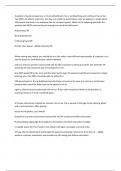
A patient is found unresponsive in his small bathroom. He is not breathing and is sitting in the corner. Two EMTsare abe to reach him, but they are unabe to stand side by side. He appears to weigh about 150 pounds and there is no evidence that he has been injured. Which of the folowing woud be the quickest and MOST practical way of moving him out of the bathroom? A) Extremity lift B) Long backboard C) Direct ground lift D) Stair chair device -ANSA) Extremity lift When moving any patient, you should do so in the safest, most efficient way possible. If a patient is in a narrow space (ie, small bathroom, narrow hallway) and you and your partner cannot stand side by side to perform a direct ground lift, the extremity lift would be the most practical way of moving him or her. One EMT would lift by the arms and the other by the legs; the patient could then be moved toa larger working area. Two EMTs should be able to safely lift a 150-pound patient. A long backboard would clearly not work in the case of a narrow or smal space because there would be little room to the patient's left or right to slide the board underneath him or her. A stair chair would also likely not be possible, or practical, because of such a confined space. A 52-year-old woman crashed her minivan into a tree. She is pinned at the legs by the steering wheel and is semiconscious. After gaining access to the patient, you shoud: A) perform a primary assessment and provide any lifesaving care before extrication. B) immediately apply high-flow oxygen to the patient and alow extrication to begin. C) rapidly assess her from head to toe, obtain vital signs, and apply a cervical collar. D) have the fire department disentangle the patient and quickly remove her from the car. -ANSA) perform a primary assessment and provide any life-saving care before extrication.
Document information
- Uploaded on
- February 14, 2024
- Number of pages
- 71
- Written in
- 2023/2024
- Type
- Exam (elaborations)
- Contains
- Questions & answers


