OB NURS 306 Study Guide for Week 4 Content
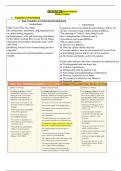
OB NURS 306 Study Guide for Week 4 Content o Transition to Parenthood o Role Transition to Motherhood/Fatherhood ▪ Motherhood ▪ Fatherhood Mercer describes four stages ■ Commitment, attachment, and preparation for an infant during pregnancy ■ Acquaintance with and increasing attachment to the infant, learning how to care for the infant, and physical restoration during the early weeks after birth ■ Moving toward a new normal during the first 4 months ■ Achievement of a maternal identity around 4 months In general, men do not fantasize about being a father, nor do they role-play being a father during childhood The meaning of “father” varies based on the man’s interpretation of the role and its expectations and responsibilities. This is influenced by: ■ How he was fathered ■ How his culture defines the role ■ In some cultures, men are not expected to be involved in the birthing process and/or care of the newborn. ■ By friends and family, and by his partner. Factors that influence the man’s transition to fatherhood are: ■ Developmental and emotional age ■ Cultural expectations ■ Relationship with his partner/wife ■ Knowledge and understanding of fatherhood ■ Previous experiences as a father ■ The manner in which he was fathered ■ Financial concerns ■ Support from partner/wife, friends, and family o Special populations: Adolescent parents ▪ Adolescence is the transition between childhood and Adulthood + working through the developmental tasks of being a teenager (Erik Erikson: identity vs role confusion) ▪ Less experiences to none o Signs of normal bonding and attachment ▪ BONDING: directional baby emotional feelings that begin during pregnancy ▪ ATTACHMENT: bidirectional ↔ emotional connection between both ▪ When to intervene when it is abnormal ■ Expected assessment findings: o ■ Parents hold the infant close. o ■ Parents refer to the infant by name or proper sex. o ■ Parents respond to the infant’s needs. o ■ Parents speak positively about the infant. o ■ Parents appear interested in learning about the infant. o ■ Parents ask appropriate questions about infant care. o ■ Parents appear comfortable holding and caring for the infant. ■ Maladaptive assessment findings: o ■ Parents call the infant “it.” o ■ Parents avoid eye contact with the infant (this can be viewed as adaptive based on culture). o ■ Parents do not respond to the infant’s cries. (ignores the baby) o ■ Parents are emotionally unavailable to the infant. o ■ Parents allow others to care for the infant, showing no interest (this can be viewed as adaptive based on culture). o ■ Parents demonstrate poor feeding techniques such as propping bottles, not burping the infant, or seeming to be uncomfortable and/or irritated when nursing. o Postpartum Blues vs Postpartum Depression Postpartum Blues *aka Baby Blues occur during the first 2 postpartum weeks, last for a few days Occurs or affects a majority of women. *feels sad and cries easily, but she is able to take care of herself and her infant (seek help after 4 weeks) Possible causes of postpartum blues are: ■ Changes in hormonal levels ■ Fatigue ■ Stress from taking on the new role of mother Signs and symptoms of postpartum blues are: ■ Anger ■Anxiety, ■ Mood swings ■ Impatience ■ Sadness ■ Weeping, ■ Crying ■ Difficulty sleeping ■ Difficulty concentrating ■ Difficulty eating ■ Feeling “I’m not myself” ■ Restlessness
Document information
- Uploaded on
- February 13, 2024
- Number of pages
- 10
- Written in
- 2023/2024
- Type
- Exam (elaborations)
- Contains
- Questions & answers