

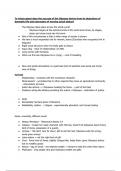
To what extent does the success of the Odyssey derive from its depictions of
domestic life and characters of varying social status?
- The Odyssey takes place across the whole world
- Odysseus begins at the extreme limits of the world and comes, by stages,
closer and closer back into his home.
● Part of this inclusiveness is that a wider range of society is shown.
● We have a much expanded role for women, slaves (Eurycleia who recognises him in
disguise)
● Right social structure when he finally gets to Ithaca
● Argus dog - value of relationships (17.290)
● Long scenes with Eumaeus
● When we first see Odysseus he is crying → sick of travelling
● Slow and gentle domesticity is a particular kind of aesthetic and social and moral
view of things
Cyclops
- Shepherding - contrasts with the monstrous character
- Moral lesson? - uncivilised but in other respects they have an agricultural community
- intervention at home
- Suitor like actions –> Odysseus invading the home → part of the fault
- Posideon acting like Athene punishing the suitors / Odysseus - restoration of justice
● Gods
● Remarkably humane piece of literature
● Relatability, realism → Calypso - supernaturally abundant, but homely feeling
Xenia: unworldly, different world
● Nestor, Menelaus - Telemachus Books 3,4
● Calypso - reveals her nasty character with Hermes, doesn’t let Odysseus leave (funny
kind of Xenia, possession of a guest),
● Cyclops - “We don’t care for Zeus”, gift to eat him last, Odysseus eats his wrong,
xenia gone wrong?
● Lotus-eaters = not the right kind of gift
● Circe - funny kind of Xenia, slightly Calypso-like, helps them, gives Odysseus advice
but no wealthy goods
● Aeolus - bag of winds - not retained wealth + refuses to help him when they return
● Phaecians - only people who give Odysseus wealth and gifts
domestic life and characters of varying social status?
- The Odyssey takes place across the whole world
- Odysseus begins at the extreme limits of the world and comes, by stages,
closer and closer back into his home.
● Part of this inclusiveness is that a wider range of society is shown.
● We have a much expanded role for women, slaves (Eurycleia who recognises him in
disguise)
● Right social structure when he finally gets to Ithaca
● Argus dog - value of relationships (17.290)
● Long scenes with Eumaeus
● When we first see Odysseus he is crying → sick of travelling
● Slow and gentle domesticity is a particular kind of aesthetic and social and moral
view of things
Cyclops
- Shepherding - contrasts with the monstrous character
- Moral lesson? - uncivilised but in other respects they have an agricultural community
- intervention at home
- Suitor like actions –> Odysseus invading the home → part of the fault
- Posideon acting like Athene punishing the suitors / Odysseus - restoration of justice
● Gods
● Remarkably humane piece of literature
● Relatability, realism → Calypso - supernaturally abundant, but homely feeling
Xenia: unworldly, different world
● Nestor, Menelaus - Telemachus Books 3,4
● Calypso - reveals her nasty character with Hermes, doesn’t let Odysseus leave (funny
kind of Xenia, possession of a guest),
● Cyclops - “We don’t care for Zeus”, gift to eat him last, Odysseus eats his wrong,
xenia gone wrong?
● Lotus-eaters = not the right kind of gift
● Circe - funny kind of Xenia, slightly Calypso-like, helps them, gives Odysseus advice
but no wealthy goods
● Aeolus - bag of winds - not retained wealth + refuses to help him when they return
● Phaecians - only people who give Odysseus wealth and gifts


