
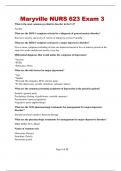
Maryville NURS 623 Exam 3 Questions with 100% Correct Answers | Verified | Updated
What is the most common psychiatric disorder in the U.S? Anxiety What are the DSM-5 symptom criteria for a diagnosis of general anxiety disorder? Excessive anxiety and worry of variety of things for at least 6 months What are the DSM-5 symptom criteria for a major depressive disorder? Five or more symptoms including at least one depressed mood or loss of interest present in the same two weeks and present nearly every day Differential diagnoses that would mimic the symptoms of depression? *Anxiety *PTSD *Substance Abuse What are the risk factors for major depression? *Age *Gender *Personal Hx (migrains, PUD, chronic pain) *Fx Hx (depression, suicide, alcholism, substance abuse) What are the common presenting symptoms of depression in the geriatric patient? Somatic (general pain) Psychology (feeling of guilt/worry, suicidal, memory) Psychomotor (anxiety/agitation) Vegetative (poor appitite/sleep) What are the NON-pharmacologic treatments for management for major depressive disorder? Interpersonal and cognitive behavior therapy What are the pharmacologic treatments for management for major depressive disorder? SSRI, SNRI, TCA, MAO Names of common ssris Fluoxetine (Prozac) Sertraline (Zoloft) Paroxetine (paxil) Page 2 of 12 Citalopram (celexa) Escitalopram (Lexapro) Names of common snris Duloxetine (Cymbalta) Venlafaxine (Effexor) Desvenlafaxine (Pristiq) What are concerns in elderly taking medication for major depression? A slower metabolism requires lower dosing; greater risk of falls, osteoporosis, fractures What are the pharmacologic versus nonpharmacologic treatment for management for general anxiety disorder? Non-pharmacological interventions of cognitive behavioral therapy has proven equal results to SSRI pharmacologic therapy DIGFAST for bipolar because your digging yourself into hole Distractibility Indiscretion/Insomnia Grandiosity Flight of ideas Activities ↑ Sleep Deficit Talkativeness What is the symptom criteria for BD I ? Identification of at least one-lifetime mania episode must have occurred What is the symptom criteria for BD II ? Identification of at least one hypomania episode and one major depressive episode must have occurred What is the symptom criteria for diagnosing unipolar (depression) Persistently depressed mood or loss of interest in activities, causing significant impairment in daily life (no mania/hypomania) How do you assess suicide risk (consider mnemonic SAD PERSONS) S-ex A-ge D-epression P-revious attempt E-thanol abuse Page 3 of 12 R-ational thinking loss S-ocial support loss O-rganized plan N-o spouse S-ickness How would you identify intimate partner violence? *reluctant to speak in front of partner *gives evasive answers *Overly protective or controlling partner What are the stages of grieving? (DABDA) Denial Anger Bargaining Depression Acceptance What are the phases of grief? (Aca) Avoid Confront Accomadate Acknowledge the loss Reacting to the separation Recollecting and Re-experiencing the Relationship w/deceased How would you identify intimate partner violence? 1) a patient who is reluctant to speak in front of her partner and gives evasive answers 2) Overly protective or controlling partner What is the clinical presentation of post-traumatic stress disorder (PTSD)? A: INTRUSIVE thoughts, nightmares or flashbacks B: AVOIDANCE any situation of activity that brings memories C: HYPERAROUSAL: Hypersensitive or on edge, unprovoked anger, jumpiness, and on guard What are the DSM-5 criteria for a diagnosis of PTSD? 1 SYMPTOM of intrusive, avoidance, or hyper-arousal MUST HAVE PERSISTED FOR MORE THAN 1 MONTH What is the management for PTSD? PHARMACOLOGY: SSRI's paroxetine (paxil) or sertaline (Zoloft), anxiolytic buspirone (buspar) Page 4 of 12 NON-PHARMACOLOGICAL: cognitive behavioral therapies, brief eclectic psychotherapy, narrative exposure therapy Potential complications of over-prescription of opiate pain meds Constipation Sedation Resp Depression Dizziness N/V Medications that can cause Constipation? Antacids, anticholinergics, Anti convulsive, Antidepressants (tcas), Antihypertensives, nsaids, Opioids What are the warning signs that the patient has Anorexia? Substantial weight loss S/S of depression or mood swings cardio problems preoccupation with weight, calories, and food, wear baggy clothes history of excessive exercise What do labs look like in anorexia? Leukopenia elevated BUN anemic hypomagnesmia elevated TSH sinus bradycardia. What are the warning signs that the patient has Bulemia? Significant weight gain tooth erosion calluses on back of hands esophageal erosion negative body image eats rapidly until uncomfortably full swollen salivary (parotid) glands irregular menses eat large amounts of food in isolation signs or symptoms of depression What do labs look like in bulemia? Hyponatremia, hypochloremia, elevated amylase Page 5 of 12 Discuss sleep hygiene strategies for a patient complaining of insomnia Maintain a regular sleep and wake schedule Eat regular meals every day Develop a relaxing bedtime routine Limit amount of liquid consumed in evening Limit amount of caffeine consumed later in day Avoid tobacco and alcohol later in the day Avoid daytime naps Exercise regularly Limit exposure to bright lights or television in evening Bed should be used for sleeping and sex only Turn any clocks facing the bed away If not asleep after 20 mins get out of bed and engage in quiet activity before reattempting to fall asleep. What is the The most common long term effect of sexual assault PTSD In an attempt to promote behavioral changes in a patient, what is the best approach to take as the provider? Educate the patient on all of the options available to them and allow them to choose their plan What are the risk factors for substance abuse disorder *Underlying mental health/emotional problems *low socioeconomic status *access to medications and substances Patterns commonly seen in domestic violence among victims? -Feels afraid of their partner -Avoids certain topics out of fear of angering partner -Feels they deserve to be hurt or mistreated -Feels emotionally numb or helpless Patterns commonly seen in domestic violence among perpetrator? -Humiliates/Criticizes partner -Blames the victim for their abusive behavior -Acts jealous and possessive -Limits partners access to money, phone, car
Document information
- Uploaded on
- January 30, 2024
- Number of pages
- 12
- Written in
- 2023/2024
- Type
- Exam (elaborations)
- Contains
- Questions & answers


