
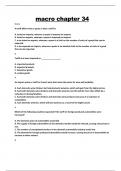
macro chapter 34 exam questions with 100 % correct answers
A tariff differs from a quota in that a tariff is: A. levied on imports, whereas a quota is imposed on exports. B. levied on exports, whereas a quota is imposed on imports. C. a tax levied on exports, whereas a quota is a limit on the number of units of a good that can be exported. D. a tax imposed on imports, whereas a quota is an absolute limit to the number of units of a good that can be imported. D Tariffs are taxes imposed on _________________. A. imported products B. exported products C. hazardous goods D. surplus goods A An import quota or tariff on French wine that raises the prices for wine will probably: A. hurt domestic wine drinkers but help domestic wineries, which will gain from the higher prices. B. hurt both domestic wine drinkers and domestic wineries, but this will be more than offset by a reduction in driving fatalities. C. hurt both domestic wine drinkers and domestic wine producers because of a reduction in competition. D. hurt domestic wineries, which will lose business as a result of the higher prices. A Which of the following would be expected if the tariff on foreign-produced automobiles were increased? A. The domestic price of automobiles would fall. B. The supply of foreign automobiles to the domestic market would be reduced, causing auto prices to rise. C. The number of unemployed workers in the domestic automobile industry would rise. D. The demand for foreign-produced automobiles would increase, causing the price of automobiles to increase in other nations. B _____________ are numerical limitations on the quantity of products that can be imported. A. Tariffs B. Import quotas C. Taxes D. Nontariff barriers B Tariffs and other trade restrictions increase the domestic scarcity of products from abroad. Such policies benefit domestic producers of the restricted products at the expense of domestic consumers." This statement: A. contains one error; the trade restraints do not increase the scarcity of foreign-produced goods. B. contains one error; domestic producers gain at the expense of foreign producers rather than domestic consumers. C. contains two errors; trade restraints do not increase the domestic scarcity of product and neither do they harm domestic consumers. D. is essentially correct. D Which of the following is the best example of a quota? A. a tax placed on all small cars sold in the domestic market B. a limit imposed on the number of men's suits that can be imported from a foreign country C. a subsidy from the American government to domestic manufacturers of men's suits so they can compete more effectively with foreign producers of men's suits D. a $100-per-car fee imposed on all small cars imported B A new American import quota on imported steel would be likely to: A. increase the production of steel-using American firms. B. increase American production of steel. C. generate tax revenue to the government. D. reduce the cost of production to steel-using American firms. B The infant industry argument for protectionism suggests that an industry must be protected in the early stages of its development so that: A. firms will be protected from subsidized foreign competition. B. domestic producers can attain the economies of scale to allow them to compete in world markets. C. there will be adequate supplies of crucial resources in case they are needed for national defence. D. it will not be subjected to a takeover from a foreign competitor. ____________ means selling goods below their cost of production. A. Protectionism B. Dumping C. Import quotas D. Non-tariff barriers B The membership of the WTO includes about __________ nations. A. 15 B. 150 C. 700 D. 1500 B An import quota does which of the following? A. decreases the price of the imported goods to consumers B. increases the price of the domestic goods to consumers C. redistributes income away from domestic producers of those products toward domestic producers of exports D. both a) and c)
Document information
- Uploaded on
- January 25, 2024
- Number of pages
- 9
- Written in
- 2023/2024
- Type
- Exam (elaborations)
- Contains
- Questions & answers


