

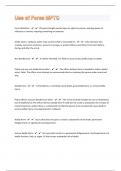
Force Definition: - ✔ ✔ Physical strength exerted upon an object or person; exerting power to influence or control; imposing something on someone. Under julian v randazzo, police may use force that is reasonable to: - ✔ ✔ Take someone into custody, overcome resistance, prevent an escape, or protect officers and others from harm before, during, and after the arrest Non deadly force - ✔ ✔ Is neither intende d, nor likely to cause serious bodily injury or death. Police may use non deadly force when: - ✔ ✔ The officer believes force is needed to make a lawful arrest. Note: The officer must attempt to communicate that he is placing the person under arrest and why Deadly Force - ✔ ✔ Is intended to, or will likely cause death, great bodily harm, or serious bodily injury. Police officers may use deadly force when: - ✔ ✔ The crime involved includes the use or threatened use of deadly force; The officer believes de adly force if used will not create a substantial risk of injury to innocent persons; and/or there is a substantial risk that the person to be arrested will cause death or serious bodily injury is his apprehension is delayed. Bodily Harm - ✔ ✔ Injury that does not pose or create a substantial risk of death, permanent disfigurement, or significant loss/impairment. Serious bodily Harm - ✔ ✔ An injury that results in a permanent disfigurement, loss/impairment of a bodily function, limb, or organ. Or that caus es substantial risk of death. Graham v. Connor - ✔ ✔ US Supreme Court case that set the "Reasonableness Standard" Totality of the Circumstances - ✔ ✔ The complete picture of what was happening including: - Type and severity of the crime - Did the suspect pose an immediate threat to officers or others - Was the suspect actively resisting arrest or attempting to escape custody by flight. Tennessee v. Garner - ✔ ✔ Police may use deadly force to stop a fleeing suspect from escaping IF; the s uspect threatens the officer with a weapon; OR there is probable cause to believe the suspect has committed a crime involving the infliction of serious injury; AND deadly force is necessary to prevent escape; AND where feasible, some warning was given. Threat Perception Categories - ✔ ✔ Strategic, Tactical, Volatile, Harmful, Lethal Strategic: - ✔ ✔ Baseline for being on duty. Aware of surroundings and employs basic safety strategies (distance/positioning) Tactical - ✔ ✔ There is a perceived risk, and sa fety strategies are deployed. Underlying circumstances and other factors indicate confrontation or enforcement action. Volatile - ✔ ✔ Threat potential is recognized by the officer. The level of danger and potential for bodily harm is increased with action by police ongoing or certain. Harmful - ✔ ✔ Perceived threat of bodily harm to officers or others is ongoing or imminent. Lethal - ✔ ✔ Perceived threat of imminent risk of death or serious bodily injury to officer or third party
Preview 2 out of 8 pages
Exam (elaborations)
Use of Force MPTC 68 Questions with 100% Correct Answers | Verified | Latest Update
Preview 2 out of 8 pages
Force Definition: - ️️Physical strength exerted upon an object or person; exerting power to influence or control; imposing something on someone. Under julian v randazzo, police may use force that is reasonable to: - ️️Take someone into custody, overcome resistance, prevent an escape, or protect officers and others from harm before, during, and after the arrest Non deadly force - ️️Is neither intended, nor likely to cause serious bodily injury or death. Police may use non deadly force when: - ️️The officer believes force is needed to make a lawful arrest. Note: The officer must attempt to communicate that he is placing the person under arrest and why Deadly Force - ️️Is intended to, or will likely cause death, great bodily harm, or serious bodily injury. Police officers may use deadly force when: - ️️The crime involved includes the use or threatened use of deadly force; The officer believes deadly force if used will not create a substantial risk of injury to innocent persons; and/or there is a substantial risk that the person to be arrested will cause death or serious bodily injury is his apprehension is delayed. Bodily Harm - ️️Injury that does not pose or create a substantial risk of death, permanent disfigurement, or significant loss/impairment. Serious bodily Harm - ️️An injury that results in a permanent disfigurement, loss/impairment of a bodily function, limb, or organ. Or that causes substantial risk of death.
Content preview
Document information
- Uploaded on
- January 13, 2024
- Number of pages
- 8
- Written in
- 2023/2024
- Type
- Exam (elaborations)
- Contains
- Questions & answers
$8.49
Wrong document? Swap it for free
Within 14 days of purchase and before downloading, you can choose a different document. You can simply spend the amount again.
Written by students who passed
Immediately available after payment
Read online or as PDF

Reputation scores are based on the amount of documents a seller has sold for a fee and the reviews they have received for those documents. There are three levels: Bronze, Silver and Gold. The better the reputation, the more your can rely on the quality of the sellers work.
Available in package deal
Package deal
MPTC PACKAGE DEAL

