

BIOS_242
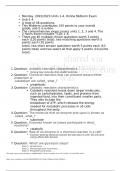
1. Question: Anabolic reactions characteristics • forming large molecules from smaller molecules 2. Question: Chemical reactions that can proceed toward either anabolism or catabolism are called_ what_? • amphibolic 3. Question: Catabolic reactions characteristics • Catabolic reactions break down larger molecules, such as carbohydrates, lipids, and proteins from ingested food, into their constituent smaller parts. They also include the breakdown of ATP, which releases the energy needed for metabolic processes in all cells throughout the body. 4. Question: The molecule that an enzyme acts upon is known as called_ what_? • substrate 5. Question: Enzymes known as lyases participate in what_ reactions? • catabolic 6. Question: Role of an enzyme in a chemical reaction in a cell? • Enzymes speed up chemical reactions that take place in cells--the activation energy affects their function 7. Question: Which are glycolysis steps? Step 1: Hexokinase. ... Step 2: Phosphoglucose Isomerase. ... Step 3: Phosphofructokinase. ... Step 4: Aldolase. ... Step 5: Triosephosphate isomerase. ... Step 6: Glyceraldehyde-3-phosphate Dehydrogenase. ... Step 7: Phosphoglycerate Kinase. ... Step 8: Phosphoglycerate Mutase Step 9: Enolase Step 10: Pyruvate Kinase 8. Question: What_ is fermentation? Fermentation is a metabolic process that produces chemical changes in organic substrates through the action of enzymes. In biochemistry, it is narrowly defined as the extraction of energy from carbohydrates in the absence of oxygen. 9. Question: What_ is Krebs cycle? The Krebs cycle is a series of chemical reactions used by all aerobic organisms to generate energy through the oxidization of acetate—derived from carbohydrates, fats, and proteins —into carbon dioxide. Theoretically there are several alternatives to the TCA cycle, but the TCA cycle appears to be the most efficient. 10. Question: Anaerobic bacteria use what_ as final electron acceptors in respiration? • NO3- 11. Question: The metabolic processes called_ fermentation produces what_? • Enzymes speed up chemical reactions that take place in cells--the activation energy affects their function 12. Question: What_ are electron carrier molecule where are they derived from? In glucose metabolism, the electrons come from electron carriers. The electrons on the electron carriers come from the oxidation of glucose. 13. Question: When does_ DNA Replication occurs during cell cycle? • Interphase 14. Question: When does_ Sister chromatids separate and move toward the poles of the cell during in mitotic cell division? • Anaphase of Mitosis 15. Question: What_ is an aligned pair of homologous chromosomes called_? • Tetrad .................................................................................................CONTINUE.
Document information
- Uploaded on
- January 9, 2024
- Number of pages
- 15
- Written in
- 2023/2024
- Type
- Exam (elaborations)
- Contains
- Questions & answers


