

John Dewar, “The Normal Chaos of Family Law” (1998) 61 MLR 467
Examples drawn from our Syllabus
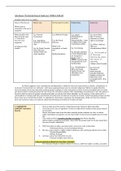
Chaos of Family Law Role of Law No Normatie Content Relatonships Autonomy
Which Leads to
uncertainty in the next 4
categories
What should be the E.g. Parental E.g. Welfare Principle E.g. Legal E.g. Secret Birth
Role of Family Law? Inioliement ✅ Parenthood & Idea of mother’s
=> Use this to Parental autonomy is child’s
structure your E.g. Signalling E.g. No-Fault Responsibility - How right to knowledge
responses function of Divorce Divorce ✅ to determine what
Law ✅ constitutes either ✅ E.g. Where children's
Is family law truly What is the rights are
chaotc? E.g. No Order Principle normatiity of family E.g. Terminology conceptualised (Gillick) ✅
from Child Law law?
Unless there are E.g. Broader Queston E.g. Participation
clear benefts ✅ Multiculturalism ✅ of what Relatonships
of Children →
are recognised -
Burden case → Uncertainty about
Sisters trying to be the extent of
recognised as Civil autonomy
Partnership ✅ s1(3)(a) of the Checklist
E.g. Cohabitation → E.g. Financial
Why are these Proiisions
family forms not Shift towards
afforded more private ordering;
protection ✅ people coming up
with their own
arrangements ✅ (Pre-
Nups)
As Dewar suggests, many contemporary deielopments in family law has been characterised as chaotc, contradictory or
incoherent. He describes it as ‘antnomic’, with many opposing themes and no consistent alignment. While it is posited that the
recent moiement away from discreton towards greater emphasis on rules and greater concern to fnd a principled basis for family
law, this has led to uncertainty about the role of law, the normatie content of law, relatonships and autonomy in law. My opinion is
that the trend has not led to greater normatie pluralism or anarchy that Parker identfes, on the contrary, it has merely led to a
confrontaton of existng fault-lines and diiersity of family forms or interests in family law in itself. Dewar had rightly pointed out that
these chaos are a normal state of afair. In oppositon to the Dewar’s argument, the deielopments, whilst not free from critcism,
haie only seried to reduce and calm the chaos that will always be inherent in Family Law itself.
1. NORMATIVE - More at stake here than merely a ‘balancing exercise’ between rights and utlity
CONTENT: Normatie - Carol Smart: the ‘axes of regulaton’ of diiorce shifed from morality (a fault-based system)
Anarchy to economics
- Recent moiement away from discreton towards greater emphasis on rules, to reduce
public expenditure and greater concern than before to fnd some principled basis for family
law
- This trend has led to normatie pluralism or anarchy that Parker identfes
- Which reflects underlying uncertainty about what the proper basis for the law should be in
the area of family relatonship
1. Shif from rights to utlity, associated with a moie from rules to discreton
- Fault-based diiorce to non-fault based diiorce
2. But also a moie back to a rights model in family law, with contnuing atachment to utlity
- Parental Responsibility
- Welfare Principle
3. And also a moie from discreton to rules
- Financial remedies upon Diiorce
LAW AS HAVING NORMATIVE CONTENT: DIVORCE
- The remoial of fault as central to diiorce is seen as a shif from rights to utlity, associated
Examples drawn from our Syllabus
Chaos of Family Law Role of Law No Normatie Content Relatonships Autonomy
Which Leads to
uncertainty in the next 4
categories
What should be the E.g. Parental E.g. Welfare Principle E.g. Legal E.g. Secret Birth
Role of Family Law? Inioliement ✅ Parenthood & Idea of mother’s
=> Use this to Parental autonomy is child’s
structure your E.g. Signalling E.g. No-Fault Responsibility - How right to knowledge
responses function of Divorce Divorce ✅ to determine what
Law ✅ constitutes either ✅ E.g. Where children's
Is family law truly What is the rights are
chaotc? E.g. No Order Principle normatiity of family E.g. Terminology conceptualised (Gillick) ✅
from Child Law law?
Unless there are E.g. Broader Queston E.g. Participation
clear benefts ✅ Multiculturalism ✅ of what Relatonships
of Children →
are recognised -
Burden case → Uncertainty about
Sisters trying to be the extent of
recognised as Civil autonomy
Partnership ✅ s1(3)(a) of the Checklist
E.g. Cohabitation → E.g. Financial
Why are these Proiisions
family forms not Shift towards
afforded more private ordering;
protection ✅ people coming up
with their own
arrangements ✅ (Pre-
Nups)
As Dewar suggests, many contemporary deielopments in family law has been characterised as chaotc, contradictory or
incoherent. He describes it as ‘antnomic’, with many opposing themes and no consistent alignment. While it is posited that the
recent moiement away from discreton towards greater emphasis on rules and greater concern to fnd a principled basis for family
law, this has led to uncertainty about the role of law, the normatie content of law, relatonships and autonomy in law. My opinion is
that the trend has not led to greater normatie pluralism or anarchy that Parker identfes, on the contrary, it has merely led to a
confrontaton of existng fault-lines and diiersity of family forms or interests in family law in itself. Dewar had rightly pointed out that
these chaos are a normal state of afair. In oppositon to the Dewar’s argument, the deielopments, whilst not free from critcism,
haie only seried to reduce and calm the chaos that will always be inherent in Family Law itself.
1. NORMATIVE - More at stake here than merely a ‘balancing exercise’ between rights and utlity
CONTENT: Normatie - Carol Smart: the ‘axes of regulaton’ of diiorce shifed from morality (a fault-based system)
Anarchy to economics
- Recent moiement away from discreton towards greater emphasis on rules, to reduce
public expenditure and greater concern than before to fnd some principled basis for family
law
- This trend has led to normatie pluralism or anarchy that Parker identfes
- Which reflects underlying uncertainty about what the proper basis for the law should be in
the area of family relatonship
1. Shif from rights to utlity, associated with a moie from rules to discreton
- Fault-based diiorce to non-fault based diiorce
2. But also a moie back to a rights model in family law, with contnuing atachment to utlity
- Parental Responsibility
- Welfare Principle
3. And also a moie from discreton to rules
- Financial remedies upon Diiorce
LAW AS HAVING NORMATIVE CONTENT: DIVORCE
- The remoial of fault as central to diiorce is seen as a shif from rights to utlity, associated


