

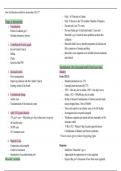
How did Mussolini establish his dictatorship 1922-27?
- Only 1 of 4 fascists in Cabinet
Stages to dictatorship - Only 35 fascists in the 535-member Chamber of Deputies
1. Normalisation - Fascism only won 7% voters
- Period of coalition gov’t - Previous Italian gov’ts had lasted under 2 years and
- Granting emergency powers Mussolini’s gov’t faced the same problems as those that
collapsed
2. Controlling the Fascist squads - Mussolini didn’t have a detailed programme of policies and
- Fascist Grand Council little experience of running anything
- Militia - Mussolini;s own supporters were divided between moderates
- Cheka and radicals
- Growth of the PNF
Normalisation: How did people benefit from Fascist rule?
3. Increased control Industry
- News manipulation From 1922-5:
- Improving relations with the Catholic Church - Industrial production rose 31%
- Gaining control of the South - Unemployment decreased by 72%
- 1919 = 18m days lost to strikes, 1920 = 16m days lost to
4. Constitutional change strikes, 1923 = 300,000 days lost to strikes
- Acerbo Law - M/ship of General Confederation of Labour (socialist trade
- Transformation of the electoral system union) dropped from 2.5m to 500,000
- Taxes and controls over industry were cut by De Stefani
5. April 1925 general election - Investigation into war profits dropped
- 374 gov’t seats → Mussolini gets the parliamentary majority - Telephone companies privatised and state monopoly on life
- 46 Socialist seats insurance ended
- 39 PPI seats - 19 Dec 1923 - Palazzo Chigi Accords agreed between
- 19 Communist seats Confederation of Industry and Fascist syndicates
→ Fascist unions given exclusive bargaining rights
6. Matteotti Crisis
- Compromise and normality Response:
- Control of extremists - Satisfied w/ Mussolini’s gov’t
- Introduction of an authoritarian gov’t - Appreciated the suppression of w/class agitation
Mussolini’s problems - Enjoyed the gov’ts relaxation of how firms were regulated
, How did Mussolini establish his dictatorship 1922-27?
- Knew there wouldn’t be any meaningful experimentation to Vatican
alter status quo of the regime - Italy was predominantly Catholic - Church approval would
benefit Mussolini
Agriculture - Could help Fascists gain popularity, particularly in the non-
- Destruction of the Federterra (peasant leagues) Fascist south
→ Nov 1921 - Oct 1922 - 37 strikes involving 43,000 workers - Place Mussolini in a strong position for polarising L+R wing
→ 1923 - 0 strikes elements of PPI
- Visocchi Decree 1920 abolished (regulated peasant land Mussolini’s appeasement of the Church
occupations) - Jan 1923 - Mussolini met Vatican Secretary General and
agreed to bail Church-controlled Bank of Rome from financial
→ land taken back by previous owners
scandal
→ new gov’t modified inheritance tax and eased taxes on profits
- Feb 1923 measures:
→ local Socialist administrations forced to resign and landlords → Fascists attacked freemasonry and banned its m/ship
resumed control → state grant introduced to improve clergy salaries
→ crucifix re-introduced in classrooms, courtrooms, civil service
King
offices
- Mussolini was cautious in handling the King due to army, civil
→ distribution of contraceptives and promotion of birth control
service and senate’s strong loyalty to the monarchy
- King wasn’t a threat to Mussolini → believed that Mussolini became a criminal offence
created a strong gov’t and didn’t dismiss him during → anti-clerical journals banned
Matteotti crisis → liberal proposals to tax Church property were dropped
- Mussolini remained respectful and met every week w/ the King
News manipulation
Army - Mussolini continued to edit Il Popolo d’Italia - reached record
- Welcomed the appointment of Marshall Diaz as Minister for circulation
War - Mussolini devoted large amounts of time to checking the press
- Concerns over MSVN allayed when Mussolini made them and writing to editors
swear an oath of loyalty to the King during the Matteotti crisis - Mussolini wanted to be available to journalists and sought to
- Approved of Mussolini’s attack on L-wing and active talk of charm them
foreign policy - Presented Corfu crisis 1923 as an Italian triumph
- Knew that Mussolini wanted the armed forces to expand
Controlling the Fascist squads
- Only 1 of 4 fascists in Cabinet
Stages to dictatorship - Only 35 fascists in the 535-member Chamber of Deputies
1. Normalisation - Fascism only won 7% voters
- Period of coalition gov’t - Previous Italian gov’ts had lasted under 2 years and
- Granting emergency powers Mussolini’s gov’t faced the same problems as those that
collapsed
2. Controlling the Fascist squads - Mussolini didn’t have a detailed programme of policies and
- Fascist Grand Council little experience of running anything
- Militia - Mussolini;s own supporters were divided between moderates
- Cheka and radicals
- Growth of the PNF
Normalisation: How did people benefit from Fascist rule?
3. Increased control Industry
- News manipulation From 1922-5:
- Improving relations with the Catholic Church - Industrial production rose 31%
- Gaining control of the South - Unemployment decreased by 72%
- 1919 = 18m days lost to strikes, 1920 = 16m days lost to
4. Constitutional change strikes, 1923 = 300,000 days lost to strikes
- Acerbo Law - M/ship of General Confederation of Labour (socialist trade
- Transformation of the electoral system union) dropped from 2.5m to 500,000
- Taxes and controls over industry were cut by De Stefani
5. April 1925 general election - Investigation into war profits dropped
- 374 gov’t seats → Mussolini gets the parliamentary majority - Telephone companies privatised and state monopoly on life
- 46 Socialist seats insurance ended
- 39 PPI seats - 19 Dec 1923 - Palazzo Chigi Accords agreed between
- 19 Communist seats Confederation of Industry and Fascist syndicates
→ Fascist unions given exclusive bargaining rights
6. Matteotti Crisis
- Compromise and normality Response:
- Control of extremists - Satisfied w/ Mussolini’s gov’t
- Introduction of an authoritarian gov’t - Appreciated the suppression of w/class agitation
Mussolini’s problems - Enjoyed the gov’ts relaxation of how firms were regulated
, How did Mussolini establish his dictatorship 1922-27?
- Knew there wouldn’t be any meaningful experimentation to Vatican
alter status quo of the regime - Italy was predominantly Catholic - Church approval would
benefit Mussolini
Agriculture - Could help Fascists gain popularity, particularly in the non-
- Destruction of the Federterra (peasant leagues) Fascist south
→ Nov 1921 - Oct 1922 - 37 strikes involving 43,000 workers - Place Mussolini in a strong position for polarising L+R wing
→ 1923 - 0 strikes elements of PPI
- Visocchi Decree 1920 abolished (regulated peasant land Mussolini’s appeasement of the Church
occupations) - Jan 1923 - Mussolini met Vatican Secretary General and
agreed to bail Church-controlled Bank of Rome from financial
→ land taken back by previous owners
scandal
→ new gov’t modified inheritance tax and eased taxes on profits
- Feb 1923 measures:
→ local Socialist administrations forced to resign and landlords → Fascists attacked freemasonry and banned its m/ship
resumed control → state grant introduced to improve clergy salaries
→ crucifix re-introduced in classrooms, courtrooms, civil service
King
offices
- Mussolini was cautious in handling the King due to army, civil
→ distribution of contraceptives and promotion of birth control
service and senate’s strong loyalty to the monarchy
- King wasn’t a threat to Mussolini → believed that Mussolini became a criminal offence
created a strong gov’t and didn’t dismiss him during → anti-clerical journals banned
Matteotti crisis → liberal proposals to tax Church property were dropped
- Mussolini remained respectful and met every week w/ the King
News manipulation
Army - Mussolini continued to edit Il Popolo d’Italia - reached record
- Welcomed the appointment of Marshall Diaz as Minister for circulation
War - Mussolini devoted large amounts of time to checking the press
- Concerns over MSVN allayed when Mussolini made them and writing to editors
swear an oath of loyalty to the King during the Matteotti crisis - Mussolini wanted to be available to journalists and sought to
- Approved of Mussolini’s attack on L-wing and active talk of charm them
foreign policy - Presented Corfu crisis 1923 as an Italian triumph
- Knew that Mussolini wanted the armed forces to expand
Controlling the Fascist squads


