

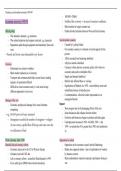
Creating a social market economy 1945-89
- 100 RM = DM6.5
Economic recovery 1945-55 - Stabilised the economy → increased consumer confidence
- Black market no longer common use
Allied policy - Further divided relations between West and East Germany
- War industries banned, e.g. munitions
- War-related industries had outputs restricted, e.g. chemicals Social market economy
- Reparations paid through equipment and machinery from each - Created by Ludwig Erhard
zone - Free market economy w/ elements of social support for the
→ French and Soviet zones dismantled every factory poorest
- All but essential food rationing abolished
Currency - All price controls abolished
- Reichsmark was almost worthless - Currency reform and new economic policy led to boost in
- Black market replaced use of currency economy and positive multiplier effect
- Transport and communication links crossed zones, making - Supply and demand stabilised
logistics of repairment difficult - Reform only affected those w/ savings
- Difficult to create economic unity w/ each zone having - Equalisation of Burdens Act 1952 - taxed military assets and
different approaches to recovery redistributed money to help the poor
- Co-determination - allowed worker representatives on
Damage of the war managerial boards
- Economic and physical damage led to some Germans Impact
emigrating - Slow progress due to the damaging effects of the war
→ e.g. 160,000 pows in France remained - Some businesses did collapse from the reform
- Factories and businesses began to produce and trade again
- Immigrants exceeded the number of emigrants → refugees
- Unemployment increased: 1948 - 442,000, 1950 - 1.8m
of soviet army, expelled from E Europe and some were due - 1959 - car production 4.5x greater than 1950, steel production
to reallocation of land 2x
West Germany after 1949 Opposition to reform
Marshall aid and currency reform - Opposition in the economic council and the Bundestag
- Economic aid given by the US to Western Europe - Britain also opposed reform - fears of exploitation of workers
- Germany received US$1.4m by business owners
- Led to currency reform - created the Deutschmark in 1948 - Many industrialists wanted to maintain cartelisation from pre-
- Every adult given DM60 when reform introduced war
- 100 RM = DM6.5
Economic recovery 1945-55 - Stabilised the economy → increased consumer confidence
- Black market no longer common use
Allied policy - Further divided relations between West and East Germany
- War industries banned, e.g. munitions
- War-related industries had outputs restricted, e.g. chemicals Social market economy
- Reparations paid through equipment and machinery from each - Created by Ludwig Erhard
zone - Free market economy w/ elements of social support for the
→ French and Soviet zones dismantled every factory poorest
- All but essential food rationing abolished
Currency - All price controls abolished
- Reichsmark was almost worthless - Currency reform and new economic policy led to boost in
- Black market replaced use of currency economy and positive multiplier effect
- Transport and communication links crossed zones, making - Supply and demand stabilised
logistics of repairment difficult - Reform only affected those w/ savings
- Difficult to create economic unity w/ each zone having - Equalisation of Burdens Act 1952 - taxed military assets and
different approaches to recovery redistributed money to help the poor
- Co-determination - allowed worker representatives on
Damage of the war managerial boards
- Economic and physical damage led to some Germans Impact
emigrating - Slow progress due to the damaging effects of the war
→ e.g. 160,000 pows in France remained - Some businesses did collapse from the reform
- Factories and businesses began to produce and trade again
- Immigrants exceeded the number of emigrants → refugees
- Unemployment increased: 1948 - 442,000, 1950 - 1.8m
of soviet army, expelled from E Europe and some were due - 1959 - car production 4.5x greater than 1950, steel production
to reallocation of land 2x
West Germany after 1949 Opposition to reform
Marshall aid and currency reform - Opposition in the economic council and the Bundestag
- Economic aid given by the US to Western Europe - Britain also opposed reform - fears of exploitation of workers
- Germany received US$1.4m by business owners
- Led to currency reform - created the Deutschmark in 1948 - Many industrialists wanted to maintain cartelisation from pre-
- Every adult given DM60 when reform introduced war


