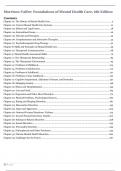
Test Bank Morrison-Valfre Foundations of Mental Health Care, 6th EditionContents Chapter 01: The History of Mental Health Care ..................................................................................................... 2 Chapter 02: Current Mental Health Care Systems ............................................................................................... 10 Chapter 03: Ethical and Legal Issues ................................................................................................................... 18 Chapter 04: Sociocultural Issues .......................................................................................................................... 26 Chapter 05: Theories and Therapies ..................................................................................................................... 34 Chapter 06: Complementary and Alternative Therapies...................................................................................... 43 Chapter 07: Psychotherapeutic Drug Therapy ..................................................................................................... 50 Chapter 8: Skills and Principles of Mental Health Care ....................................................................................... 59 Chapter 10: Therapeutic Communication ............................................................................................................ 68 Chapter 9: Mental Health Assessment Skills ........................................................................................................ 76 Chapter 11: The Therapeutic Relationship ............................................................................................................ 85 Chapter 12: The Therapeutic Environment .......................................................................................................... 95 Chapter 13: Problems of Childhood .................................................................................................................... 103 Chapter 14: Problems of Adolescence .................................................................................................................. 112 Chapter 15: Problems of Adulthood ..................................................................................................................... 121 Chapter 16: Problems of Late Adulthood ............................................................................................................ 130 Chapter 17: Cognitive Impairment, Alzheimer's Disease, and Dementia ............................................................ 137 Chapter 18: Managing Anxiety ........................................................................................................................... 146 Chapter 19: Illness and Hospitalization ...............................................................................................................154 Chapter 20: Loss and Grief ................................................................................................................................. 163 Chapter 21: Depression and Other Mood Disorders ........................................................................................... 172 Chapter 22: Physical Problems, Psychological Sources ...................................................................................... 180 Chapter 23: Eating and Sleeping Disorders .........................................................................................................187 Chapter 24: Dissociative Disorders .....................................................................................................................195 Chapter 25: Anger and Aggression ..................................................................................................................... 204 Chapter 26: Outward-Focused Emotions: Violence ........................................................................................... 212 Chapter 27: Inward-Focused Emotions: Suicide ................................................................................................ 220 Chapter 28: Substance-Related Disorders ......................................................................................................... 228 Chapter 29: Sexual Disorders ............................................................................................................................. 235 Chapter 30: Personality Disorders ..................................................................................................................... 244 Chapter 31: Schizophrenia and Other Psychoses................................................................................................ 252 Chapter 32: Chronic Mental Health Disorders ................................................................................................... 260 Chapter 33: Challenges for the Future ................................................................................................................ 267
1 | P a g eChapter 01: The History of Mental Health Care
MULTIPLE CHOICE
1. The belief of the ancient Greek philosopher Plato that the rational soul controlled the
irrational soul could be compared with the belief of the more recent psychological theorist:
a. Freud
b. Pinel
c. Fisher
d. Rush
ANS: A
Sigmund Freud believed that mental illness was, in part, caused by forces both within and
outside the personality. Philippe Pinel advocated acceptance of mentally ill individuals as
human beings in need of medical assistance. Alice Fisher was a Florence Nightingale nurse
who cared for the mentally ill, and Dr. Benjamin Rush was the author of the book Diseases of
the Mind.
PTS:
1
OBJ: 2
DIF: Cognitive Level: Comprehension REF: p. 4
TOP: Early Years of Mental Health
KEY: Nursing Process Step: Assessment MSC: Client Needs: Psychosocial Integrity
2. During the mid-1500s, behaviors associated with mental illness were more accurately
recorded by professionals. This practice led to for different abnormal behaviors.
a. Classifications
b. Diagnosing
c. Treatment
d. Education
ANS: A
Classification of abnormal behaviors did not begin until this time, after the practice of more
accurate recording of behaviors was begun. Diagnoses, treatment guidelines, and any
education regarding mental health disorders were not available during this period.
PTS:
1
OBJ: 3
DIF: Cognitive Level: Knowledge
REF: p. 5
TOP: Mental Illness During the Renaissance
KEY: Nursing Process Step: Assessment MSC: Client Needs: Psychosocial Integrity
3. During the latter part of the eighteenth century, psychiatry became a separate branch of
medicine, and inhumane treatment was greatly diminished by the French hospital director:
a. Dix
b. Beers
c. Pinel
d. Carter
ANS: C
2 | P a g ePhilippe Pinel advocated acceptance of the mentally ill, as well as proper treatment. Dorothea
Dix crusaded for construction of mental health hospitals. Clifford Beers wrote the book A
Mind That Found Itself. President Jimmy Carter established the President’s Commission on
Mental Health in 1978.
PTS:
1
OBJ: 4
DIF: Cognitive Level: Knowledge
REF: p. 5
TOP: Mental Illness in the Eighteenth Century
KEY: Nursing Process Step: Assessment MSC: Client Needs: Psychosocial Integrity
4. In 1841,
surveyed asylums, jails, and almshouses throughout the United
States, Canada, and Scotland and is credited with bringing about public awareness and reform
for the care of the mentally ill. a. Sigmund Freud
b. John Cade
c. Florence Nightingale
d. Dorothea Dix
ANS: D
Dorothea Dix spent 20 years surveying facilities that housed mentally ill individuals and is
credited with major changes in the care of the mentally ill. Sigmund Freud introduced the
concept of psychoanalysis, John Cade discovered lithium carbonate for the treatment of
bipolar disorder, and Florence Nightingale trained nurses in England in the 1800s.
PTS:
1
OBJ: 4
DIF: Cognitive Level: Knowledge
REF: p. 6
TOP: Mental Illness in the Nineteenth Century
KEY: Nursing Process Step: Assessment MSC: Client Needs: Psychosocial Integrity
5. Afors aMental direct Hygieneresult of Clif wasf oformed inrd Beers’ 1w909ork withand bao
focus onok , A Mind prevention ofThat Found mental illness Itself, the Commit and: tee
a. Early detection of symptoms of mental illness
b. Education of caregivers
c. Current treatment options
d. Removing the stigma attached to mental illness
ANS: D
Clifford Beers’ book reflected on his attempt at suicide followed by the deplorable care he
received for the next 3 years in mental hospitals. Beers’ work and book raised the
consciousness of people throughout the country regarding prevention and removal of the
stigma of having a mental illness. Early detection of symptoms, education of caregivers, and
current treatment options regarding mental illness were not the focus of his book, nor were
they a priority for the Committee for Mental Hygiene.
PTS:
1
OBJ: 4
DIF: Cognitive Level: Knowledge
REF: p. 6
TOP: Mental Illness in the Twentieth Century
KEY: Nursing Process Step: Assessment MSC: Client Needs: Psychosocial Integrity
6. During the 1930s, what common treatment for schizophrenia caused clients to fall into a
coma that could last as long as 50 hours? a. Electroconvulsive therapy
b. Insulin therapy
c. Humoral therapy
d. Amphetamine therapy
ANS: B
3 | P a g eInsulin therapy was believed to successfully treat schizophrenia in the early 1900s.
Amphetamines were used to treat depression, and electroconvulsive therapy was used for
severe depression. Humoral therapy, which originated in ancient Greece and Rome, was a
belief that mental illness resulted from an imbalance of the humors of air, fire, water, and
earth.
PTS:
1
OBJ: 5
DIF: Cognitive Level: Knowledge
REF: p. 8
TOP: Influences of War on Mental Health Therapies
KEY: Nursing Process Step: Assessment MSC: Client Needs: Psychosocial Integrity
7. In the 1930s, what mental health disorder was electroconvulsive therapy (ECT) most often
used to treat?
a. Schizophrenia
b. Bipolar disorder
c. Severe depression
d. Violent behavior
ANS: C
ECT was found to be an effective treatment for severe depression in the 1930s. During this
period, schizophrenia was treated with insulin therapy, and violent behavior was treated with
a lobotomy. In 1949, lithium carbonate was discovered as a treatment for bipolar disorder.
PTS:
1
OBJ: 5
DIF: Cognitive Level: Knowledge
REF: p. 6
TOP: Influences of War on Mental Health Therapies
KEY: Nursing Process Step: Assessment MSC:Client Needs: Psychosocial
Integrity
8. In the early twentieth century, a frontal lobotomy was a common treatment for violent
behaviors. Which description of this procedure is accurate?
a. A procedure that delivers an electrical stimulus to the frontal lobes of the brain
b. A surgical procedure that drills holes in the front of the skull to drain fluid
c. A surgical procedure that severs the frontal lobes of the brain from the thalamus
d. A surgical procedure that inserts implants into the frontal lobes of the brain
ANS: C
A frontal lobotomy is a surgical procedure in which the frontal lobes of the brain are severed
from the thalamus.
PTS:
1
OBJ: 5
DIF: Cognitive Level: Knowledge
REF: p. 6
TOP: Influences of War on Mental Health Therapies
KEY: Nursing Process Step: Assessment MSC: Client Needs: Psychosocial Integrity
9. Which class of drugs was introduced in the 1930s for the treatment of depression? a. SSRIs
b. Tricyclic antidepressants
c. MAOIs
d. Amphetamines
ANS: D
In the 1930s, amphetamines were found to boost the spirits of depressed people. SSRIs,
tricyclic antidepressants, and MAOIs are antidepressant agents, but they were not discovered
until much later.
PTS:
1
OBJ: 5
DIF: Cognitive Level: Knowledge
REF: p. 6
TOP: Influences of War on Mental Health Therapies
KEY: Nursing Process Step: Assessment MSC: Client Needs: Psychosocial Integrity
4 | P a g e10. In 1937, Congress passed the Hill-Burton Act, which was significant for the treatment of
mental health because it funded:
a. Research on drugs for the treatment of mental health disorders
b. Training of mental health professionals
c. Construction of psychiatric units in facilities throughout North America
d. Development of community mental health clinics
ANS: C
The Hill-Burton Act provided money for the construction of psychiatric units in the United
States. Research on drugs was not a part of the Hill-Burton Act. Training of mental health
professionals was funded by the National Mental Health Act of 1946, and community mental
health centers were not instituted until the 1960s.
PTS:
1
OBJ: 5 | 9
DIF: Cognitive Level: Knowledge
REF: p. 6
TOP: Influences of War on Mental Health Therapies
KEY: Nursing Process Step: Assessment MSC: Client Needs: Psychosocial Integrity
11. The National Mental Health Act of 1946 provided a means for funding of programs that
promote research on mental health and:
a.b. DTrainingevelopm ofe nt of menmental healthtal he professionalsalthclinics in
thecommunity
c. Treatment for veterans suffering from mental health disorders
d. Educating the public about mental illness
ANS: B
The National Mental Health Act of 1946 provided much needed training for individuals who
cared for patients with mental health disorders. Community mental health clinics were
initiated in the 1960s, treatment for veterans was not funded by this act, and education of the
public occurred later.
PTS:
1
OBJ: 5 | 9
DIF: Cognitive Level: Knowledge
REF: p. 6
TOP: Influences of War on Mental Health Therapies
KEY: Nursing Process Step: Assessment MSC: Client Needs: Psychosocial Integrity
12. Which of the following best describes the disorder that was first recognized in veterans
following the Korean and Vietnam Wars? a. Depression
b. Bipolar disorder
c. Post-traumatic stress disorder
d. Paranoid schizophrenic disorder
ANS: C
Posttraumatic stress disorder was initially discovered in veterans who had been involved in
armed conflicts. The other disorders also occur in veterans but were not first recognized in
soldiers who were fighting wars.
PTS:
1
OBJ: 5
DIF: Cognitive Level: Knowledge
REF: p. 6
TOP: Influences of War on Mental Health Therapies
KEY: Nursing Process Step: Assessment MSC: Client Needs: Psychosocial Integrity
13. The introduction of
in the 1950s led to the deinstitutionalization of many
mentally ill individuals.
a. Psychotherapeutic drugs
b. Community mental health clinics
5 | P a g ec. Residential treatment centers
d. State mental health facilities
ANS: A
Psychotherapeutic drugs allowed for better control of behaviors than did other therapies
alone during the 1950s. Patients were being released from state mental health facilities as a
result of psychotherapeutic drug therapy. Community mental health clinics and residential
treatment centers resulted from the deinstitutionalization of patients.
PTS:
1
OBJ: 6
DIF: Cognitive Level: Knowledge
REF: p. 7
TOP: Introduction of Psychotherapeutic Drugs
KEY: Nursing Process Step: Assessment MSC: Client Needs: Psychosocial Integrity
14. In 1949, an Australian physician discovered which therapy to be an effective treatment for
bipolar (manic-depressive) illness?
a.b. InsulinWater/ice therapy therapy
c. Lithium carbonate therapy
d. Electroconvulsive therapy
ANS: C
To this day, lithium is a treatment that is used to effectively balance the manic states and
depressive states of bipolar disorder. None of the other therapies listed are effective for
bipolar disorder.
PTS:
1
OBJ: 6
DIF: Cognitive Level: Knowledge
REF: p. 7
TOP: Introduction of Psychotherapeutic Drugs
KEY: Nursing Process Step: Assessment MSC: Client Needs: Psychosocial Integrity
15. In the early 1960s, a committee appointed by President John F. Kennedy recommended the
development of a new approach to the way mental health care was administered, with an
emphasis on the introduction of: a. Psychotherapeutic drugs
b. State mental health care systems
c. Community mental health centers
d. Deinstitutionalization of patients
ANS: C
The emergence of community mental health centers was necessary, in part because of the
massive deinstitutionalization of patients from state mental health care facilities after the
introduction of psychotherapeutic drugs in the 1950s.
PTS:
1
OBJ: 7
DIF: Cognitive Level: Knowledge
REF: p. 7
TOP: Introduction of Psychotherapeutic Drugs
KEY: Nursing Process Step: Assessment MSC: Client Needs: Psychosocial Integrity
16. The Mental Health Systems Act of 1980 was one of the most progressive mental health bills
in the history of the United States, but its enactment was interrupted by the: a. Election of a
new president
b. Appointment of a new Surgeon General
c. Rapid expansion of community centers
d. National Alliance on Mental Illness (NAMI) surveys
ANS: A
6 | P a g eThe election of a new president and his administration led to drastic cuts in federal funding
for mental health programs. None of the other three choices were a part of the Mental Health
Systems Act of 1980.
PTS:
1
OBJ: 9
DIF: Cognitive Level: Knowledge
TOP: Congressional Actions
REF: p. 7
KEY: Nursing Process Step: Assessment MSC: Client Needs: Psychosocial Integrity
17. The Omnibus Budget Reform Act (OBRA) of 1987 prevented the housing of people with
chronic mental illness in: a. Nursing homes
b. SResidentialtate menta l htreatmentealth fa
ccentersilities c.
d. Homeless shelters
ANS: A
Many mentally ill, especially elderly, people were inappropriately placed in nursing homes
with personnel who were not trained to care for these people. OBRA prevented this practice.
State mental health facilities, residential treatment centers, and homeless shelters were not
addressed in the OBRA of 1987.
PTS:
1
OBJ: 9
DIF: Cognitive Level: Knowledge
TOP: Congressional Actions
REF: p. 8
KEY: Nursing Process Step: Assessment MSC: Client Needs: Psychosocial Integrity
18. In the late 1980s, government funding for mental health care dwindled, and most insurance
companies coverage for psychiatric care. a. Withdrew
b. Increased
c. Decreased
d. Added
ANS: A
Unfortunately, insurance companies followed the trend of the national government to the
point of actually dropping coverage for psychiatric care.
PTS:
1
OBJ: 9
DIF: Cognitive Level: Knowledge
TOP: Congressional Actions
KEY: Nursing Process Step: Assessment MSC: Client Needs: Psychosocial Integrity
19. In 2006, the National Alliance on Mental Illness (NAMI) conducted a comprehensive survey
and grading of state mental health care for adults and learned that the overall grade for care
was:
a. ―A‖
b. ―B‖
c. ―C‖
d. ―D‖
ANS: D
The NAMI gave a grade of ―D‖ to the mental health care system based on poor funding,
limited availability of care, and patients’ lack of access to mental health care.
PTS:
1
OBJ: 9
DIF: Cognitive Level: Knowledge
TOP: Congressional Actions
REF: p. 6
KEY: Nursing Process Step: Assessment MSC: Client Needs: Psychosocial Integrity
REF: p. 1
7 | P a g e20. Which of the following persons has the greatest risk for developing ineffective coping
behaviors?
a. The middle-aged man whose diet is high in saturated fat and who has a 20-year history of
tobacco use
b. The single 30-year-old female facing the death of her father
c. The 19-year-old college student with a family history of schizophrenia
d. The 9-year-old whose parents are nurturing but provide chores and responsibilities
ANS: C Mental health is influenced by three factors: inherited characteristics, childhood
nurturing, and life circumstances. The risk for developing ineffective coping behaviors
increases when problems exist in any one of these areas.
PTS:
1
OBJ: 2
DIF: Cognitive Level: Knowledge
REF: p. 2
TOP: Introduction KEY: Nursing Process Step: Assessment
MSC: Client Needs: Psychosocial Integrity
21. In the early 1900s the first theory of mental illness that showed behavior could be changed is
attributed to: a. Beers
b. Dix
c. Freud
d. Pinel
ANS: C
Freud was the first person who succeeded in explaining human behavior in psychological
terms and in demonstrating that behavior can be changed under the proper circumstances.
PTS:
1
OBJ: 5
DIF: Cognitive Level: Knowledge
TOP: Psychoanalysis
REF: p. 8
KEY: Nursing Process Step: Assessment MSC: Client Needs: Psychosocial Integrity
MULTIPLE RESPONSE
1. The humoral theory of disease embraced by Hippocrates required a balance of which
elements? (Select all that apply.) a. Fire
b. Water
c. Light
d. Air
e. Earth
ANS: A, B, D, E
Hippocrates viewed mental illness as a result of an imbalance of humors—the fundamental
elements of air, fire, water, and earth. Each basic element had a related humor or part in
the body.
PTS:
1
OBJ: 2
DIF: Cognitive Level: Knowledge
TOP: Greece and Rome
REF: p. 2
KEY: Nursing Process Step: Assessment MSC: Client Needs: Psychosocial
Integrity
2. Which aspects of adult mental health care systems did the National Alliance on Mental
Illness survey focus on? (Select all that apply.) a. Availability of care
b. Access to care
c. Regulation of medications
d. Increased funding
ANS: A, B, D
8 | P a g eIn 2006, the National Alliance on mentalMental healthIl lness care(NA systemsMI) cond
conducteducted the ―infi rstmore co mthanpre h15ensive years‖
survey and grading of state adult
(NAMI, 2006). Their results revealed a fragmented system with an overall grade of D.
Recommendations focused on increased funding, availability of care, access to care, and
greater involvement of consumers and their families.
PTS:
1
OBJ: 9
DIF: Cognitive Level: Knowledge
TOP: Twenty-first century
REF: p. 8
KEY: Nursing Process Step: Assessment MSC: Client Needs: Psychosocial Integrity
3. Mental health is said to be influenced by which of the following factors? (Select all that
apply.)
a. Diet and nutritional intake
b. Inherited characteristics
c. Activities of daily living
d. Childhood nurturing
e. Life circumstances
ANS: B, D, E
Mental health is influenced by three factors: inherited characteristics, childhood nurturing,
and life circumstances. The risk for developing ineffective coping behaviors increases when
problems exist in any one of these areas.
PTS:
1
OBJ: 2
DIF: Cognitive Level: Knowledge
TOP: Congressional Actions
REF: p. 7
KEY: Nursing Process Step: Assessment MSC: Client Needs: Psychosocial Integrity
COMPLETION
1. During the middle ages, mentally ill patients often were burned at the stake and were greatly
mistreated. In an attempt to treat mentally ill people more humanely, Bethlehem Hospital,
more commonly called _ , was created.
ANS:
Bedlam
Bedlam was the nickname for Bethlehem Hospital, which prevented burning of mentally ill
people at the stake but provided poor care for the mentally ill.
PTS:
1
OBJ: 3
DIF: Cognitive Level: Knowledge
TOP: Mental Illness in the Middle Ages
KEY: Nursing Process Step: Assessment MSC: Client Needs: Psychosocial Integrity
REF: p. 3
9 | P a g eChapter 02: Current Mental Health Care Systems
MULTIPLE CHOICE
1. Because mental health care is not covered in Australia under the basic health plan,
which citizens are more likely to receive mental health care? a. Wealthy
b. Homeless
c. Disabled
d. Low-income
ANS: A
Wealthy citizens, as well as those with private insurance, are more likely to receive mental
health care in Australia because they are better able to afford the care than are homeless,
disabled, or low-income citizens on the basic health plan with no mental health care coverage.
PTS:
1
OBJ: 1
DIF: Cognitive Level: Comprehension REF: p. 11
TOP: Mental Health Care in Australia
KEY: Nursing Process Step: Assessment MSC: Client Needs: Psychosocial Integrity
2. Mental health care is available under the universal health care system in Britain, which
is funded primarily by: a. Employers
b. Private donations
c. Small businesses
Tax revenues
ANS: D
Tax revenues are the primary funding source for Britain’s universal health care system. All
aspects of health care, except for eye care and limited dental care, are covered under the
standard benefit package for citizens of Britain.
PTS:
1
OBJ: 1
DIF: Cognitive Level: Knowledge
TOP: Mental Health Care in Britain
REF: p. 11
KEY: Nursing Process Step: Assessment MSC: Client Needs: Psychosocial Integrity
3. The
model views clients holistically with the goal of creating a support system
designed to encourage independence in the client with a mental health disorder. a.
Community support systems
b. Case management
c. Multidisciplinary health care team
d. Client population
ANS: A
The community support systems (CSS) model works by coordinating social, medical, and
psychiatric services. Case management refers to individual management of clients and takes
into consideration psychosocial rehabilitation, consults, referrals, therapy, and crisis
intervention. A multidisciplinary health care team is made up of all of the professionals who
work within a mental health care system, and client population simply refers to individuals
who may potentially seek mental health care.
PTS:
1
OBJ: 3
DIF: Cognitive Level: Knowledge
TOP: Outpatient Care
REF: p. 12
KEY: Nursing Process Step: Assessment MSC: Client Needs: Psychosocial Integrity
10 | P a g e4. The home mental health nurse visits a female client to assess her ability to care for herself
at home after discharge from an inpatient setting. Which component of the case
management system does this demonstrate? a. Consultation
b. Crisis intervention
c. Resource linkage
d. Psychosocial rehabilitation
ANS: D
Psychosocial rehabilitation assists clients in gaining independence in activities of daily living
to the best of their individual capabilities. Consultation refers to assistance obtained from
specialists, such as a psychiatrist; crisis intervention refers to care provided during a crisis
event; and resource linkage indicates referral to community resources.
PTS:
1
OBJ: 5
DIF: Cognitive Level: Comprehension REF: p. 14
TOP: Case Management Systems
KEY: Nursing Process Step: InterventionMSC: Client Needs: Health Promotion and
Maintenance
5. A client with a severe, treatment-resistant mental illness has been assigned to an assertive
community treatment (ACT) team. An ACT treatment strategy that helps to prevent
recurrent hospitalizations for mental health reasons is to meet with the client in the
community setting: a. Once per week
b. Two to four times per week
c. Five to six times per week
d. Seven to eight times per week
ANS: B
The continuous care team that meets with a client two to four times per week has been found
to be effective in directing the client’s treatment on a more continuous basis, resulting in
greater stability for the client who is living in the community with the help of appropriate
systems.
PTS:
1
OBJ: 5
DIF: Cognitive Level: Knowledge
TOP: Case Management Systems
KEY: Nursing Process Step: Intervention
MSC: Client Needs: Safe and Effective Care Environment
6. Which member of the multidisciplinary mental health care team is primarily responsible
for evaluating the family of the client, as well as the environmental and social
surroundings of the client, and plays a major role in the admission of new clients?
a. Psychiatric nS The Marketplace to Buy and Sell your Study Material
b. Clinical psychologist
c. Psychiatrist
d. Psychiatric social worker
ANS: D
These are the primary responsibilities of the psychiatric social worker. The psychiatric nurse’s
primary responsibilities include assisting with the client’s activities of daily living and
managing individual, family, and group psychotherapy. The clinical psychologist is involved
in the planning of treatment and diagnostic processes, and the psychiatrist is the leader of the
team.
PTS:
1
OBJ: 6
DIF: Cognitive Level: Comprehension REF: pp. 15-16
TOP: Multidisciplinary Mental Health Care Team
KEY: Nursing Process Step: Intervention
REF: p. 15
11 | P a g eMSC: Client Needs: Safe and Effective Care Environment
7.
It is estimated that approximately
million adults in the United States experience
some form of mental or emotional disorder. a. 35.5
b. 61.5
c. 28.2
d. 59
ANS: B
Although exact statistics are unavailable, it is estimated that at any given time at least 61.5
million adults in the United States suffer from mental-emotional disorders. ―Approximately
18.1% of American adults—about 42 milli onpeople—live with anxiety disorders‖ (National
Alliance on Mental Illness, 2014).
PTS:
1
OBJ: 7
DIF: Cognitive Level: Knowledge
TOP: Impact of Mental Illness
REF: p. 17
KEY: Nursing Process Step: Assessment MSC: Client Needs: Psychosocial Integrity
8. A male client with a diagnosis of bipolar disorder is admitted to an inpatient unit during a
severe manic episode. As a result of guidelines implemented by the Health Care Financing
Administration in 1983, the client’s Medicare will pay for his stay in this unit for: a. The
length of time necessary for his condition to be stabilized
b. Up to 6 months with appropriate documentation
c. A pre-determined length of time based on the diagnosis
d. 2 to 4 weeks
ANS: C
Medicare payment guidelines are based on the diagnosis, which is classified under a
diagnosis-related group (DRG), and specify a pre-determined payment for a particular
diagnosis. This cost containment strategy has also been adopted by some private insurance
companies. After the pre-determined time, the facility is responsible for additional costs
incurred by the client’s stay.
PTS:
1
OBJ: 1
DIF: Cognitive Level: Comprehension REF: p. 18
TOP: Economic Issues of Mental Illness
KEY: Nursing Process Step: Assessment
MSC: Client Needs: Safe and Effective Care Environment
9. A female client was given the diagnosis of schizophrenia and recently has lost her job. She
tells the nurse that she has enough money for only two more house payments, and if she
does not find a job, she fears she will become homeless. The nurse knows that this client
falls into the group of nearly
of U.S. citizens who live below the poverty
level. a. 1%
b. 6%
c. 12%
d. 25%
ANS: C
Approximately 12% of Americans (or 33 million people) live below the poverty level. Living in
poverty often precipitates mental disorders, or mental disorders may occur while an
individual is living in poverty.
12 | P a g ePTS:
1
OBJ: 7
DIF: Cognitive Level: Knowledge
TOP: Social Issues of Mental Illness
REF: p. 18
KEY: Nursing Process Step: Assessment MSC: Client Needs: Psychosocial Integrity
10. Addiction to recreational drugs, such as crack, cocaine, and heroin, combined with use of
psychotherapeutic drugs is associated with: a. Permanent psychotic states
b. Bipolar disorder
c. Generalized anxiety disorder
d. Obsessive-compulsive disorder
ANS: A
Permanent psychotic states are occurring in mental health clients who combine
their psychotherapeutic medications with the abuse of recreational drugs. The combination of
these two types of drugs is not commonly associated with bipolar disorder, generalized
anxiety disorder, or obsessive-compulsive disorder.
PTS:
1
OBJ: 7
DIF: Cognitive Level: Knowledge
TOP: Social Issues of Mental Illness
REF: p. 18
KEY: Nursing Process Step: Assessment MSC: Client Needs: Psychosocial Integrity
11. A female client who is undergoing therapy for depression is divorced and has two children,
ages 2 and 4. She has just enrolled in a local community college and is worried about
providing food and clothes for her family while holding down a minimum wage job and
devoting the time needed to be successful in school. The nurse determines that the best
community resource for assisting this client to meet these needs is: a. A shelter for victims of
domestic violence
b. Women, Infants, and Children (WIC)
c. A family-planning agency
d. A family recreation center
ANS: B
WIC gives assistance to low-income women and children up to the age of 5 who are at
nutritional risk by providing foods to supplement the diet and information on healthy eating
habits. The other options do not address her situation because she has not voiced needs
related to domestic violence or family planning, and a family recreation center will not meet
her financial needs.
PTS:
1
OBJ: 4
DIF: Cognitive Level: Application
REF: p. 13
TOP: Delivery of Community Mental Health Services
KEY: Nursing Process Step: Intervention
MSC: Client Needs: Safe and Effective Care Environment
12. The home care nurse is providing care to an older adult client with a diagnosis of depression
who is caring for his wife with Alzheimer’s disease. He states that he hardly has enough
energy to cook and clean the house. The couple has no children, and no relatives live within
a close distance. Which community agency would be of greatest benefit to this client? a. A
recreational club
b. An adult education program
c. A day care center for the elderly
d. Meals on Wheels
ANS: D
By providing food, Meals on Wheels would remove one responsibility for this client. A
recreational club or an adult education program is appropriate, but the priority need for this
13 | P a g ecouple is food. A day care center for the elderly may be necessary in the future, but it is not a
priority at this time.
PTS:
1
OBJ: 4
DIF: Cognitive Level: Application
REF: p. 13
TOP: Deliveryof CommunityMental Health Services
KEY: Nursing Process Step: Intervention
MSC: Client Needs: Safe and Effective Care Environment
13. A 9-year-old girl is given the diagnosis of depression. She has low self-esteem, does not
enjoy group therapy, and does not show her emotions. The nurse has had difficulty
establishing rapport with this client and decides to ask for assistance from another
treatment team member. Which team member would best assist in this situation? a.
Psychiatric assistant
b. Dietitian
c. Occupational therapist
d. Expressive therapist
ANS: D
Expressive therapists work well with children who have difficulty expressing their thoughts
and feelings. Expressive therapists use creative methods that appeal to children. The dietitian
would not be the best team member to meet the needs of the client at this time. The
psychiatric assistant, or technician, assists the nurse with daily activities and in monitoring
clients during leisure activities. The occupational therapist works primarily with
rehabilitational therapy, such as socialization and vocational retraining.
PTS:
1
DIF: Cognitive Level: Application
REF: p. 16
OBJ: 6 TOP: Multidisciplinary Mental Health Care Team KEY: Nursing
Process Step: Intervention
MSC: Client Needs: Safe and Effective Care Environment
14. Nearly
of all countries in the world have no clear governmental policy that
addresses mental health issues. a. 7%
b. 26%
c. 50%
d. 75%
ANS: C
In addition to nearly half of the countries in the world that have no policy on mental health
issues, approximately one third have no program for coping with the increasing numbers of
mental health disabilities.
PTS:
1
OBJ: 1
DIF: Cognitive Level: Knowledge
REF: p. 10
TOP: Current Mental Health Care Systems
KEY: Nursing Process Step: Assessment MSC: Client Needs: Psychosocial Integrity
15. A woman is admitted to an inpatient psychiatric unit after a suicide attempt by overdose. The
primary rationale for her admission is to:
a. Have limited supervision by health care personnel
b. Maintain responsibility for her own behavior
c. Receive treatment in the least restrictive manner
d. Provide her with a safe and secure environment
ANS: D
14 | P a g eThe most important advantage of inpatient psychiatric care is that it provides clients with a
safe and secure environmentwhere theycan focus on and work with the problems that brought
them there.
PTS:
1
OBJ: 2
DIF: Cognitive Level: Knowledge
TOP: Inpatient Care
REF: p. 11
KEY: Nursing Process Step: Planning MSC: Client Needs: Psychosocial Integrity
16. A client suffering from chronic mental illness often forgets to take her medication and needs
to be reminded to take care of daily hygiene. She does not have family or other support
persons living in the area. The care delivery most beneficial for this client is: a. Emergency
departments
b. Residential program
c. Community mental health center
d. Psychiatric home care
ANS: B
Residential programs offer the protected, supervised environment this client needs to be
compliant. Emergency care has stabilization and crisis as its focus, psychiatric home care
works with clients and families in transition, and community mental health centers deal with
crisis, counseling, and education.
PTS:
1
OBJ: 4
DIF: Cognitive Level: Application
REF: p. 12
TOP: Community Mental Health Care Delivery
KEY: Nursing Process Step: Planning MSC: Client Needs: Psychosocial Integrity
17. A 35-year-old client with a long history of schizophrenia who often forgets to take his
medication is admitted to an inpatient unit after police find him threatening passengers on a
bus. This is his fourth admission in 3 months. This frequent re-hospitalization is an example
of:
a. Recidivism
b. Symptom exacerbation
c. Noncompliance
d. Rejection
ANS: A
Unable to cope in the community setting, people with chronic psychiatric problems often
return to institutions or use community services on a revolving-door basis. This behavior
pattern is known as recidivism and means a relapse (return) of a symptom, disease, or
behavior
PTS:
1
OBJ: 4
DIF: Cognitive Level: Knowledge
TOP: Outpatient Care
REF: p. 12
KEY: Nursing Process Step: Planning MSC: Client Needs: Psychosocial Integrity
18. When arranging community resource linkages for a client and her children who are victims of
domestic violence, which resource is the most immediately appropriate? a. Adult education
program
b. Family recreation center
c. Mediation group
d. Women’s shelter
ANS: D
A women’s domestic abuse shelteristhemost appropriate resource for the immediate safety
needs of the family. While education programs, family recreation centers, and mediation
15 | P a g egroups also provide benefit to the family, they do not address the initial safety of the woman
and her children.
PTS:
1
OBJ: 4
DIF: Cognitive Level: Application
REF: p. 14
TOP: Case Management: Resource Linkages
KEY: Nursing Process Step: Planning MSC: Client Needs: Psychosocial Integrity
MULTIPLE RESPONSE
1. Which principles characterize mental health care in Canada? (Select all that apply.) a.
Portability
b. Universality
c. Accessibility
d. Comprehensiveness
e. Private insurance models
f. Public administration
ANS: A, B, C, D, F
Portability refers to retaining services in the event of moving; universality means that
everyone in the nation of Canada is covered; accessibility indicates that everyone has access to
health care; comprehensiveness means that all necessary treatment is covered; and public
administration reveals that the health care system is publicly run and accountable. Private
insurance models are the types of insurance provided in the United States.
PTS:
1
OBJ: 1
DIF: Cognitive Level: Knowledge
TOP: Mental Health Care in Canada
REF: p. 10
KEY: Nursing Process Step: Evaluation MSC: Client Needs: Psychosocial Integrity
2. In the United States, which factors determine whether a client requires inpatient rather
than outpatient care? (Select all that apply.) a. Severity of the illness
b. Level of dysfunction
c. Suitability of the setting for treating the problem
d. Anticipated diagnosis
e. Level of client cooperation
f. Ability to pay
ANS: A, B, C, E, F
These options are the determining factors for inpatient mental health care. If a client meets
the criteria, the diagnosis does not matter in the determination of whether the client requires
inpatient or outpatient care.
PTS:
1
OBJ: 2
DIF: Cognitive Level: Comprehension REF: pp. 11-12
TOP: Care Settings
KEY: Nursing Process Step: Assessment
MSC: Client Needs: Safe and EffectiveCare Environment
3. Which client populations are at greater risk for the development of mental health
disorders? (Select all that apply.) a. Homeless
b. Clients infected with HIV or AIDS
c. Those in crisis
d. Nurses
e. Clients living in rural areas
f. Older adults
16 | P a g eg. Psychiatrists
h. Children
ANS: A, B, C, E, F, H
These individuals are considered to be at high risk for various reasons. Nurses and
psychiatrists are not considered at high risk for developing mental health disorders.
PTS:
1
OBJ: 7
DIF: Cognitive Level: Knowledge
TOP: Client Populations
REF: p. 17
KEY: Nursing Process Step: Assessment MSC: Client Needs: Psychosocial Integrity
4. The case management for a client requiring community mental health services would
include which of the following? (Select all that apply.) a. Advocacy
b. Crisis intervention
c. Provision of referrals to a shelter
d. Administration of psychotropic medications
e. Developing a client’s plan of care
ANS: A, B, C
Case management is a system of interventions designed to support mentally ill clients living
in the community. The major components of case management are psychosocial
rehabilitation, consultation, resource linkage (referral), advocacy, therapy, and crisis
intervention. Administration of medications is performed by an individual, not a system, and
clients are involved in planning their care.
PTS: 1 DIF: Cognitive Level: Knowledge REF: pp. 14-15 OBJ: 5 TOP: Case
Management
17 | P a g eChapter 03: Ethical and Legal Issues
MULTIPLE CHOICE
1. A male teenage client tells the nurse that his friends like to drink alcohol occasionally to get
drunk. The client’s friends see nothing wrong with their drinking habits. The client states
that he was taught by his parents and agrees that underage drinking is not acceptable. Also,
he has never seen his parents drunk; therefore, he refuses to drink with his friends. Which
mode of transmission best describes how this client’s particular value was formed? a.
Moralizing
b. Modeling
c. Reward-punishment
d. Laissez-faire
ANS: B
Modeling best describes how the teenage client developed this value because his parents not
only discussed this issue but behaved in a way for the teen to copy. Moralizing sets standards
of right and wrong with no choices allowed; the reward-punishment model rewards valued
behavior and punishes undesired behavior; and the laissez-faire model imposes no restriction
or direction on choices.
PTS:
1
OBJ: 1
DIF: Cognitive Level: Application
TOP: Acquiring Values
REF: p. 21
KEY: Nursing Process Step: Assessment MSC: Client Needs: Psychosocial Integrity
2. A female client becomes combative when the nurse attempts to administer routine
medications. The nurse would like to ignore the client but chooses to talk with the client to
calm her. The nurse is successful in calming the client, and the client takes her medications.
What process best describes how the nurse decided on the course of action taken? a. Values
clarification
b. Nurse’s rights
c. Beliefs
d. Morals
ANS: A
Values clarification consists of the steps of choosing, prizing, and acting. This most accurately
describes how the nurse made the proper decision. The nurse chose the best action,
reaffirmed the choice, and then enacted the choice. The nurse’s rights were not violated, and
beliefs and morals do not describe the entire decision-making process that occurred.
PTS:
1
OBJ: 1
DIF: Cognitive Level: Application
TOP: Values Clarification
KEY: Nursing Process Step: Intervention
MSC: Client Needs: Safe and Effective Care Environment
3. Twenty-three states have enacted mental health parity laws. The most accurate description
of these laws is that they require insurance companies to: a. Include coverage for mental
illness
b. Include coverage for substance abuse treatment
c. Include coverage for mental illness that is equal to coverage for physical illness
d. Include coverage for outpatient therapy for individuals with substance abuse
ANS: C
REF: p. 21
18 | P a g eThe mental health parity laws require insurance companies to include coverage for mental
illness that is equal to coverage for physical illness. Only nine states include treatment for
substance abuse in their parity laws.
PTS:
1
OBJ: 2
DIF: Cognitive Level: Knowledge
TOP: Client Rights
KEY: Nursing Process Step: Assessment
MSC: Client Needs: Safe and Effective Care Environment
4. The client is feeling very anxious and has requested that a p.r.n. antianxiety medication be
ordered. The nurse informs the client that the medication can be administered only every 4
hours and was given 3 hours ago. The nurse promises to give the client the medication as
soon as it is due, but the nurse goes to lunch 1 hour later without giving the client the
medication. Which ethical principle did the nurse violate? a. Fidelity
b. Veracity
c. Confidentiality
d. Justice
ANS: A
Fidelity refers to the obligation to keep one’s word. The nurse violated this principle in this
situation, which leads to mistrust from the client. Veracity is the duty to tell the truth,
confidentiality is the duty of keeping the client’s information private, and justice indicates
that all clients must be treated fairly, equally, and respectfully.
PTS:
1
OBJ: 3
DIF: Cognitive Level: Application
TOP: Ethical Principles
KEY: Nursing Process Step: Intervention
MSC: Client Needs: Safe and Effective Care Environment
5. A male client is seeking help in a mental health clinic for anger management problems. He
voices that he is fearful that his wife may divorce him because of his anger problem, and he
is willing to do ―whatever it takes‖ to control his anger. Later in the week, the client’s wife
also seeks assistance because she is going to divorce her husband. The nurse who is caring
for both of these clients tries to decide the correct action to take. The nurse is experiencing:
a. A moral dilemma
b. Value clarification
c. An ethical conflict (or dilemma)
d. A breach of confidentiality
ANS: C
This is an example of an ethical conflict or ethical dilemma. The nurse wants to help both
clients but must maintain confidentiality for each. Use of guidelines for ethical decision
making can assist the nurse in making an ethical decision. A moral dilemma is simply a
dilemma associated with making a decision between right and wrong. Value clarification is
a process that helps to identify an individual’s values.
PTS:
1
OBJ: 3
DIF: Cognitive Level: Application
TOP: Ethical Conflict
KEY: Nursing Process Step: Intervention
MSC: Client Needs: Safe and Effective Care Environment
6. The psychiatrist asks the nurse to perform a procedure that she is not familiar with, and the
nurse is unsure whether this is something within the scope of practice. Where can the nurse
find the answer to her question? a. National nurse practice act
REF: p. 23
REF: p. 23
REF: p. 22
19 | P a g eb. State nurse practice act
c. Regional nurse practice act
d. Community nurse practice act
ANS: B
Each state’s board of nursing determines the scope of practice in that state through a series of
regulations that are called nurse practice acts. It is the nurse’s responsibility to know his or her
scope of practice. The other options do not exist.
PTS:
1
OBJ: 4
DIF: Cognitive Level: Comprehension REF: p. 25
TOP: Legal Concepts in Health Care
KEY: Nursing Process Step: Intervention
MSC: Client Needs: Safe and Effective Care Environment
7. An order written by a physician is reviewed by the nursing staff, and no one is familiar with
the treatment instructions. A nurse who was recently hired knows that this treatment is
covered by the state’s nurse practice act. What is the nurse’s best course of action? a. Call
the physician to ask for clarification
b. Check the state’s nurse practice act again
c. Contact the nursing supervisor for approval to carry out the treatment
d. Refer to the facility’s policy and procedure to determine the course of action
ANS: D
Because this treatment is covered under the state’s nurse practice act, the next step is to refer
to the facility’s policy and procedure manual to determine whether the ordered treatment is
allowed by the facility. Calling the physician is not necessary because there was no question
about how the order was written, and the state’s nurse practice act has already been checked.
Contacting the nursing supervisor would be acceptable only after the facility’s policy has been
checked.
PTS:
1
OBJ: 4
DIF: Cognitive Level: Application
TOP: Legal Concepts in Health Care
KEY: Nursing Process Step: Intervention
MSC: Client Needs: Safe and Effective Care Environment
8. Standards of nursing practice for mental health can best be described as helping to ensure:
a. That certain clients receive care
b. Quality and effectiveness of care
c. Proper documentation
d. Proper medication administration
ANS: B
Most health care disciplines have standards of practice documented as guidelines with
measurable criteria that can be used to evaluate the quality and effectiveness of care provided.
All clients have the right to receive care, so standards of nursing practice would not address
who receives care. Although proper documentation and proper medication administration
might be part of the evaluation process, they do not provide complete evaluation of quality
and effectiveness of care.
PTS:
1
OBJ: 4
DIF: Cognitive Level: Comprehension REF: p. 25
TOP: Legal Concepts in Health Care
KEY: Nursing Process Step: Evaluation
MSC: Client Needs: Safe and Effective Care Environment
REF: p. 25
20 | P a g e9. If a client is involuntarily committed to a mental health care facility indefinitely, the law
requires that the case must be reviewed every: a. 3 months
b. 6 months
c. 12 months
d. 15 months
ANS: C
Although the case is being reviewed constantly by the mental health care team, the court must
review the indefinite commitment on a yearly basis.
PTS:
1
OBJ: 5
DIF: Cognitive Level: Knowledge
TOP: Adult Psychiatric Admissions
KEY: Nursing Process Step: Intervention
MSC: Client Needs: Safe and Effective Care Environment
10. A male client is being argumentative during a group therapy session. The psychiatric
technician warns the client that if he does not cooperate with the nurse, he will be physically
restrained and taken to his room for the remainder of the day. For which action could the
technician be held liable? a. Assault
b. Battery
c. Privacy
d. Fraud
ANS: A
The technician is engaging in assault, which is any act that threatens a client. Battery of a
client occurs when any physical act of touching occurs without the client’s permission. Privacy
refers to issues related to the body and confidentiality, and fraud is giving false information.
PTS:
1
OBJ: 6
DIF: Cognitive Level: Application
TOP: Areas of Potential Liability
KEY: Nursing Process Step: Intervention
MSC: Client Needs: Safe and Effective Care Environment
11. Which of the following circumstances, when it occurs on an inpatient mental health unit,
would be considered false imprisonment?
a. An alert and oriented client is confined to his room after being loud and
argumentative with another client in the recreation area.
b. Restraints are placed on a client who has been admitted in a lethargic state because
of misuse of medications and who has fallen three times since admission.
c. A client is housed in a private room with visual monitors after attempting suicide at
home on the previous day.
d. An alert and oriented client who was admitted for a 72-hour involuntary
commitment is prevented from leaving the facility 2 days after admission.
ANS: A
The client cannot be confined to his room if he did not pose a threat to himself or others, or if
no contract was made with the client regarding consequences for inappropriate behavior. All
of the other options are appropriate because they follow guidelines for client safety.
PTS:
1
OBJ: 6
DIF: Cognitive Level: Analysis
TOP: Areas of Potential Liability
KEY: Nursing Process Step: Intervention
MSC: Client Needs: Safe and Effective Care Environment
REF: p. 27
REF: p. 26
REF: p. 26
21 | P a g e12. The nurse often assists in the process of obtaining informed consent from the client for
treatment and/or procedures. Who has the responsibility of providing information to the
client so he can give informed consent? a. Social worker
b. Nurse
c. Physician
d. Facility’s legal representative
ANS: C
The physician is responsible for providing the client with the information necessary to give
informed consent, including expectations and risks involved. The nurse can assist by obtaining
the written documentation necessary for informed consent.
PTS:
1
OBJ: 8
DIF: Cognitive Level: Knowledge
TOP: Care Providers’ Responsibilities
KEY: Nursing Process Step: Intervention
MSC: Client Needs: Safe and Effective Care Environment
13. An important responsibility of the nurse in a mental health facility is to ensure that clients
do not
from the facility without a discharge order, by carefully supervising and
accurately documenting client behaviors and therapeutic actions. a. Escape
b. Abandon
c. Flee
d. Elope
ANS: D
The appropriate terminology used when a client runs away from a facility without a discharge
order is elopement. In the event of elopement, the caregiver can be held liable if a client
becomes injured.
PTS:
1
OBJ: 8
DIF: Cognitive Level: Knowledge
TOP: Care Providers’ Responsibilities
KEY: Nursing Process Step: Intervention
MSC: Client Needs: Safe and Effective Care Environment
14. If a female client tells the nurse of extensive plans she has to harm the girlfriend of her ex-
husband, what is the nurse’s best action?
a. Try to talk with the client to convince her not to harm the girlfriend
b. Have the client sign a contract with you stating that she will not harm the girlfriend
c. Inform the ex-husband of the intentions of the client
d. Inform the girlfriend of the intentions of the client
ANS: D
Health care providers have a duty to warn others when serious harm may occur as the result
of actions taken by the client. This does not breach confidentiality because providers have an
obligation to protect the public as well as the client. In addition to warning the client, the
nurse should inform the client’s physician and the nursing supervisor and must document the
situation and actions taken. The other options are not adequate to meet the duty to warn or to
prevent harm to the girlfriend.
PTS:
1
OBJ: 8
DIF: Cognitive Level: Application
TOP: Care Providers’ Responsibilities
KEY: Nursing Process Step: Intervention
MSC: Client Needs: Safe and Effective Care Environment
REF: p. 27
REF: p. 27
REF: p. 27
22 | P a g e15. A female client asks the nurse if the medication risperidone (Risperdal), an antipsychotic
medication for schizophrenia, has any side effects. Which response by the nurse would
violate the ethical concept of veracity?
a. ―I am not sure, but I will find out.‖
b. ―Risperdal has no documented side effects.‖
c. ―Risperdal does have some side effects.‖
d. ―Let’s talk to your physician about potential side effects.‖
ANS: B
The ethical concept of veracity refers to the duty of being truthful with the client, within the
scope of one’s practice. Stating that the drug has no side effects is not a truthful statement
because the medication does have side effects.
PTS:
1
OBJ: 3
DIF: Cognitive Level: Application
TOP: Ethical Principles
KEY: Nursing Process Step: Intervention
MSC: Client Needs: Safe and Effective Care Environment
16. The charge nurse on a busy inpatient psychiatric unit is concerned because a nurse and
nursing assistant have called out for the shift. Upon calling the nursing office, the charge
nurse is informed that there is no one to replace them. In addition, the emergency call button
at the nurse’s station is malfunctioning. This charge nurse sees this as a violation of a. Legal
rights
b. The patient’s bill of rights
c. Care provider rights
d. Ethical principles
ANS: C
Care provider rights provide for respect, safety, and competent assistance. The patient’s bill of
rights deals with provision for client rights. Legal rights are not impacted, and although ethical
principles serve as behavior guidelines, it is not the most appropriate response in this case.
PTS:
1
OBJ: 1
DIF: Cognitive Level: Application
TOP: Care Provider Rights
KEY: Nursing Process Step: Intervention
MSC: Client Needs: Safe and Effective Care Environment
17. The nurse encounters a client crying in her room. Upon talking to the client it is discovered
that she is upset because a new nursing assistant made her go out for a walk with the group
even though the client informed her that she waits for her daughter to go for her walk. This is
a potential violation of which ethical principle? a. Beneficence
b. Autonomy
c. Confidentiality
d. Nonmaleficence
ANS: B
Autonomy refers to the right of people to act for themselves and make personal choices. The
principle of beneficence refers to actively doing good, and maleficence refers to doing no
harm. Confidentiality is not violated in this situation.
PTS:
1
OBJ: 1
DIF: Cognitive Level: Application
TOP: Ethics: Ethical Principles
KEY: Nursing Process Step: Intervention
REF: p. 23
REF: p. 22
REF: p. 23
23 | P a g eMSC: Client Needs: Safe and Effective Care Environment
18. A client preparing for discharge from an inpatient unit asks a nurse which psychiatrist she
would recommend to use for follow-up as an outpatient. The nurse responds, ―There are
several good physicians on your list. Make sure you do not use Dr. Smith. I have heard some
terrible things about his methods of treatment.‖ This is an example of which type of potential
liability?
a. Slander
b. Invasion of privacy
c. Assault
d. Libel
ANS: A
Slander is verbal defamation, which is false communication, and can result in harm to the
psychiatrist’s practice. Libel is written defamation, and assault is threat of bodily harm.
Invasion of privacy pertains to confidential information and is not pertinent in this case.
PTS:
1
OBJ: 6
DIF: Cognitive Level: Application
TOP: Areas of Potential Liability
KEY: Nursing Process Step: Intervention
MSC: Client Needs: Safe and Effective Care Environment
19. A client frequently wanders around the unit, and the staff frequently needs to reorient the
client to the environment and remind her not to walk into the rooms of other clients on the
unit. Due to short staffing, the decision is made to use a restraint device to prevent this from
occurring. This action may constitute: a. Assault
b. Defamation
c. False imprisonment
d. Negligence
ANS: C
The application of protective devices and restraints may constitute false imprisonment.
Restraints must be used only to protect the client, not for staff convenience. All less restrictive
measures should first be attempted and documented.
PTS:
1
OBJ: 6
DIF: Cognitive Level: Application
TOP: Areas of Potential Liability
KEY: Nursing Process Step: Intervention
MSC: Client Needs: Safe and Effective Care Environment
MULTIPLE RESPONSE
1. If a person is perceived to be a threat to himself or others, who can implement an
involuntary commitment to a mental health facility? (Select all that apply.) a. Family
members
b. Police
c. Physicians
d. Social workers
e. Representatives of a county administrator
ANS: B, C, E
Police, physicians, and representatives of a county administrator are the only individuals who
can implement an involuntary admission to a mental health facility. An involuntary admission
can last from days to years, depending on the need. A court order is necessary for extended
involuntary admissions.
REF: p. 27
REF: p. 26
24 | P a g ePTS:
1
OBJ: 5
DIF: Cognitive Level: Knowledge
TOP: Adult Psychiatric Admissions
KEY: Nursing Process Step: Intervention
MSC: Client Needs: Safe and Effective Care Environment
2. For a nurse or health care provider to be found negligent, what requirements must the
provider’s misconduct meet? (Select all that apply.) a. The provider owed a duty to the
client.
b. The provider breached a duty to the client.
c. The provider had intent to harm the client.
d. The provider caused injury to the client by action or inaction.
e. The provider caused loss or damage through his or her actions.
ANS: A, B, D, E
These four criteria must be present for an act of a health care provider to be considered
negligent. Intent to harm would be considered a criminal action rather than an action of
negligence.
PTS:
1
OBJ: 7
DIF: Cognitive Level: Comprehension REF: p. 25
TOP: Areas of Potential Liability
KEY: Nursing Process Step: Evaluation
MSC: Client Needs: Safe and Effective Care Environment
3. The use of protective devices may be considered false imprisonment. In order to assure the
rights of the client are not violated, which practices must be implemented when using a
device? (Select all that apply.)
a. A written medical order must be on the medical record
b. Client must be confined to bed.
c. Restraints must be removed and limb exercised every 2 hours.
d. Restraints must be implemented in the event of short staffing as a preventive measure.
e. Client must be assessed and monitored every 15 minutes.
ANS: A, C, E
Restraints must be used only to protect the client, not for staff convenience. All less restrictive
measures should first be attempted and documented. A written medical order for restraints
must be on file in the client’s chart. Once restraints have been applied, the caregivers have an
increased obligation to observe, assess, and monitor the client every 15 minutes. The
restraints must be removed, one limb at a time, and the limb exercised every 2 hours. All
observations and actions must be documented. Restraints are removed as soon as the client’s
behavior is under control.
PTS:
1
OBJ: 7
DIF: Cognitive Level: Comprehension REF: p. 27
TOP: Areas of Potential Liability
KEY: Nursing Process Step: Evaluation
MSC: Client Needs: Safe and Effective Care Environment
COMPLETION
1. The term
REF: p. 26
describes an individual’s attitudes, beliefs, and values and helps a
person distinguish between what is considered right and wrong behavior.
ANS:
25 | P a g eMorals
Morals are developed through learned behavior, teachings of others, and experience.
PTS:
1
OBJ: 1
DIF: Cognitive Level: Knowledge
TOP: Values and Morals
KEY: Nursing Process Step: Assessment
MSC: Client Needs: Safe and Effective Care Environment
2. The nurse documents on the medication administration record that a medication has been
given as ordered on a daily basis, but the medication actually has been out of stock for a
week.
This nurse is guilty of
.
ANS:
Fraud
This nurse is committing fraud by giving false information. Not only is this illegal, but it could
bring harm to the client in several ways.
PTS:
1
OBJ: 6
DIF: Cognitive Level: Comprehension REF: p. 26
TOP: Areas of Potential Liability
KEY: Nursing Process Step: Intervention
MSC: Client Needs: Safe and Effective Care Environment
3. is either omitting or committing a duty that a reasonable and prudent person would or would
not do that brings harm to an individual in a health care environment.
ANS:
Negligence
Malpractice
Negligence on the part of a professional is called malpractice.
PTS:
1
OBJ: 7
DIF: Cognitive Level: Knowledge
TOP: Areas of Potential Liability
KEY: Nursing Process Step: Intervention
MSC: Client Needs: Safe and Effective Care Environment
Chapter 04: Sociocultural Issues
MULTIPLE CHOICE
1.
REF: p. 27
REF: p. 21
An older Asian female with a diagnosis of depression is cared for by her
granddaughter. Her granddaughter is very attentive to the client’s needs,
attends every therapy session, and is active in the planning and implementing of
the treatment plan. The granddaughter’s valuing of her grandmother is most
likely due to her: a. Ethnicity
b. Cultural beliefs
c. Religion
26 | P a g ed. Stereotype
ANS: B
Cultural beliefs develop over many generations and are a learned set of values, beliefs, and
behaviors. Asian cultures commonly value their elderly family members. Ethnicity and
religion do not explain the granddaughter’s behavior in that ethnicity describes customs and
socialization patterns, and religion refers to an organized form of worship. Stereotyping is a
preconceived belief about another cultural group, so it does not apply to this situation.
PTS:
1
OBJ: 1
DIF: Cognitive Level: Application
TOP: Characteristics of Culture
REF: p. 31
KEY: Nursing Process Step: Assessment MSC: Client Needs: Psychosocial Integrity
2.
A traditional Arab female client is brought to the emergency department
Content preview
Morrison-Valfre: Foundations of Mental Health Care, 6th Edition
Contents
Chapter 01: The History of Mental Health Care ..................................................................................................... 2
Chapter 02: Current Mental Health Care Systems ............................................................................................... 10
Chapter 03: Ethical and Legal Issues ................................................................................................................... 18
Chapter 04: Sociocultural Issues .......................................................................................................................... 26
Chapter 05: Theories and Therapies..................................................................................................................... 34
Chapter 06: Complementary and Alternative Therapies...................................................................................... 43
Chapter 07: Psychotherapeutic Drug Therapy ..................................................................................................... 50
Chapter 8: Skills and Principles of Mental Health Care ....................................................................................... 59
Chapter 10: Therapeutic Communication ............................................................................................................ 68
Chapter 9: Mental Health Assessment Skills ........................................................................................................ 76
Chapter 11: The Therapeutic Relationship............................................................................................................ 85
Chapter 12: The Therapeutic Environment .......................................................................................................... 95
Chapter 13: Problems of Childhood .................................................................................................................... 103
Chapter 14: Problems of Adolescence .................................................................................................................. 112
Chapter 15: Problems of Adulthood ..................................................................................................................... 121
Chapter 16: Problems of Late Adulthood............................................................................................................ 130
Chapter 17: Cognitive Impairment, Alzheimer's Disease, and Dementia............................................................ 137
Chapter 18: Managing Anxiety ........................................................................................................................... 146
Chapter 19: Illness and Hospitalization ...............................................................................................................154
Chapter 20: Loss and Grief ................................................................................................................................. 163
Chapter 21: Depression and Other Mood Disorders ........................................................................................... 172
Chapter 22: Physical Problems, Psychological Sources...................................................................................... 180
Chapter 23: Eating and Sleeping Disorders.........................................................................................................187
Chapter 24: Dissociative Disorders .....................................................................................................................195
Chapter 25: Anger and Aggression ..................................................................................................................... 204
Chapter 26: Outward-Focused Emotions: Violence ........................................................................................... 212
Chapter 27: Inward-Focused Emotions: Suicide ................................................................................................ 220
Chapter 28: Substance-Related Disorders ......................................................................................................... 228
Chapter 29: Sexual Disorders ............................................................................................................................. 235
Chapter 30: Personality Disorders ..................................................................................................................... 244
Chapter 31: Schizophrenia and Other Psychoses................................................................................................ 252
Chapter 32: Chronic Mental Health Disorders ................................................................................................... 260
Chapter 33: Challenges for the Future ................................................................................................................ 267
1|Page
, Chapter 01: The History of Mental Health Care
MULTIPLE CHOICE
1. The belief of the ancient Greek philosopher Plato that the rational soul controlled the
irrational soul could be compared with the belief of the more recent psychological theorist:
a. Freud
b. Pinel
c. Fisher
d. Rush
ANS: A
Sigmund Freud believed that mental illness was, in part, caused by forces both within and
outside the personality. Philippe Pinel advocated acceptance of mentally ill individuals as
human beings in need of medical assistance. Alice Fisher was a Florence Nightingale nurse
who cared for the mentally ill, and Dr. Benjamin Rush was the author of the book Diseases of
the Mind.
PTS: 1 DIF: Cognitive Level: Comprehension REF: p. 4
OBJ: 2 TOP: Early Years of Mental Health
KEY: Nursing Process Step: Assessment MSC: Client Needs: Psychosocial Integrity
2. During the mid-1500s, behaviors associated with mental illness were more accurately
recorded by professionals. This practice led to for different abnormal behaviors.
a. Classifications
b. Diagnosing
c. Treatment
d. Education
ANS: A
Classification of abnormal behaviors did not begin until this time, after the practice of more
accurate recording of behaviors was begun. Diagnoses, treatment guidelines, and any
education regarding mental health disorders were not available during this period.
PTS: 1 DIF: Cognitive Level: Knowledge REF: p. 5
OBJ: 3 TOP: Mental Illness During the Renaissance
KEY: Nursing Process Step: Assessment MSC: Client Needs: Psychosocial Integrity
3. During the latter part of the eighteenth century, psychiatry became a separate branch of
medicine, and inhumane treatment was greatly diminished by the French hospital director:
a. Dix
b. Beers
c. Pinel
d. Carter
ANS: C
2|Page
, Philippe Pinel advocated acceptance of the mentally ill, as well as proper treatment. Dorothea
Dix crusaded for construction of mental health hospitals. Clifford Beers wrote the book A
Mind That Found Itself. President Jimmy Carter established the President’s Commission on
Mental Health in 1978.
PTS: 1 DIF: Cognitive Level: Knowledge REF: p. 5
OBJ: 4 TOP: Mental Illness in the Eighteenth Century
KEY: Nursing Process Step: Assessment MSC: Client Needs: Psychosocial Integrity
4. In 1841, surveyed asylums, jails, and almshouses throughout the United
States, Canada, and Scotland and is credited with bringing about public awareness and reform
for the care of the mentally ill. a. Sigmund Freud
b. John Cade
c. Florence Nightingale
d. Dorothea Dix
ANS: D
Dorothea Dix spent 20 years surveying facilities that housed mentally ill individuals and is
credited with major changes in the care of the mentally ill. Sigmund Freud introduced the
concept of psychoanalysis, John Cade discovered lithium carbonate for the treatment of
bipolar disorder, and Florence Nightingale trained nurses in England in the 1800s.
PTS: 1 DIF: Cognitive Level: Knowledge REF: p. 6
OBJ: 4 TOP: Mental Illness in the Nineteenth Century
KEY: Nursing Process Step: Assessment MSC: Client Needs: Psychosocial Integrity
5. Afors aMental direct Hygieneresult of Clif wasf oformed inrd Beers’ 1w909ork withand bao
focus onok , A Mind prevention ofThat Found mental illness Itself, the Commit and: tee
a. Early detection of symptoms of mental illness
b. Education of caregivers
c. Current treatment options
d. Removing the stigma attached to mental illness
ANS: D
Clifford Beers’ book reflected on his attempt at suicide followed by the deplorable care he
received for the next 3 years in mental hospitals. Beers’ work and book raised the
consciousness of people throughout the country regarding prevention and removal of the
stigma of having a mental illness. Early detection of symptoms, education of caregivers, and
current treatment options regarding mental illness were not the focus of his book, nor were
they a priority for the Committee for Mental Hygiene.
PTS: 1 DIF: Cognitive Level: Knowledge REF: p. 6
OBJ: 4 TOP: Mental Illness in the Twentieth Century
KEY: Nursing Process Step: Assessment MSC: Client Needs: Psychosocial Integrity
6. During the 1930s, what common treatment for schizophrenia caused clients to fall into a
coma that could last as long as 50 hours? a. Electroconvulsive therapy
b. Insulin therapy
c. Humoral therapy
d. Amphetamine therapy
ANS: B
3|Page
, Insulin therapy was believed to successfully treat schizophrenia in the early 1900s.
Amphetamines were used to treat depression, and electroconvulsive therapy was used for
severe depression. Humoral therapy, which originated in ancient Greece and Rome, was a
belief that mental illness resulted from an imbalance of the humors of air, fire, water, and
earth.
PTS: 1 DIF: Cognitive Level: Knowledge REF: p. 8
OBJ: 5 TOP: Influences of War on Mental Health Therapies
KEY: Nursing Process Step: Assessment MSC: Client Needs: Psychosocial Integrity
7. In the 1930s, what mental health disorder was electroconvulsive therapy (ECT) most often
used to treat?
a. Schizophrenia
b. Bipolar disorder
c. Severe depression
d. Violent behavior
ANS: C
ECT was found to be an effective treatment for severe depression in the 1930s. During this
period, schizophrenia was treated with insulin therapy, and violent behavior was treated with
a lobotomy. In 1949, lithium carbonate was discovered as a treatment for bipolar disorder.
PTS: 1 DIF: Cognitive Level: Knowledge REF: p. 6
OBJ: 5 TOP: Influences of War on Mental Health Therapies
KEY: Nursing Process Step: Assessment MSC:Client Needs: Psychosocial
Integrity
8. In the early twentieth century, a frontal lobotomy was a common treatment for violent
behaviors. Which description of this procedure is accurate?
a. A procedure that delivers an electrical stimulus to the frontal lobes of the brain
b. A surgical procedure that drills holes in the front of the skull to drain fluid
c. A surgical procedure that severs the frontal lobes of the brain from the thalamus
d. A surgical procedure that inserts implants into the frontal lobes of the brain
ANS: C
A frontal lobotomy is a surgical procedure in which the frontal lobes of the brain are severed
from the thalamus.
PTS: 1 DIF: Cognitive Level: Knowledge REF: p. 6
OBJ: 5 TOP: Influences of War on Mental Health Therapies
KEY: Nursing Process Step: Assessment MSC: Client Needs: Psychosocial Integrity
9. Which class of drugs was introduced in the 1930s for the treatment of depression? a. SSRIs
b. Tricyclic antidepressants
c. MAOIs
d. Amphetamines
ANS: D
In the 1930s, amphetamines were found to boost the spirits of depressed people. SSRIs,
tricyclic antidepressants, and MAOIs are antidepressant agents, but they were not discovered
until much later.
PTS: 1 DIF: Cognitive Level: Knowledge REF: p. 6
OBJ: 5 TOP: Influences of War on Mental Health Therapies
KEY: Nursing Process Step: Assessment MSC: Client Needs: Psychosocial Integrity
4|Page