

Shakespeare’s Tragedies
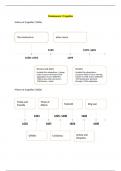
History of tragedies (1500s)
Titus Andronicus Julius Caesar
1595 1599–1601
1590–1593 1599
Romeo and Juliet Hamlet
Notable film adaptations: George Notable film adaptations:
Cukor’s Oscar-nominated 1936 Laurence Olivier’s Oscar-winning
adaptation; Franco Zeffirelli's Hamlet in 1948; Franco Zeffirelli’s
1968 version; Baz Luhrmann's 1990 production; Kenneth
1996 Romeo + Juliet. Branagh’s 1996 adaptation
History of tragedies (1600s)
Troilus and Timon of
Cressida Athens Macbeth King Lear
1603 1605–1608 1606
1602 1605 1606 1608
Othello Coriolanus Antony and
Cleopatra
, Characteristics
Tragic protagonists
o Commonly have a tragic flaw (Hamartia)
o They become a tragic hero, develop into a bigger person in front of the
audience so when their downfall arrives it makes it even more tragic
o Often face external pressures eg. Fate, ghosts/evil spirits and other
characters
Idea of Good vs Evil, with the good being destroyed along with the bad as a
consequence
The role of fate and fortune
The protagonists desire for revenge, their greed and their emotions eg anger,
sadness etc..
Moment of Catharsis typically occurs at the end of the play
Supernatural elements that influence key events
Comic relief to lighten the dark, tragic mood often through humorous characters
Lack of poetic justice
Things end bad for everyone, good/innocent people die for example.
Characteristics within tragedies
Macbeth:
• Macbeth’s hamartia is his ambition, which leads to him becoming the King of
Scotland but also to his death. His blind ambition leads him to kill innocent people,
and ultimately die.
Hamlet:
• Hamlet’s unwavering desire for revenge after his father’s death is his fatal flaw,
leading to the death of Polonius after his hasty actions.
• Catharsis also takes place at the end of the play, with the audience sympathising for
Hamlet as Laertes and Claudius plot his death.
Romeo and Juliet:
• There is a lack of poetic justice in Romeo and Juliet as the two “star-crossed lovers”
die unnecessarily – “all are punished” [Prince Escalus].
Anomalies
Romeo and Juliet
• Could be a tragedy, as it ends with the brutal deaths at the end of the play.
• It is also however, a romance due to the passionate love between Romeo and Juliet.
Hamlet, Macbeth and King Lear are all examples of tragedy.
• Despite this they all have small scenes/lines that are humorous to diffuse tension.
Why have tragedies been so popular throughout history?
• It is due to something that tragic plays provide called catharsis.
• When people go and watch a piece of theatre and the main theme is tragedy it
enables them to purge all of their negative emotions such as anger, frustration and
sorrow.
• This process has been proven to improve a person’s drive and therefore
effectiveness within society.
History of tragedies (1500s)
Titus Andronicus Julius Caesar
1595 1599–1601
1590–1593 1599
Romeo and Juliet Hamlet
Notable film adaptations: George Notable film adaptations:
Cukor’s Oscar-nominated 1936 Laurence Olivier’s Oscar-winning
adaptation; Franco Zeffirelli's Hamlet in 1948; Franco Zeffirelli’s
1968 version; Baz Luhrmann's 1990 production; Kenneth
1996 Romeo + Juliet. Branagh’s 1996 adaptation
History of tragedies (1600s)
Troilus and Timon of
Cressida Athens Macbeth King Lear
1603 1605–1608 1606
1602 1605 1606 1608
Othello Coriolanus Antony and
Cleopatra
, Characteristics
Tragic protagonists
o Commonly have a tragic flaw (Hamartia)
o They become a tragic hero, develop into a bigger person in front of the
audience so when their downfall arrives it makes it even more tragic
o Often face external pressures eg. Fate, ghosts/evil spirits and other
characters
Idea of Good vs Evil, with the good being destroyed along with the bad as a
consequence
The role of fate and fortune
The protagonists desire for revenge, their greed and their emotions eg anger,
sadness etc..
Moment of Catharsis typically occurs at the end of the play
Supernatural elements that influence key events
Comic relief to lighten the dark, tragic mood often through humorous characters
Lack of poetic justice
Things end bad for everyone, good/innocent people die for example.
Characteristics within tragedies
Macbeth:
• Macbeth’s hamartia is his ambition, which leads to him becoming the King of
Scotland but also to his death. His blind ambition leads him to kill innocent people,
and ultimately die.
Hamlet:
• Hamlet’s unwavering desire for revenge after his father’s death is his fatal flaw,
leading to the death of Polonius after his hasty actions.
• Catharsis also takes place at the end of the play, with the audience sympathising for
Hamlet as Laertes and Claudius plot his death.
Romeo and Juliet:
• There is a lack of poetic justice in Romeo and Juliet as the two “star-crossed lovers”
die unnecessarily – “all are punished” [Prince Escalus].
Anomalies
Romeo and Juliet
• Could be a tragedy, as it ends with the brutal deaths at the end of the play.
• It is also however, a romance due to the passionate love between Romeo and Juliet.
Hamlet, Macbeth and King Lear are all examples of tragedy.
• Despite this they all have small scenes/lines that are humorous to diffuse tension.
Why have tragedies been so popular throughout history?
• It is due to something that tragic plays provide called catharsis.
• When people go and watch a piece of theatre and the main theme is tragedy it
enables them to purge all of their negative emotions such as anger, frustration and
sorrow.
• This process has been proven to improve a person’s drive and therefore
effectiveness within society.


