

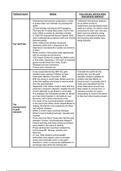
Political Impact Details How and why did this affect
international relations?
- Abandoned international cooperation in order It effected international relations
to protect their own interests by protectionist as countries turned to
tariffs isolationism and decreased world
- US had already introduced the Emergency trade as a whole. As nations were
Tariff and the Fordney-McCumber Tariff in the consumed for their own recovery
early 1920s to protect its domestic markets there was less attention being
- In 1930 US imposed the Smoot-Hawley Tariff played to international disputes
which extended the protective tariff over 20,000 and ensuring that treaties were
imported goods being followed.
- Other nations had already introduced
The Tariff War
retaliatory tariffs and in response to the
Depression increased the number and severity
of them
- Britain turned to favourable trade agreements
with its colonies and dominions
- 1932 Import Duties Act ended the British policy
of free trade, imposing a 10% tariff on imported
goods except those from India, South
Rhodesia and the Dominions
- France soon followed suit
- It was suspended during WW, the gold It divided the world into the
standard was restored in Britain by then sterling bloc and the gold
Chancellor Winston Churchill in 1925 standard. Britain’s isolationist
- With the slump in world trade, Britain was one policies had bad effects on
of the first leading economies to remove itself America and it is possible that if
from the gold standard trade was maintained that the
- September 1931 Britain made it clear that this Great Depression would have
would be a long-term decision, despite US and been easier to recover from. It
French attempts to get Britain to reconsider showed countries no longer
- The strategy had immediate benefits for Britain cooperating to resolve the issues
as it had more freedom to stimulate its own at hand but rather looking inward.
economy, but it came at America’s cost
- The value of the pound decreased compared
to the cost of the dollar, which helped Britain by
The
making US imports more expensive and their
abandonment
own exports cheaper
of gold - Within a month many countries followed
standard
Britain’s lead including Denmark, Sweden and
Canada
- There were two blocs- those who had the gold
standard, France, Czechoslovakia, Belgium,
Poland and Italy and those whose currencies
were linked to the value of sterling
- These sterling bloc countries included the
Commonwealth, Norway, Sweden and
Denmark
- 27 July 1933, British Commonwealth
Declaration was signed- aims to increase
prices and eventually return to the gold
standard in order to ensure the stabilisation of
exchange rates within the sterling bloc
international relations?
- Abandoned international cooperation in order It effected international relations
to protect their own interests by protectionist as countries turned to
tariffs isolationism and decreased world
- US had already introduced the Emergency trade as a whole. As nations were
Tariff and the Fordney-McCumber Tariff in the consumed for their own recovery
early 1920s to protect its domestic markets there was less attention being
- In 1930 US imposed the Smoot-Hawley Tariff played to international disputes
which extended the protective tariff over 20,000 and ensuring that treaties were
imported goods being followed.
- Other nations had already introduced
The Tariff War
retaliatory tariffs and in response to the
Depression increased the number and severity
of them
- Britain turned to favourable trade agreements
with its colonies and dominions
- 1932 Import Duties Act ended the British policy
of free trade, imposing a 10% tariff on imported
goods except those from India, South
Rhodesia and the Dominions
- France soon followed suit
- It was suspended during WW, the gold It divided the world into the
standard was restored in Britain by then sterling bloc and the gold
Chancellor Winston Churchill in 1925 standard. Britain’s isolationist
- With the slump in world trade, Britain was one policies had bad effects on
of the first leading economies to remove itself America and it is possible that if
from the gold standard trade was maintained that the
- September 1931 Britain made it clear that this Great Depression would have
would be a long-term decision, despite US and been easier to recover from. It
French attempts to get Britain to reconsider showed countries no longer
- The strategy had immediate benefits for Britain cooperating to resolve the issues
as it had more freedom to stimulate its own at hand but rather looking inward.
economy, but it came at America’s cost
- The value of the pound decreased compared
to the cost of the dollar, which helped Britain by
The
making US imports more expensive and their
abandonment
own exports cheaper
of gold - Within a month many countries followed
standard
Britain’s lead including Denmark, Sweden and
Canada
- There were two blocs- those who had the gold
standard, France, Czechoslovakia, Belgium,
Poland and Italy and those whose currencies
were linked to the value of sterling
- These sterling bloc countries included the
Commonwealth, Norway, Sweden and
Denmark
- 27 July 1933, British Commonwealth
Declaration was signed- aims to increase
prices and eventually return to the gold
standard in order to ensure the stabilisation of
exchange rates within the sterling bloc


