

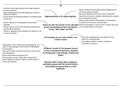
• First two months little progress was made towards a
• Had to consider the emergency food consignments to
German settlement
• Partly organisational and Allied statesmen formed a central and eastern Europe
‘Cabinet of Nations’ • Set up the Supreme Economic Council to deal with
• Could not ignore pressing problems of immediate post Representatives of 27 states attended financial and economic problems affecting both occupied
war Europe. and unoccupied Germany.
• Easing of the German food blockade in exchange for
• Neither Russia nor the defeated enemy powers surrender of the German merchant fleet.
attended. Power lay with the Council of Ten, attended• Monitor the progress of the civil war in Russia pros and
• Russia was torn by civil war between the Bolsheviks by two representatives each from Britain, cons of Allied military intervention
and the White Russians. France, Italy, Japan and USA
• Efforts to negotiate a truce between the factions in the
civil war had failed.
58 Committees set up to draft clauses of the • Work was handicapped by the absence of any
treaties of peace central coordinating body
• Committees worked in isolation resulting in
contradictory solutions
• Organisation of the conference was streamlined as a
result of Lloyd George’s controversial Fontainebleau
memorandum. 24 March, Council of Ten became Council
• Fear that the Allies might drive Germany into the arms of Four to streamline decisions. Attended
of the Bolsheviks by Clemenceau, Lloyd George, Orlando and
• Secret discussions amongst the four Wilson
• Then became council of three after Orlando left in
protest against its refusal to agree to Italian claims in
Fiume and Dalmatia Decision taken to drop idea of signing a
preliminary peace with the Central Powers,
and instead proceed quickly to a final
settlement
• Had to consider the emergency food consignments to
German settlement
• Partly organisational and Allied statesmen formed a central and eastern Europe
‘Cabinet of Nations’ • Set up the Supreme Economic Council to deal with
• Could not ignore pressing problems of immediate post Representatives of 27 states attended financial and economic problems affecting both occupied
war Europe. and unoccupied Germany.
• Easing of the German food blockade in exchange for
• Neither Russia nor the defeated enemy powers surrender of the German merchant fleet.
attended. Power lay with the Council of Ten, attended• Monitor the progress of the civil war in Russia pros and
• Russia was torn by civil war between the Bolsheviks by two representatives each from Britain, cons of Allied military intervention
and the White Russians. France, Italy, Japan and USA
• Efforts to negotiate a truce between the factions in the
civil war had failed.
58 Committees set up to draft clauses of the • Work was handicapped by the absence of any
treaties of peace central coordinating body
• Committees worked in isolation resulting in
contradictory solutions
• Organisation of the conference was streamlined as a
result of Lloyd George’s controversial Fontainebleau
memorandum. 24 March, Council of Ten became Council
• Fear that the Allies might drive Germany into the arms of Four to streamline decisions. Attended
of the Bolsheviks by Clemenceau, Lloyd George, Orlando and
• Secret discussions amongst the four Wilson
• Then became council of three after Orlando left in
protest against its refusal to agree to Italian claims in
Fiume and Dalmatia Decision taken to drop idea of signing a
preliminary peace with the Central Powers,
and instead proceed quickly to a final
settlement


