

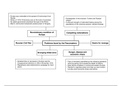
• Europe was vulnerable to the spread of Communism from
Russia. • Disintegration of the Austrian, Turkish and Russian
• Winter of 1918-19 Germany was on the brink of revolution. empire.
• No stable government anywhere the east of the Rhine. • Continued strength of nationalist feeling among the
• March, communism temporarily seized power in Hungary. populations of the victorious powers- wanted revenge.
Revolutionary condition of Competing nationalisms
Europe
Russian Civil War Problems faced by the Peacemakers Desire for revenge
Diverging Allied aims Hunger, disease and
economic chaos
• Greatest blow to real peace in Europe was the • Fear of revolution intensified by the influenza pandemic
Congressional elections in USA in November 1918. which by spring 1919 caused the death of millions.
• Republicans were determined to campaign for hard • Near famine conditions in central and eastern Europe
peace • Wanted to negotiate peace and draw up new frontiers
but also avert economic chaos and famine
Russia. • Disintegration of the Austrian, Turkish and Russian
• Winter of 1918-19 Germany was on the brink of revolution. empire.
• No stable government anywhere the east of the Rhine. • Continued strength of nationalist feeling among the
• March, communism temporarily seized power in Hungary. populations of the victorious powers- wanted revenge.
Revolutionary condition of Competing nationalisms
Europe
Russian Civil War Problems faced by the Peacemakers Desire for revenge
Diverging Allied aims Hunger, disease and
economic chaos
• Greatest blow to real peace in Europe was the • Fear of revolution intensified by the influenza pandemic
Congressional elections in USA in November 1918. which by spring 1919 caused the death of millions.
• Republicans were determined to campaign for hard • Near famine conditions in central and eastern Europe
peace • Wanted to negotiate peace and draw up new frontiers
but also avert economic chaos and famine


