

#1 The birds & the bees
LEARNING GOALS
Difference between phenotype and genotype
- How is DNA formed?
- How does Myosis / Mytosis work?
- How does gene expression / trait inheritance work?
- What are the different stages of prenatal development?
- What are genetic disorders?
- What are teratogens?
SELF STUDY
PRINCIPLES OF HEREDITARY TRANSMISSION
Conception
-> the moment of fertilization, when a sperm penetrates an ovum, forming a zygote
Zygote
=> a single cell formed at conception from the union of sperm & ovum
-> sperm penetrates the lining of an ovum -> biochemical reaction repels other sperm cells – actual sperm cell begins
to disintegrate + releasing its genetic material; ovum also releases its genetic material => new cell nucleus forms
around the hereditary information
Hereditary Material
-> chromosomes
=> a threadlike structure made up of genes; humans: 46 chromosomes in the nucleus of the each body cell
-> each of them consists of thousands of chemical segments
-> come in matching pairs, each member of a pair corresponds to the other in size, shape, and the hereditary
functions it serves; each parent contribute 23 chromosomes to each of their children
=> genes
-> basic units of hereditary cells that work to build a single protein
-> hereditary blueprints for development that are transmitted unchanged from generation
to generation
-> are stretches of deoxyribonuclei acid (DNA)
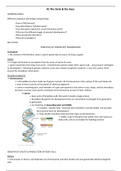
=> complex, “double-helix” molecule that resembles a twisted ladder and provides
the chemical basis for development
=> long, double stranded molecules that make up chromosomes
-> mRNA: copy of the gene that travels from cell nucleus to
body cells; acts as a template for building proteins
GROWTH OF ZYGOTE & PRODUCTION OF BODY CELLS
Mitosis
=> the process in which a cell duplicates its chromosomes and then divides into two genetically identical daughter
cells
,-> zygote divides into two cells (4, 8, 16 etc) -> before each division -> cell duplicates its 46 chromosomes -> sets
more in opposite directions -> division proceeds
=> two new cells with 23 identical pairs of chromosomes
The Germ (Sex) Cells
-> serve one special hereditary function – they produce gametes (=> sperm in males & ova in females) -> different
type of cell production
-> differs to mitosis as the resulting cells are able to join with gametes to create a unique cell => unique individual
Meiosis
=> the process by which a germ cell divides, producing gametes that each contain half of the parent cell’s original
complement of chromosomes (male & female products of meiosis contain 23 chromosomes)
1) each of the germ cell’s original chromosomes duplicates itself & the duplicate remains attached
2) crossing-over takes place among adjacent chromosomes, thus creating new hereditary combinations
3) the original cell now divides to form to new cells, each of them has 23 duplicated chromosomes
4) each chromosome and its duplicate now split and segregate into separate gametes => each gamete has
half of the chromosomes of its original cell
,Crossing-Over
=> a process in which genetic material is exchanged between pairs of chromosomes during meiosis
HEREDITARY UNIQUENESS
=> matter of chance which of the two chromosomes will end up in a particular new cell
Independent assortment
=> the principle that each pair of chromosomes segregates independently of all other chromosome pairs during
meiosis
-> many different combinations of chromosomes could result from the meiosis of a single germ cell
Autosomes
=> the 22 pairs of human chromosomes that are identical in males & females; are homologous – they are similar in
shape and size
-> sex is determined by the 23rd pair => sex chromosome
Sex chromosomes
X chromosome
=> the larger of the two sex chromosomes; normal females have XX
Y chromosome
=> the shorter of the two sex chromosomes; normal males have XY
-> child’s sex is determined whether an X-bearing or a Y-bearing sperm fertilizes the ovum
GENE EXPRESSION
Alleles
=> alternative forms of a gene that can appear at a particular site on a chromosome
- dominant alleles
=> a relatively powerful gene that is expressed phenotypically and masks the effect of a less
powerful gene
- recessive alleles
=> a less powerful gene that is not expressed phenotypically when paired with a dominant allele
Homozygous
=> having inherited two alleles for an attribute that are identical in their effects
-> people whose genotype for an attribute consists of two alleles of the same kind -> e.g. an NN individual is
homozygous for normal vision -> will only pass genes for normal vision to children (vice versa nn)
Heterozygous
= having inherited two alleles for an attribute that have different effects
-> Nn -> he/she has inherited alternative forms of alleles -> will have normal vision because it’s dominant, but could
also pass the recessive form to children
, -Genetic imprinting -X linked -If N inhibited -> fails -Intermediate outcome
Codominance
-> condition in which two heterozygous but equally powerful alleles produce a phenotype in which both genes are
fully & equally expressed
-> the phenotype they produce is a compromise between the two genes -> e.g. human blood types A + B are equally
expressive, neither dominates the other
-> another type= two heterozygous alleles are stronger than the other but fails to mask all of the other’s effect
-> sickle-cell anemia
=> a genetic blood disease that causes red blood cells to assume an unusual sickle shape & to become
inefficient at distributing oxygen
-> but also helps to combat malaria
=> example of good/bad genetic mutation -> genetic abnormality
Sex-Linked Inheritance
=> an attribute determined by a recessive gene that appears on X chromosomes -> more likely to characterize males
-> related to sex chromosomes, very predictable
-> because they don’t have a second X chromosome to combat the gene on the other chromosome
-> are determined by genes located on sex chromosomes
-> occurs more often on X chromosomes and therefore more on males because Y won’t block the dominant colour
blindness gene
Polygenic Inheritance
-> Polygenic Traits: a characteristic that is influenced by the actions of many genes rather than a single pair (e.g.:
height, weight, intelligence, skin colour, temperament, susceptibility to cancer
-> Pleiotropic: producing or having multiple effects from a single gene
HEREDITARY DISORDERS
Congenital defect
-> a problem that is present (not necessarily apparent) at birth; such defects may stem from genetic & prenatal
influences or from complications of the birth process
Abnormalities of Sex Chromosomes
LEARNING GOALS
Difference between phenotype and genotype
- How is DNA formed?
- How does Myosis / Mytosis work?
- How does gene expression / trait inheritance work?
- What are the different stages of prenatal development?
- What are genetic disorders?
- What are teratogens?
SELF STUDY
PRINCIPLES OF HEREDITARY TRANSMISSION
Conception
-> the moment of fertilization, when a sperm penetrates an ovum, forming a zygote
Zygote
=> a single cell formed at conception from the union of sperm & ovum
-> sperm penetrates the lining of an ovum -> biochemical reaction repels other sperm cells – actual sperm cell begins
to disintegrate + releasing its genetic material; ovum also releases its genetic material => new cell nucleus forms
around the hereditary information
Hereditary Material
-> chromosomes
=> a threadlike structure made up of genes; humans: 46 chromosomes in the nucleus of the each body cell
-> each of them consists of thousands of chemical segments
-> come in matching pairs, each member of a pair corresponds to the other in size, shape, and the hereditary
functions it serves; each parent contribute 23 chromosomes to each of their children
=> genes
-> basic units of hereditary cells that work to build a single protein
-> hereditary blueprints for development that are transmitted unchanged from generation
to generation
-> are stretches of deoxyribonuclei acid (DNA)
=> complex, “double-helix” molecule that resembles a twisted ladder and provides
the chemical basis for development
=> long, double stranded molecules that make up chromosomes
-> mRNA: copy of the gene that travels from cell nucleus to
body cells; acts as a template for building proteins
GROWTH OF ZYGOTE & PRODUCTION OF BODY CELLS
Mitosis
=> the process in which a cell duplicates its chromosomes and then divides into two genetically identical daughter
cells
,-> zygote divides into two cells (4, 8, 16 etc) -> before each division -> cell duplicates its 46 chromosomes -> sets
more in opposite directions -> division proceeds
=> two new cells with 23 identical pairs of chromosomes
The Germ (Sex) Cells
-> serve one special hereditary function – they produce gametes (=> sperm in males & ova in females) -> different
type of cell production
-> differs to mitosis as the resulting cells are able to join with gametes to create a unique cell => unique individual
Meiosis
=> the process by which a germ cell divides, producing gametes that each contain half of the parent cell’s original
complement of chromosomes (male & female products of meiosis contain 23 chromosomes)
1) each of the germ cell’s original chromosomes duplicates itself & the duplicate remains attached
2) crossing-over takes place among adjacent chromosomes, thus creating new hereditary combinations
3) the original cell now divides to form to new cells, each of them has 23 duplicated chromosomes
4) each chromosome and its duplicate now split and segregate into separate gametes => each gamete has
half of the chromosomes of its original cell
,Crossing-Over
=> a process in which genetic material is exchanged between pairs of chromosomes during meiosis
HEREDITARY UNIQUENESS
=> matter of chance which of the two chromosomes will end up in a particular new cell
Independent assortment
=> the principle that each pair of chromosomes segregates independently of all other chromosome pairs during
meiosis
-> many different combinations of chromosomes could result from the meiosis of a single germ cell
Autosomes
=> the 22 pairs of human chromosomes that are identical in males & females; are homologous – they are similar in
shape and size
-> sex is determined by the 23rd pair => sex chromosome
Sex chromosomes
X chromosome
=> the larger of the two sex chromosomes; normal females have XX
Y chromosome
=> the shorter of the two sex chromosomes; normal males have XY
-> child’s sex is determined whether an X-bearing or a Y-bearing sperm fertilizes the ovum
GENE EXPRESSION
Alleles
=> alternative forms of a gene that can appear at a particular site on a chromosome
- dominant alleles
=> a relatively powerful gene that is expressed phenotypically and masks the effect of a less
powerful gene
- recessive alleles
=> a less powerful gene that is not expressed phenotypically when paired with a dominant allele
Homozygous
=> having inherited two alleles for an attribute that are identical in their effects
-> people whose genotype for an attribute consists of two alleles of the same kind -> e.g. an NN individual is
homozygous for normal vision -> will only pass genes for normal vision to children (vice versa nn)
Heterozygous
= having inherited two alleles for an attribute that have different effects
-> Nn -> he/she has inherited alternative forms of alleles -> will have normal vision because it’s dominant, but could
also pass the recessive form to children
, -Genetic imprinting -X linked -If N inhibited -> fails -Intermediate outcome
Codominance
-> condition in which two heterozygous but equally powerful alleles produce a phenotype in which both genes are
fully & equally expressed
-> the phenotype they produce is a compromise between the two genes -> e.g. human blood types A + B are equally
expressive, neither dominates the other
-> another type= two heterozygous alleles are stronger than the other but fails to mask all of the other’s effect
-> sickle-cell anemia
=> a genetic blood disease that causes red blood cells to assume an unusual sickle shape & to become
inefficient at distributing oxygen
-> but also helps to combat malaria
=> example of good/bad genetic mutation -> genetic abnormality
Sex-Linked Inheritance
=> an attribute determined by a recessive gene that appears on X chromosomes -> more likely to characterize males
-> related to sex chromosomes, very predictable
-> because they don’t have a second X chromosome to combat the gene on the other chromosome
-> are determined by genes located on sex chromosomes
-> occurs more often on X chromosomes and therefore more on males because Y won’t block the dominant colour
blindness gene
Polygenic Inheritance
-> Polygenic Traits: a characteristic that is influenced by the actions of many genes rather than a single pair (e.g.:
height, weight, intelligence, skin colour, temperament, susceptibility to cancer
-> Pleiotropic: producing or having multiple effects from a single gene
HEREDITARY DISORDERS
Congenital defect
-> a problem that is present (not necessarily apparent) at birth; such defects may stem from genetic & prenatal
influences or from complications of the birth process
Abnormalities of Sex Chromosomes


