LCSW Exam Therapist Development Center Exam Solved 100%
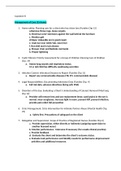
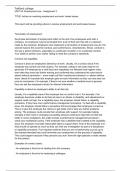
A group for women experiencing depression has been meeting for 3 weeks. Several group members approach the group leader expressing concern that another group member regularly interrupts and dominates the conversation. What stage of group formation is the group most likely in? A. Forming B. Storming C. Norming D. Performing - ANSWERThe correct answer is B: Storming. During this stage it is common for subgroups to emerge, like the one approaching the leader. A social worker has been meeting with a client for two years who is about to graduate from college and move back to her home state. The client wishes to continue therapy with the social worker via teletherapy. The social worker is only licensed in the state the social worker resides. What is the FIRST thing the social worker should do? A. Decline to provide teletherapy because it is illegal to do so across state lines. B. Determine whether the social worker's state board allows teletherapy across state lines. C. Determine whether the state board of the client's residence allows teletherapy across state lines. D.Continue to provide therapy due to the longstanding relationship established between therapist and client. - ANSWERThe correct answer is B: to determine whether the social worker's state board allows teletherapy across state lines. If they do, then we could do C after this (if the social worker's state board does not allow this, then there would be no need to do C, which is why we would do B first). A is incorrect because that is not a true statement as some states do allow this. D is similarly incorrect because it does not acknowledge the fact that some states do not allow teletherapy across state lines. (Even if there is a longstanding relationship). A social worker meets with a 22-year-old woman who reports she is experiencing increased feelings of anxiety, agitation, and irritability. What should the social worker do NEXT?A. Consider a diagnosis of hyperthyroidism B. Refer the client for a psychiatric evaluation C. Complete a biopsychosocial assessment D. Refer the client for a medical evaluation - ANSWERThe correct answer is D, to refer the client for a medical evaluation. The client reports increased feelings of anxiety, agitation, and irritability. Before doing anything else, we want to discuss the need for a medical evaluation to rule out a possibly underlying medical reason for her condition. While we aren't expected to know any and every medical condition, we are expected to know that a medical referral for new symptoms is best practice. A is outside of our scope of practice; it wouldn't be our job to consider this specific medical diagnosis, but to refer her to someone who can rule out this and any other underlying biological cause for her symptoms. B is incorrect, because while at some point we may make a referral to a psychiatrist for medication, it is not what we would do FIRST. C could occur after we do D. All of the following statements describe defense mechanisms EXCEPT: A. Conscious behavior used by the client to protect the client from the influence of the therapist. B. Justifying actions or thoughts to make them seem acceptable when unconsciously they are not. C. Rejecting or attributing unacceptable aspects of one's personality to another individual. D. The process of protecting oneself from anxiety, feelings of guilt, or undesirable thoughts. - ANSWERThe best answer here would be A. If we look at the definition provided above we notice that B, C, and D all incorporate various aspects of defense mechanisms. On the other hand, A is discussing conscious behaviors or thoughts, whereas defense mechanisms are on a more unconscious level. That is why as clinicians we need to help client's identify the various defense mechanisms they may use and bring them to a conscious level. A social worker has been meeting with a 28-year-old woman for the past six months to work on issues of depression and suicidal ideation. The social worker observes that on days that she meets with this client, later in the day she spends a lot of time thinking about death and her mood is lower. What should the social worker do FIRST? A. Use her emotional reaction to explore how the client's suicidal ideation may be impacting those around her. B. Seek supervision. C. Begin meeting with an individual therapist. D. Refer the client to someone who specializes in depression and suicide. - ANSWERThe correct answer is B, to seek supervision. A is inappropriate because we should not be using countertransference (which is about our emotional reactions as the therapist) in therapy. Although it is possible that the therapist may begin their own therapy (C) at some point, this isn't the FIRST thing we would do. Individual therapy is something that could be discussed in supervision as one way to manage the therapist's countertransference. D is premature, as the therapist and client have been meeting for 6 months and have an established relationship. At this point, there is no need to refer out. A social worker has been meeting with a 28-year-old woman for the past six months to work on issues of depression and suicidal ideation. The social worker observes that on days that she meets with this client, later in the day she spends a lot of time thinking about death and experiences a lower mood. What is this an example of? A. Poor Boundaries. B. Transference. C. Countertransference. D. Trauma Response. - ANSWERThe correct answer is C, countertransference. The therapist is having an emotional reaction to what the client is sharing. A social worker meets with a 14-year-old client who shares with the social worker that she is pregnant. She does not want her parents to know she is pregnant. The social worker practices in a jurisdiction where social workers are required to share this information with the parents of a minor child. What should the social worker do FIRST: A. Maintain confidentiality per the client's request B. Maintain confidentiality due to safety issues that may arise if the parents are informed of her pregnancy C. Inform the client that she is required to disclose this information with the client's parents D. Inform the client's parents of the client's pregnancy - ANSWERThe correct answer is C. While we may want to honor our client's self-determination and her wishes to have confidentiality maintained (A), the question stem specifies that the social worker practices in a jurisdiction where we must inform the client's parents of her pregnancy. Despite our own beliefs about this, we are required to follow the law. (B) is incorrect because nothing in the question stem states that a safety issue is present regarding telling the parents. While her parents will need to be informed of her pregnancy (D), telling the client about this (C) should come first. Additionally, we should explore with the client how she wants her parents to be informed; she may want to be a part of this rather than the social worker disclosing this on her behalf. A 32 year-old man seeks treatment from a social worker for ongoing problems with both his personal and professional functioning. He reports that even though he has been moderately successful in his career, he continues to feel uncertain about his abilities, feeling as if at any moment he will be exposed as a fraud. When the social worker inquires about his personal relationships, he looks down and says that he doesn't really let anyone get close to him. According to Erikson, this client likely experienced difficulty during which developmental stage? A. Trust vs. Mistrust B. Industry vs. Inferiority C. Autonomy vs. Shame and Doubt D. Initiative vs. Guilt - ANSWERC, Autonomy vs. Shame and Doubt. The prevailing characteristic that comes through about the client is his lack of self-assurance. We see him doubting himself professionally and perhaps also personally. This may explain his tendency to keep others at arm's length (protecting himself from failure). If the 'building blocks' strategy doesn't work for you, keeping playing with it and find something that does - it's not important why it works, only that it helps you remember and apply the information when you need to! A social work supervisor meets with one of her supervisees for supervision. During this meeting, the supervisee shares they have become sexually involved with a client. They share they want to refer the client to another social worker in order to pursue a relationship with them. What is the FIRST action the supervisor should take? A. Immediately report the social worker to the board B. Assist the supervisee in transferring the client to a different social worker C. Discuss the ethical violations that are occurring with the supervisee D. Terminate her supervisory relationship with the social worker - ANSWERThe correct answer is C, to discuss the ethical violations that are occurring with the supervisee. While A, B, and D are all possible actions that the supervisor could take at some point, we should always start by speaking with the social worker first. The social worker is engaging in unethical behavior, so the supervisor needs to address the ethical violations the social worker is engaging in. The supervisor may report the supervisee to their board (A), but it wouldn't occur before talking directly to the supervisee. The supervisee should absolutely end their relationship with the client. Even once that occurs, the client should be transferred to a different social worker (B). But again, this wouldn't happen until first speaking with the supervisee about the ethical violations. If the supervisee isn't willing to engage in ethical practice, they may decide they're unable to continue providing supervision (D). This still wouldn't occur until after first speaking with the supervisee. A woman is referred to a social worker by her EAP. The referral indicates that the woman is frequently absent from work and has difficulty completing projects. During the initial assessment, the woman avoids answering questions about her relationship with her spouse. The woman becomes tearful when asked about her family and social supports. The woman shares that her husband does not "allow" her to go out in the evening or on weekends. She goes on to tell the social worker that she is pregnant, but has not told her husband about the baby. What should the social worker do NEXT? Refer the client to a doctor for prenatal care Suggest couples treatment to address issues of stress around the move Redirect the client back to issues of absence and incomplete job performance Assess the woman for domestic violence and help her create a safety plan - ANSWERIn the item above, the strongest answer is D, since the stem provides the test-taker with multiple risk factors for domestic violence. Answer A is incorrect because our priority is to assess for domestic violence. A referral to a doctor for prenatal care would follow risk assessment and safety planning. Additionally, answer A wrongly assumes the woman is not receiving prenatal care. Answer B is incorrect as we would need to rule out domestic violence before considering couples counseling. Couples counseling is contraindicated if domestic violence is suspected. Answer C is incorrect because issues of safety warrant immediate attention and this answer disregards the red flags raised in the vignette. A hospital-based social worker meets with a new client who was admitted following a domestic assault perpetrated by her boyfriend. The woman shares that her boyfriend, with whom she lives, was upset because she was texting with a male coworker and went out for drinks with him after work. She shares that her boyfriend is very insecure and she should have known how this would affect him due to similar instances in the past. She tells the therapist that her boyfriend felt terrible about the incident, brought her flowers while she was in the hospital, and promised never to hurt her again. What should the social worker do FIRST? Assist client in identifying alternative living arrangements due to risk of additional violence. Provide psychoeducation regarding the cycle of violence and offer resources for victims of domestic violence. Provide client with referral to anger management classes for her boyfriend. Assess the clie - ANSWERThe correct answer in this LCSW practice question is B. It is clear that domestic violence exists-the woman was hospitalized following the most recent incident and indicates similar instances in the past. The client appears to be unaware of the cycle of violence. It would be important to shed light on this dynamic so the client has an awareness of the likelihood of future violence and how to identify when it is more likely to occur. In addition, providing resources to the client would allow her to access support on her own terms. Answer A pushes the therapist's agenda, as the client has not indicated a desire to locate alternative living arrangements. Answer C is incorrect because the focus should be on the client, not her boyfriend. Finally, the actions described in answer D could be done after B, but the priority is helping the client understand the cycle she is engaged in with her boyfriend and providing resources. An 82-year-old client was admitted to a hospital after experiencing a fall down the stairs. The client is ready to be discharged from the hospital and wishes to return home where she lives independently despite the fact that she is still recovering physically from her injuries. Both the client's doctors and her adult children want the client to move into an assisted living facility where she can be better supported during her recovery, but the client is adamant about living independently. What should the social worker do? A. Work with the client to determine ways she can support her independence while maintaining safety B. Schedule a competency hearing C. Explain the benefits of assisted living to the client D. Schedule the client's discharge to an assisted living facility for the duration of her recovery - ANSWERThe correct answer is A, to work with the client to determine ways she can support her independence while maintaining safety. There is nothing in the question stem that indicates a need for a competency hearing (B). The client has already expressed her desire to live at home, so C and D are both going against the client's self-determination. Answer option A honors the client's self-determination while also addressing potential safety concerns that may arise during her recovery. A local social service agency hires a social worker to address the service gaps within the local community, identifying that hispanic clients are being served at a lower rate than other populations within the community. What should the social worker do FIRST to advocate on behalf of this community: A. Determine the social service needs of the Hispanic Community B. Identify leaders of the Hispanic community C. Meet with leaders of the Hispanic community D. Form a task force of interested community members - ANSWERThe best place to start is by identifying leaders of the Hispanic Community (B). Before meeting with leaders of the Hispanic community (C), we must first identify who those leaders are. Once we identify who the leaders are, we can meet with them. In meeting with them, they may even be able to provide us some information on what the specific social service needs are of the Hispanic Community (A). If not, we could next form a task force (D). Then, with the task force, we could then conduct a needs assessment (using the cultural knowledge and expertise from steps B and C to inform our assessment). A 16-year-old girl and her parents are referred to a social worker by the child's pediatrician for concerns around social anxiety and depression. The family resides in a state where parental consent is required for treatment of anyone under the age of 18. What is BEST practice for the social worker during the initial session with the girl and her parents? A. Obtain written consent from the parents and discuss with the daughter how confidentiality will be maintained. B. Obtain written consent from the parents, obtain verbal consent from the daughter, and discuss confidentiality considerations with both the parents and daughter. C. Obtain written consent from the parents, obtain verbal consent from the daughter, and discuss with the parents how confidentiality will be maintained due to the daughter's age. D. Obtain written consent from the daughter, obtain verbal consent from the parents, and discuss confidentiality co - ANSWERB is our best answer because it does three important things: 1. It acknowledges that the parents are the ones who need to formally complete consent forms. 2. It also has the daughter provide verbal consent for her therapy. While this is not required, it is best practice. 3. It has the social worker discuss confidentiality considerations with both the parents AND the daughter, which is crucial when working with minors (especially teens!). This discussion can include both what will be kept confidential between the minor and the therapist and what will be shared with the parents and why. When working with minors and their parents, this is always a discussion you want to have at the very beginning of therapy with both parties present so that everyone is on the same page. This way there (hopefully!) won't be any surprises for the parents or the teen when something is (or is not) shared. A social worker has been meeting with a 30-year-old female client for a year. The client enters her most recent session visibly upset. Clenching her fists, the client angrily reports that she found out her boyfriend has been cheating on her with her best friend for the past several months. She states, "Honestly, I could just kill them both right now." What should the social worker do FIRST? A. Inform the client that she must warn the boyfriend and best friend and notify the proper authorities B. Immediately stop the session and call the police. C. Discuss voluntary hospitalization D. Explore whether the client plans to kill them - ANSWERIn the question stem, the client made a concerning statement that warrants further exploration. Immediately contacting the boyfriend, best friend, and proper authorities (A) or stopping the session to contact the police (B) is jumping a step too far ahead. We do not yet know if the client actually plans to harm them in any way, or is simply upset about the infidelity. We do not want to jump to action without gathering information first. Nothing indicates a need to hospitalize the client (C). What we want to do FIRST is figure out whether the client actually intends to cause any serious physical harm to her boyfriend or best friend (D). If she does, then we can go ahead and do A. A clinical licensure supervisor is working with a supervisee who utilizes EMDR in her sessions with clients. The supervisor has no training or experience using EMDR, and relies on the supervisee's understanding of the practice to ensure it is being used properly. The supervisor's actions can BEST be described as: A. Unethical, because they are not properly trained and cannot provide adequate oversight or guidance. B. Unethical, because they should be trained in all therapeutic modalities to adequately provide supervision. C. Ethical, because they can utilize the supervisee's knowledge to ensure adequate supervision is provided. D. Ethical, because it is not required for a supervisor to be trained in the modalities utilized by their supervisees. - ANSWERThe correct answer is A In order to provide adequate supervision for an unlicensed supervisee, the social work supervisor should have knowledge and experience in the therapeutic modalities their supervisee is utilizing. To have no experience or training in the modality of therapy being used by a supervisee is unethical, as they will not be able to provide the necessary support and oversight to their social worker in training (A). (B) is incorrect because a supervisor is not expected to be trained in all therapeutic modalities. (C) and (D) are incorrect because providing supervision for a therapeutic modality a supervisor has no training or experience in is not ethical. A 33-year-old woman has been seeing a therapist for 2 years for treatment of Major Depressive Disorder and Generalized Anxiety Disorder. The client has experienced passive suicidal ideation for her entire adult life. During the most recent session, the client calmly shares that after rationally thinking through the pros and cons, she has made the decision to end her life within the next 48 hours. What MUST the social worker do?A. Honor the client's self-determination, because she is competent to make this decision B. Begin the process of initiating an involuntary hospitalization C. Complete a mental status exam D. Explore voluntary hospitalization - ANSWERThe correct answer is D Because the client is actively suicidal, we cannot honor her self-determination (A). There is no indication in the question stem that we need to conduct a mental status exam at this time (nor is it something we MUST do, as the question asks). Due to the severity of what she is saying, we need to pursue hospitalization regardless of her mental status. We always want to explore voluntary hospitalization (D) before pursuing involuntary hospitalization (B). An 80-year-old client meets with a social worker due to recent conflict with his adult children who are urging him to move into an assisted living facility after his wife of 60 years passed and after he began using a cane. His children express ongoing concern that as he ages, he will be unable to care for himself and meet his basic needs while living alone. The client reports that he is just as able to care for his needs now as ever before and states, "there is no way anyone is going to force me into a nursing home." What is the BEST way for the social worker to respond? A. Facilitate a discussion of the pros and cons of living in an assisted living facility and offer a family session B. Discuss the differences between a nursing home and assisted living facility C. Validate the concerns of the client's children and complete an assessment to determine the client's ability to live independently D. Acknowledge the clien - ANSWERThe correct answer is D Since the question is asking what is BEST, we want to prioritize around importance. A is incorrect because the client stated he does not want to move into a facility. Since there are no details in the question stem that indicate a need for the client to move into an assisted living facility, we want to honor his self-determination. Additionally, the man is our client, not his children. So we want to first help him identify the treatment goals he wants to work on before offering a family session. B is incorrect because again, the client has already stated he doesn't want to live in a facility. So this is not a discussion that would need to take place at this time. C is incorrect because the client is in the room with us, not his children. Further, there is no information that indicates the children's concerns are valid. There is also no reason to complete an assessment to determine his ability to live independently at this time. D is the best answer because it both honors the client's right to self-determination AND acknowledges that he is the client. 1. A therapist is meeting with a client for an initial evaluation. The client reports feeling moody and has been having many headaches. The client states that she lost a lot of weight recently and has noticed a decrease in appetite. The clinician should FIRST: A. Assess the client for suicidality B. Refer the client to a psychiatrist C. Complete a mental status exam D. Refer the client to a MD - ANSWER1. For this ASWB exam practice question, the correct answer would be D. The FIRST thing we need to do is make sure there isn't a medical reason for the client's recent physical symptoms. A lot of people choose A due to the client's report of moodiness. The key word here is what should the therapist do FIRST? It doesn't mean we wouldn't do the other answer options at some point during this session, but we need to first address the client's medical symptoms. 2. A therapist has been conducting a closed 10-week group for men living with AIDS. After the 3rd session, a group member reports to the leader that they are feeling frustrated and disconnected with other members of the group. They question whether or not they want to continue. The social worker should FIRST: A. Initiate an individual session with this group member to address their feelings of frustration and disconnect B. Tell the group member that it isn't possible to leave the group at this time due to the closed nature of the group C. Encourage the group member to bring this up in the next group session D. Use the next group session to explore how other group members are feeling and whether anyone relates to how this group member is feeling in order to encourage cohesiveness - ANSWER2. The correct answer here is C. When working with groups we want to make sure we keep any issues that come up around the group within the group. So in this case, it's important to encourage the client to address their feelings with the group. A would not keep the issue within the group, and B would not be appropriate because a group member has the right to leave a group. D could be done at some point, but not before we give the client an opportunity to share his own feelings with the group. 3. Studies that collect and analyze data from the whole study population at one point in time is called: A. Single Subject Design B. Cross-sectional Studies C. Retrospective Study D. Case Study - ANSWER3. This is a recall question based on the ASWB exam. B is the correct answer because cross-sectional studies collect data at a single point in time from participants who are a variety of ages to see how change occurs as a person ages. 4. A father recently noticed an upswing in the amount of gun violence in his neighborhood. As a result he reaches out to other members of the neighborhood to hold a meeting and discuss the impact this is having on each individual, while also looking at the ways that each member can contribute to creating change. This is an example of: A. Advocacy B. Program Development C. Community Organizing D. Social Planning - ANSWER4. C is correct because community organizing involves engaging with groups, organizations, and communities in order to bring about positive changes within the community and to solve social problems identified by members of the community. For this ASWB practice test question, the key aspect here is that the social problem has been identified by the father, who is a member of the community. A, B, and D would all be described differently. 5. A social worker is developing a program that assists youth who are coming out of the juvenile justice system in finding a job. The social worker has already conducted a needs assessment and identified goals for the program. Which of the following should be the NEXT step? A. Create an action plan along with a timeline for implementation B. Create a planning team which includes identifying key staff C. Put the identified goals in action to ensure they are productive and accurate based on the identified population D. Using the identified goals, implement an action plan and evaluate progress as needed - ANSWER5. Since the social worker has already conducted a needs assessment and identified the goals for the program, they NEXT need to create a team of people who are able to plan, develop, and implement the program. Therefore, for this ASWB practice question, B is correct. A, C, and D would be done once the social worker has created a team of people who can then oversee that the goals are put into action. 6. A 15-year-old client was recently referred to a therapist at a community counseling center for an initial assessment after throwing a chair at another student at school. The mother reports this is the first incident of this type, but that the client's parents recently divorced a month ago. In order to develop the therapeutic relationship, the therapist must FIRST: A. Go over the limitations of confidentiality with the client B. Complete a biopsychosocial assessment C. Play a game to lessen the stress of the first session D. Get a release of confidentiality from the mother to talk to the client's teacher - ANSWER6. On this ASWB practice exam, the best answer here is A. It's important for the client to be aware of the limits of confidentiality before starting therapy. B, C, and D would all be options to do NEXT, but not until the therapist has addressed confidentiality with the client. 7. A therapist receives a court order to release the records of a client who is going through a custody disagreement with his partner. The therapist is worried about releasing certain aspects of the record believing that it will be harmful to the client, so the therapist advocates to release only limited aspects of the record. The judge denies the request. The therapist SHOULD: A. Release the records to the court immediately B. Release only aspects of the records that the therapist believes aren't harmful C. Speak with a lawyer D. Speak with the client about the subpoena - ANSWER7. The best answer here is A. Since the subpoena is coming from a court directly, we must provide the court with the records. The therapist has already advocated for only part of the record to be released and since the request was denied we can't do B. We could do C and D at a later point, but not before releasing the records to the court. Between the time we receive the initial request and advocated for limited release we should have already been discussing with the client the next steps in case that request is denied. 8. During an assessment a client reports a low mood, lack of sleep, and trouble concentrating. The client reports this has been going on for the past three years. The client shares they were sexually assaulted seven years ago, but reports that they, "don't really think about it anymore." The client's MOST likely diagnosis is: A. Major Depressive Disorder B. Persistent Depressive Disorder C. Cyclothymic Disorder D. Acute Stress Disorder - ANSWER8.The best answer here is B. Persistent depressive disorder is diagnosed when symptoms have been present for at least two years. Cyclothymic disorder C also has a 2 year period, however for cyclothymic disorder to be diagnosed, hypomanic symptoms and depressive symptoms must be present for at least two years which isn't noted in this stem. A is incorrect because the symptoms are not severe enough to give a diagnosis of Major Depressive Disorder. D is incorrect because ASD is only diagnosed when the traumatic event has happened within the last month. Since the event was seven years ago, this would make D incorrect.
Written for
- Institution
- LCSW
- Course
- LCSW
Document information
- Uploaded on
- November 22, 2023
- Number of pages
- 53
- Written in
- 2023/2024
- Type
- Exam (elaborations)
- Contains
- Questions & answers
Subjects
- lcsw stuvia
-
lcsw exam therapist development center exam solved
-
a group for women experiencing depression has been
-
a social worker has been meeting with a client for