
EPIGENETICS AND PLURIPOTENCY IN MOUSE EMBRYONIC STEM CELLS
Stem cells = biological cells that can differentiate into other types of cells and can divide to produce more of the
same type of stem cells (self-renewal), in mammals two types:
- Embryonic stem cells (isolated from the inner cell mass of blastocysts)
- Adult stem cells
DIFFERENT FORMS OF CELL POTENCY DURING DEVELOPMENT IN VIVO
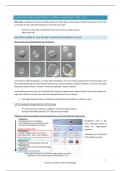
Mouse embryonic development: loss of potency
A: first fission after fertilization, H: 3 days after fertilization; inner cell mass (orange) which forms the foetus and
the trophectoderm (green) which forms the placenta, and the primitive endoderm (yellow). G: E3.5; H: E4.5 (late
blastocyst reaches uterus, “hatches” from zona pellucida, ready to implant.
In the blastocyst three axes can be defined: the embryonic-abembryonic (abemb-emb); the animal-vegetal (an-
veg); and a third axis on the same plane but perpendicular to the an-veg axis.
ICM stage already contain two defined, irreversible cell populations > potency is lost.
Further development (gastrulation) and full mouse
- 2nd linear decision: ectoderm, endoderm, mesoderm (gastrulation)
- During further differentiation, all ~200 cell types emerge
Different types of cell potency during development, can be mimicked the culture dish
Pluripotent state is the
most interesting state to
study for regenerative
purposes.
Totipotency is at the basis
of the whole cascade.
1
Summary ‘Trends in Stem Cell Biology’
,Waddington’s landscape: a differentiating cell loses developmental potential because once it
passes a pitchfork bifurcation, ridges prevent it from shifting to a different fate. Alternative
fates remain present somewhere on the landscape, but the cell cannot get to them.
Canalisation of development → epigenetic factors! as the DNA stays the same between the
cell types. E.g. methylation, histone addition
Conclusion: cells loose potency during in vivo development.
DIFFERENT TYPES OF MOUSE PLURIPOTENT CELLS IN VITRO (ONE OF THEM ES CELLS)
Origin of 3 types pluripotent mouse cells
- EC = embryonic carcinoma cells, also pluripotent
- iPSC = induced pluripotent cells, differentiated cells turned back pluripotent in vitro
Different types of in vitro pluripotent cells
- Embryonic stem cells (ESCs)
- Epiblast stem cells (EpiSCs; primed ES cells)
- Embryonal carcinoma cells (ECs; from tetra carcinoma in mouse testis from primordial germ cells (PGCs)
- Embryonic germ cells (EGCs)
- Induced pluripotent stem cells (iPSCs)
Test for pluripotency for newly derived cell lines
Mouse
- Multilineage differentiation in vitro / vivo (Germline colonization) > directed differentiation with
addition of growth factors
- Extensive proliferation in vitro under well-defined culture conditions
- Known marker genes/ proteins (Oct4, Nanog, Sox2, SSEA, etc
In practice absolute proof:
- Contribute to all somatic lineages/produce germ line (chimerism)
- Teratomas: cancer tumours; inject pluripotent cells under the skin of mice, they
multiply, and mesoderm, endoderm and ectoderm will grow > clear
indication that it works
o Can potentially be done with human cells as well
➔ Ethically controversial
2
Summary ‘Trends in Stem Cell Biology’
,Human
- Multilineage differentiation in vitro (in vivo NOT!) (Germline colonization)
- Normal, stable karyotype
- Extensive proliferation in vitro under well-defined culture conditions
- Known marker genes/ proteins (Oct4, Nanog, Sox2, SSEA, etc)
In practice absolute proof:
- NOT: Contribute to all somatic lineages/produce germ line (chimerism) Teratomas with differentiated
cells of all three germ layers (could be performed in mice; Part of ethical discussion).
Conclusion: ES cells, like some other in vitro cultured cells, are pluripotent.
APPLICATION OF ES CELLS
Why are ES cells so interesting?
- Pluripotent, self-renewal: ES cells are the only ones that will form the complete body!
- Model for embryonic development
o Regenerative medicine (grow in large quantities + differentiate)
o Generation of KO mouse
o Disease model (because differentiate into desired specialisation)
o Cytotoxicity tests (esp. during pregnancy for foetus)
- Ethical concern: can we use human ESCs? Are human embryonic stem cells human beings with full moral
status?
(Embryonal) stem cell therapies
Replace lost cells, might be useful in:
- Stroke (heart attack) → loss of muscle cells
- Duchenne muscular dystrophy → muscle degeneration (eventual
death)
- Parkinson’s disease → loss of dopamine-generating cells in the
substantia nigra, a region
- of the midbrain)
- Alzheimer
Dangers:
- Graft rejection (but not when it’s from the patient itself!; cord blood)
- Graft-vs-host
- Teratocarcinoma (formation of tumours due to the cells)
Conclusion: ES cells are very useful for regenerative medicine and to study embryonic development.
MOLECULAR MECHANISMS TO MAINTAIN PLURIPOTENCY
Embryonic stem cells
Pluripotent, (clonal) self-renewal: Different ways to inhibit differentiation in vitro:
- Pluripotency is transient in the embryo - Feeders (MEFs) + serum
- ES cells are a cultured phenomenon - Lif (as MEFs normally produce Lif) + serum
- ES cells are primed to differentiate due to - 2i (+LIF)
autocrine FGF4
3
Summary ‘Trends in Stem Cell Biology’
, Regulatory pluripotency network in ES cells
- Oct4/Nanog/Sox2 = master regulators
- The pluripotency network acts to
o Self-indue its own expression, and of their
pluripotency genes, by binding in the promotor
o Repress genes that induce differentiation
Colocalization of pluripotency network proteins
- Protein localisation on genome by ChIP-Seq
Oct4/Nanog/Sox2 also mediate enhancers: They regulate promotors and enhancers > they are the master
regulators of the cell type
Effect of manipulation of pluripotency transcription
Nott only overexpression and absence of these factors cause differentiation, but also the reduced expression. So
in vivo, perturbation of this loop is also required to trigger differentiation.
➔ General concept in stem cells that there are a few master regulators.
How does the supplements induce the pluripotency network?
this is why LIF and BMP4 are added as they start
cross talking to stabilize the pluripotency network.
Conclusion: autoregulatory loop between Oct4,
Sox2, and Nanog maintains pluripotency in ES cells
PLURIPOTENCY AND CHROMATIN STRUCTURE (EPIGENETICS)
Chromatin structure
The two main components of the epigenetic code:
- DNA methylation; methyl marks added to certain DNA
bases repress gene activity
- Histone modification: a combination of different
molecules can attach to the ‘tails’ of protein called
histones. These alter the activity of the DNA wrapped
around them.
Chromatin modifiers are important in development: if the
enzymes that put on these modifications aren’t working
properly, this can be lethal in development.
4
Summary ‘Trends in Stem Cell Biology’
Stem cells = biological cells that can differentiate into other types of cells and can divide to produce more of the
same type of stem cells (self-renewal), in mammals two types:
- Embryonic stem cells (isolated from the inner cell mass of blastocysts)
- Adult stem cells
DIFFERENT FORMS OF CELL POTENCY DURING DEVELOPMENT IN VIVO
Mouse embryonic development: loss of potency
A: first fission after fertilization, H: 3 days after fertilization; inner cell mass (orange) which forms the foetus and
the trophectoderm (green) which forms the placenta, and the primitive endoderm (yellow). G: E3.5; H: E4.5 (late
blastocyst reaches uterus, “hatches” from zona pellucida, ready to implant.
In the blastocyst three axes can be defined: the embryonic-abembryonic (abemb-emb); the animal-vegetal (an-
veg); and a third axis on the same plane but perpendicular to the an-veg axis.
ICM stage already contain two defined, irreversible cell populations > potency is lost.
Further development (gastrulation) and full mouse
- 2nd linear decision: ectoderm, endoderm, mesoderm (gastrulation)
- During further differentiation, all ~200 cell types emerge
Different types of cell potency during development, can be mimicked the culture dish
Pluripotent state is the
most interesting state to
study for regenerative
purposes.
Totipotency is at the basis
of the whole cascade.
1
Summary ‘Trends in Stem Cell Biology’
,Waddington’s landscape: a differentiating cell loses developmental potential because once it
passes a pitchfork bifurcation, ridges prevent it from shifting to a different fate. Alternative
fates remain present somewhere on the landscape, but the cell cannot get to them.
Canalisation of development → epigenetic factors! as the DNA stays the same between the
cell types. E.g. methylation, histone addition
Conclusion: cells loose potency during in vivo development.
DIFFERENT TYPES OF MOUSE PLURIPOTENT CELLS IN VITRO (ONE OF THEM ES CELLS)
Origin of 3 types pluripotent mouse cells
- EC = embryonic carcinoma cells, also pluripotent
- iPSC = induced pluripotent cells, differentiated cells turned back pluripotent in vitro
Different types of in vitro pluripotent cells
- Embryonic stem cells (ESCs)
- Epiblast stem cells (EpiSCs; primed ES cells)
- Embryonal carcinoma cells (ECs; from tetra carcinoma in mouse testis from primordial germ cells (PGCs)
- Embryonic germ cells (EGCs)
- Induced pluripotent stem cells (iPSCs)
Test for pluripotency for newly derived cell lines
Mouse
- Multilineage differentiation in vitro / vivo (Germline colonization) > directed differentiation with
addition of growth factors
- Extensive proliferation in vitro under well-defined culture conditions
- Known marker genes/ proteins (Oct4, Nanog, Sox2, SSEA, etc
In practice absolute proof:
- Contribute to all somatic lineages/produce germ line (chimerism)
- Teratomas: cancer tumours; inject pluripotent cells under the skin of mice, they
multiply, and mesoderm, endoderm and ectoderm will grow > clear
indication that it works
o Can potentially be done with human cells as well
➔ Ethically controversial
2
Summary ‘Trends in Stem Cell Biology’
,Human
- Multilineage differentiation in vitro (in vivo NOT!) (Germline colonization)
- Normal, stable karyotype
- Extensive proliferation in vitro under well-defined culture conditions
- Known marker genes/ proteins (Oct4, Nanog, Sox2, SSEA, etc)
In practice absolute proof:
- NOT: Contribute to all somatic lineages/produce germ line (chimerism) Teratomas with differentiated
cells of all three germ layers (could be performed in mice; Part of ethical discussion).
Conclusion: ES cells, like some other in vitro cultured cells, are pluripotent.
APPLICATION OF ES CELLS
Why are ES cells so interesting?
- Pluripotent, self-renewal: ES cells are the only ones that will form the complete body!
- Model for embryonic development
o Regenerative medicine (grow in large quantities + differentiate)
o Generation of KO mouse
o Disease model (because differentiate into desired specialisation)
o Cytotoxicity tests (esp. during pregnancy for foetus)
- Ethical concern: can we use human ESCs? Are human embryonic stem cells human beings with full moral
status?
(Embryonal) stem cell therapies
Replace lost cells, might be useful in:
- Stroke (heart attack) → loss of muscle cells
- Duchenne muscular dystrophy → muscle degeneration (eventual
death)
- Parkinson’s disease → loss of dopamine-generating cells in the
substantia nigra, a region
- of the midbrain)
- Alzheimer
Dangers:
- Graft rejection (but not when it’s from the patient itself!; cord blood)
- Graft-vs-host
- Teratocarcinoma (formation of tumours due to the cells)
Conclusion: ES cells are very useful for regenerative medicine and to study embryonic development.
MOLECULAR MECHANISMS TO MAINTAIN PLURIPOTENCY
Embryonic stem cells
Pluripotent, (clonal) self-renewal: Different ways to inhibit differentiation in vitro:
- Pluripotency is transient in the embryo - Feeders (MEFs) + serum
- ES cells are a cultured phenomenon - Lif (as MEFs normally produce Lif) + serum
- ES cells are primed to differentiate due to - 2i (+LIF)
autocrine FGF4
3
Summary ‘Trends in Stem Cell Biology’
, Regulatory pluripotency network in ES cells
- Oct4/Nanog/Sox2 = master regulators
- The pluripotency network acts to
o Self-indue its own expression, and of their
pluripotency genes, by binding in the promotor
o Repress genes that induce differentiation
Colocalization of pluripotency network proteins
- Protein localisation on genome by ChIP-Seq
Oct4/Nanog/Sox2 also mediate enhancers: They regulate promotors and enhancers > they are the master
regulators of the cell type
Effect of manipulation of pluripotency transcription
Nott only overexpression and absence of these factors cause differentiation, but also the reduced expression. So
in vivo, perturbation of this loop is also required to trigger differentiation.
➔ General concept in stem cells that there are a few master regulators.
How does the supplements induce the pluripotency network?
this is why LIF and BMP4 are added as they start
cross talking to stabilize the pluripotency network.
Conclusion: autoregulatory loop between Oct4,
Sox2, and Nanog maintains pluripotency in ES cells
PLURIPOTENCY AND CHROMATIN STRUCTURE (EPIGENETICS)
Chromatin structure
The two main components of the epigenetic code:
- DNA methylation; methyl marks added to certain DNA
bases repress gene activity
- Histone modification: a combination of different
molecules can attach to the ‘tails’ of protein called
histones. These alter the activity of the DNA wrapped
around them.
Chromatin modifiers are important in development: if the
enzymes that put on these modifications aren’t working
properly, this can be lethal in development.
4
Summary ‘Trends in Stem Cell Biology’


