

Chapter 01: U.S. Medical Care: A System at the Crossroads Copyright Cengage Learning. Powered by Cognero. Page 1
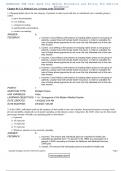
Chapter 01: U.S. Medical Care: A System at the Crossroads Copyright Cengage Learning. Powered by Cognero. Page 1 1. Charging higher prices for one category of patients in order to provide free or subsidized care to another group is called: a. price discrimination. b. cost shifting. c. categorical costing. d. reprehensible and unethical. e. creative accounting. ANSWER: b FEEDBACK: a. Incorrect. Cost shifting is the practice of charging higher prices to one group of patients, usually those with private health insurance, in order to subsidize the care of those whose payments do not cover the fully allocated cost of the care they receive. b. Correct. Cost shifting is the practice of charging higher prices to one group of patients, usually those with private health insurance, in order to subsidize the care of those whose payments do not cover the fully allocated cost of the care they receive. c. Incorrect. Cost shifting is the practice of charging higher prices to one group of patients, usually those with private health insurance, in order to subsidize the care of those whose payments do not cover the fully allocated cost of the care they receive. d. Incorrect. Cost shifting is the practice of charging higher prices to one group of patients, usually those with private health insurance, in order to subsidize the care of those whose payments do not cover the fully allocated cost of the care they receive. e. Incorrect. Cost shifting is the practice of charging higher prices to one group of patients, usually those with private health insurance, in order to subsidize the care of those whose payments do not cover the fully allocated cost of the care they receive. POINTS: 1 QUESTION TYPE: Multiple Choice HAS VARIABLES: False LEARNING OBJECTIVES: 1-1a - Emergence of the Modern Medical System DATE CREATED: 1/24/2022 3:04 AM DATE MODIFIED: 2/9/2022 7:28 AM 2. In the 1960s, individuals paid for the majority of their medical care out of pocket. Increased insurance coverage, both private and public, displaced out-of-pocket spending as the primary source of payment. By 2020, what was the forecasted percentage amount of health care spending paid by individuals? a. 6 percent b. 10.4 percent c. 11.6 percent d. 17.4 percent e. Whatever amount we are currently spending ANSWER: b FEEDBACK: a. Incorrect. The amount that individuals paid out of pocket for health care expenditures declined from 17.4 percent in the 1960s to a forecasted 10.4 percent in 2020, according to Centers for Medicare and Medicaid Services (CMS.gov). b. Correct. The amount that individuals paid out of pocket for health care DOWNLOAD THE Test Bank for Health Economics and Policy 8th Edition Henderson
Document information
- Uploaded on
- November 12, 2023
- Number of pages
- 10
- Written in
- 2023/2024
- Type
- Exam (elaborations)
- Contains
- Questions & answers


