
Management – 1IBM
TABLE OF CONTENTS
1. Managers and Management
2. Strategic Management
3. Planning
4. Foundations of Decision Making
5. HR Management
6. Creativity
7. Organisational Culture and Internationalisation
8. Corporate Social Responsibility
9. Re-Vive Guest Lecture
CHAPTER 1 – Managers and Management
1. Who are managers and where do they work?
ORGANISATION: A deliberate arrangement of people brought together to accomplish a specific
purpose.
COMMON CHARACTERISTICS OF AN ORGANISATION:
- Goals
- Structure
- People
HOW ARE MANAGERS DIFFERENT FROM NON-MANAGERIAL EMPLOYEES?
- Non-Managerial employees: Work directly on task and are not responsible for overseeing others
work.
- Managers: Direct and oversee the activities of others. May have work duties not related to
overseeing others.
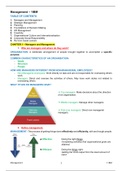
WHAT TITLES DO MANAGERS HAVE?
à Top managers: Make decisions about the direction
of an organisation.
à Middle managers: Manage other managers.
à First-Line managers: Direct non-managerial
managers.
2. Define management.
MANAGEMENT: The process of getting things done effectively and efficiently, with and trough people.
à Effective: Doing the right things.
Completing activities that organisational goals are
attained.
à Efficient: Doing the things right.
Getting the most output from the least amount of
input.
Management 1 1 IBM
,IS THE MANAGERS JOB UNIVERSAL?
a) Level of the organisation: b) Size of the organisation:
c) Profit vs. non-profit: Other way of measuring effectiveness.
d) National borders.
3. Describe what managers do.
a) Four functions approach:
Planning: Goals, strategy and plans.
Organising: What to do and by whom.
Leading: Motivating people and solve conflicts.
Controlling: Monitoring and correcting.
b) Managerial roles by Mintzberg:
- Canadian Organisational Expert.
- Internationally renowned business and management
author.
- Writes and teaches about organisational management.
WHAT SKILLS DO MANAGERS NEED?
- Conceptual skills: à Analyse and diagnose.
- Interpersonal skills: à Working well with others.
- Technical skills: à Possessing expert job knowledge.
- Political skills
WHY IS IT IMPORTANT TO STUDY MANAGEMENT?
- We all have a vested interest in improving how organisations are managed.
- Most people will either manage or be managed
MANAGEMENT IS NECESSARY:
- All levels - Every type of organisation
- All departments - Size
Management 2 1 IBM
, 4. What factors are reshaping and redefining management?
à In today’s world, managers are dealing with changing workplaces, a changing workforce, global
economic and political uncertainties and changing technologies.
à Four areas of critical importance to managers are:
- Delivering high-quality customer service
- Encouraging innovative efforts
- Use of social media efficiently and effectively
- Recognising how sustainability contributes to an organisations effectiveness.
CHAPTER 2 – Strategic Management
STRATEGIC MANAGEMENT: A series of decisions and actions that determine the performance
of an organisation in the long run.
THE IMPORTANCE OF STRATEGIC MANEGEMENT:
- It has a positive impact on organisational performance.
- It prepares managers to cope with changing situations.
- It guides managers to examine relevant factors in planning future action.
THE STRATEGIC MANAGEMENT PROCESS:
1. Identify the missions and vision of the company.
MISION: A statement of its purpose “why do we exist as an organisation”.
- Economic part: What business are we in; core activities and target groups.
- Social part: The basic values of the company
- The stakeholders
à What a mission statement includes:
VISION: The Vision statement focusses on the future; it is a source of inspiration and motivation.
Often it describes not just the future of the organisation but the future of the industry or society in which
the organisation hopes to effect change.
à Vision should be:
- Ambitious - Unique - Realistic
- Motivating - Relevant
Management 3 1 IBM
TABLE OF CONTENTS
1. Managers and Management
2. Strategic Management
3. Planning
4. Foundations of Decision Making
5. HR Management
6. Creativity
7. Organisational Culture and Internationalisation
8. Corporate Social Responsibility
9. Re-Vive Guest Lecture
CHAPTER 1 – Managers and Management
1. Who are managers and where do they work?
ORGANISATION: A deliberate arrangement of people brought together to accomplish a specific
purpose.
COMMON CHARACTERISTICS OF AN ORGANISATION:
- Goals
- Structure
- People
HOW ARE MANAGERS DIFFERENT FROM NON-MANAGERIAL EMPLOYEES?
- Non-Managerial employees: Work directly on task and are not responsible for overseeing others
work.
- Managers: Direct and oversee the activities of others. May have work duties not related to
overseeing others.
WHAT TITLES DO MANAGERS HAVE?
à Top managers: Make decisions about the direction
of an organisation.
à Middle managers: Manage other managers.
à First-Line managers: Direct non-managerial
managers.
2. Define management.
MANAGEMENT: The process of getting things done effectively and efficiently, with and trough people.
à Effective: Doing the right things.
Completing activities that organisational goals are
attained.
à Efficient: Doing the things right.
Getting the most output from the least amount of
input.
Management 1 1 IBM
,IS THE MANAGERS JOB UNIVERSAL?
a) Level of the organisation: b) Size of the organisation:
c) Profit vs. non-profit: Other way of measuring effectiveness.
d) National borders.
3. Describe what managers do.
a) Four functions approach:
Planning: Goals, strategy and plans.
Organising: What to do and by whom.
Leading: Motivating people and solve conflicts.
Controlling: Monitoring and correcting.
b) Managerial roles by Mintzberg:
- Canadian Organisational Expert.
- Internationally renowned business and management
author.
- Writes and teaches about organisational management.
WHAT SKILLS DO MANAGERS NEED?
- Conceptual skills: à Analyse and diagnose.
- Interpersonal skills: à Working well with others.
- Technical skills: à Possessing expert job knowledge.
- Political skills
WHY IS IT IMPORTANT TO STUDY MANAGEMENT?
- We all have a vested interest in improving how organisations are managed.
- Most people will either manage or be managed
MANAGEMENT IS NECESSARY:
- All levels - Every type of organisation
- All departments - Size
Management 2 1 IBM
, 4. What factors are reshaping and redefining management?
à In today’s world, managers are dealing with changing workplaces, a changing workforce, global
economic and political uncertainties and changing technologies.
à Four areas of critical importance to managers are:
- Delivering high-quality customer service
- Encouraging innovative efforts
- Use of social media efficiently and effectively
- Recognising how sustainability contributes to an organisations effectiveness.
CHAPTER 2 – Strategic Management
STRATEGIC MANAGEMENT: A series of decisions and actions that determine the performance
of an organisation in the long run.
THE IMPORTANCE OF STRATEGIC MANEGEMENT:
- It has a positive impact on organisational performance.
- It prepares managers to cope with changing situations.
- It guides managers to examine relevant factors in planning future action.
THE STRATEGIC MANAGEMENT PROCESS:
1. Identify the missions and vision of the company.
MISION: A statement of its purpose “why do we exist as an organisation”.
- Economic part: What business are we in; core activities and target groups.
- Social part: The basic values of the company
- The stakeholders
à What a mission statement includes:
VISION: The Vision statement focusses on the future; it is a source of inspiration and motivation.
Often it describes not just the future of the organisation but the future of the industry or society in which
the organisation hopes to effect change.
à Vision should be:
- Ambitious - Unique - Realistic
- Motivating - Relevant
Management 3 1 IBM


