Metabolic Integration
• Metabolism = integrated in a mul2cellular organism
o Each organ = range of pathways suited to physiological pathways
• Coordina2on between organs ensures organism can thrive
• Catabolism = breakdown to produce energy
• Anabolism = synthesis of biomolecules, requires energy
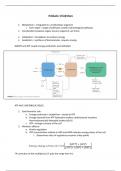
NADPH and ATP couple energy produc2on and u2liza2on
ATP HAS 2 METABOLIC ROLES
1. Stoichiometric role
a. Energy produced in catabolism = stored at ATP
b. Energy released from ATP hydrolysis renders unidirec2onal reac2ons
thermodynamically favorable (makes ∆G<0)
c. ATP = energy currency of the cell
2. Allosteric effector
a. Kine2c regula2on
b. ATP concentra2on rela2ve to ADP and AMP indicates energy status of the cell
i. Determines rates of regulatory enzymes at key points
2[𝐴𝑇𝑃] + [𝐴𝐷𝑃]
𝐸𝑛𝑒𝑟𝑔𝑦 𝑐ℎ𝑎𝑟𝑔𝑒 𝑜𝑓 𝑡ℎ𝑒 𝑐𝑒𝑙𝑙 = 0.5 3 =
[𝐴𝑇𝑃] + [𝐴𝐷𝑃] + [𝐴𝑀𝑃]
à correc2on of the mul2ply by 0.5 puts the range from 0-1
, QUANITIFYING THE ENERGY STATUS
• Adenylate kinase à interconverts ATP, ADP and AMP
o All 3 molecules exert kine2c control on regulatory enzymes at key points
o Concentra2ons must be carefully controlled
§ Changes in concentra2ons can have serious consequences for the cell
• Denominator may change as the adenylate pool is unchanged but the energy charge
can change depending on interconversion
KEY ENZYMES REGUALTED BY ENERGY CHARGE
• Regulatory enzymes respond in reciprocal fashion to adenine nucleo2des
o PFK 1 is s2mulated by AMP (glycolysis turned on)
o F16BP is inhibited by AMP (gluconeogenesis turned off)
• Regulatory enzymes in energy producing catabolic pathways show greater ac2vity at
low energy charge
• Regulatory enzymes of anabolic pathways are not ac2ve at low energy charge
AMP ACTIVATED PROTEIN KINASE
• AMPK = cellular energy sensor + master regulator of cellular metabolism of glucose,
lipid and protein
• Serine/threonine protein kinase
o Switches off ATP consuming pathways
o Switches on ATP producing pathways
• Compe22on between ATP and AMP for binding to allosteric sites of AMPK
determines ac2vity of AMPK
o Low ATP = High AMPK ac2vity
§ Increases ATP produc2on
§ AMP = allosteric ac2vator
• Males AMPK a beder susbtrate for kinase
• Metabolism = integrated in a mul2cellular organism
o Each organ = range of pathways suited to physiological pathways
• Coordina2on between organs ensures organism can thrive
• Catabolism = breakdown to produce energy
• Anabolism = synthesis of biomolecules, requires energy
NADPH and ATP couple energy produc2on and u2liza2on
ATP HAS 2 METABOLIC ROLES
1. Stoichiometric role
a. Energy produced in catabolism = stored at ATP
b. Energy released from ATP hydrolysis renders unidirec2onal reac2ons
thermodynamically favorable (makes ∆G<0)
c. ATP = energy currency of the cell
2. Allosteric effector
a. Kine2c regula2on
b. ATP concentra2on rela2ve to ADP and AMP indicates energy status of the cell
i. Determines rates of regulatory enzymes at key points
2[𝐴𝑇𝑃] + [𝐴𝐷𝑃]
𝐸𝑛𝑒𝑟𝑔𝑦 𝑐ℎ𝑎𝑟𝑔𝑒 𝑜𝑓 𝑡ℎ𝑒 𝑐𝑒𝑙𝑙 = 0.5 3 =
[𝐴𝑇𝑃] + [𝐴𝐷𝑃] + [𝐴𝑀𝑃]
à correc2on of the mul2ply by 0.5 puts the range from 0-1
, QUANITIFYING THE ENERGY STATUS
• Adenylate kinase à interconverts ATP, ADP and AMP
o All 3 molecules exert kine2c control on regulatory enzymes at key points
o Concentra2ons must be carefully controlled
§ Changes in concentra2ons can have serious consequences for the cell
• Denominator may change as the adenylate pool is unchanged but the energy charge
can change depending on interconversion
KEY ENZYMES REGUALTED BY ENERGY CHARGE
• Regulatory enzymes respond in reciprocal fashion to adenine nucleo2des
o PFK 1 is s2mulated by AMP (glycolysis turned on)
o F16BP is inhibited by AMP (gluconeogenesis turned off)
• Regulatory enzymes in energy producing catabolic pathways show greater ac2vity at
low energy charge
• Regulatory enzymes of anabolic pathways are not ac2ve at low energy charge
AMP ACTIVATED PROTEIN KINASE
• AMPK = cellular energy sensor + master regulator of cellular metabolism of glucose,
lipid and protein
• Serine/threonine protein kinase
o Switches off ATP consuming pathways
o Switches on ATP producing pathways
• Compe22on between ATP and AMP for binding to allosteric sites of AMPK
determines ac2vity of AMPK
o Low ATP = High AMPK ac2vity
§ Increases ATP produc2on
§ AMP = allosteric ac2vator
• Males AMPK a beder susbtrate for kinase