Test Bank for Essentials of Abnormal Psychology 6th Edition by Durand DOC
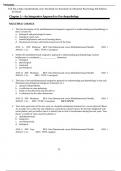
Test Bank for Essentials of Abnormal Psychology 6th Edition by Durand DOC Full file at by-Duran Chapter 2—An Integrative Approach to Psychopathology MULTIPLE CHOICE 1. The best description of the multidimensional integrative approach to understanding psychopathology is that it is based on a. biological and psychological causes. b. biological causes only. c. learned helplessness and social learning theory. d. the physical structure and chemical processes of the brain. ANS: A DIF: Moderate REF: One-Dimensional versus Multidimensional Models OBJ: 1 APALO: 1.3.e MSC: TYPE: Conceptual 2. Within the multidimensional integrative approach to understanding psychopathology, learned helplessness is considered a ______________ dimension. a. biological b. physiological c. emotional d. psychological ANS: D DIF: Moderate REF: One-Dimensional versus Multidimensional Models OBJ: 1 APALO: 1.3.e MSC: TYPE: Conceptual 3. The basis of the multidimensional integrative approach to understanding psychopathology is that each dimension (psychological, biological, emotional, etc.) a. operates independently. b. is sufficient to cause pathology. c. builds on the dimension that precedes it. d. is influenced by the other dimensions. ANS: D DIF: Moderate REF: One-Dimensional versus Multidimensional Models OBJ: 1 APALO: 1.3.e MSC: TYPE: Conceptual KEY: WWW 4. Your uncle spent most of his teen years in a hospital undergoing treatment for a severe physical illness. As an adult, he is rather shy and withdrawn, particularly around women. He has been diagnosed with social phobia, and you believe that it is entirely due to lack of socialization during his teen years. Your theory or model of what caused his phobia is a. multidimensional. b. integrative. c. one-dimensional. d. biological. ANS: C DIF: Easy REF: One-Dimensional versus Multidimensional Models OBJ: 1 APALO: 1.3.e MSC: TYPE: Applied 25 harryson 5. Amanda is 12 years old, and her sister Samantha is five. While riding in a car with their parents, the girls witness a major automobile accident where a number of people are injured. The girls react very differently to the accident. This is probably due to a. biological differences. b. developmental differences. c. psychological differences. d. sociocultural differences. ANS: BDIF: Moderate REF: One-Dimensional versus Multidimensional Models OBJ: 1 APALO: 1.2.a(4) MSC: TYPE: Applied NOT: NEW 6. One of the problems with adopting a one-dimensional biological causal model of abnormality is a. it ignores the contributions of psychological and sociocultural factors to the disorder. b. it ignores the contributions of psychological and sociocultural factors to the disorder. c. it ignores any environmental influences on the disorder. d. all of these ANS: D DIF: Easy REF: One-Dimensional versus Multidimensional Models OBJ: 1 APALO: 1.3.e MSC: TYPE: Conceptual NOT: NEW 7. The most accurate way to think of genes is that they a. set boundaries for our development. b. determine both our physical and psychological characteristics. c. determine physical but not psychological characteristics. d. actually have very little to do with any of the characteristics that we display. ANS: A DIF: Moderate REF: Genetic Contributions to Psychopathology OBJ: 2 APALO: 1.2.a(3) MSC: TYPE: Conceptual 8. Many factors that determine whether genes are “turned on” are in the environment in the form of a. social influences. b. parental influences. c. cultural influences. d. social and cultural influences. ANS: D DIF: Moderate REF: Genetic Contributions to Psychopathology OBJ: 2 APALO: 1.2.a(3) MSC: TYPE: Factual 9. Most psychological disorders appear to be influenced by many individual genes rather than caused by one single gene, a type of influence referred to as a. multigenic. b. polygenic. c. unigenic. d. morphogenic. ANS: B DIF: Moderate REF: Genetic Contributions to Psychopathology OBJ: 2 APALO: 1.2.a(3) MSC: TYPE: Factual KEY: WWW 26
Documentinformatie
- Geüpload op
- 6 oktober 2023
- Aantal pagina's
- 24
- Geschreven in
- 2023/2024
- Type
- Tentamen (uitwerkingen)
- Bevat
- Vragen en antwoorden