ACC 561WEEK 6 FINAL EXAM
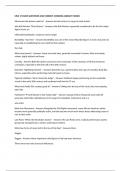
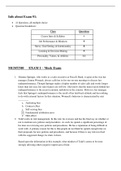
ACC 561WEEK 6 FINAL EXAM Multiple Choice Question 1 Which of the following is an advantage of corporations relative to partnerships and sole proprietorships? Harder to transfer ownership. Lower taxes. Most common form of organization. Reduced legal liability for investors. Multiple Choice Question 2 The group of users of accounting information charged with achieving the goals of the business is its creditors. investors. managers. auditors. Multiple Choice Question 3 Which of the following financial statements is concerned with the company at a point in time? Balance sheet. Income statement. Retained Earnings statement. Statement of cash flows. Multiple Choice Question 4 An income statement presents the revenues and expenses for a specific period of time. summarizes the changes in retained earnings for a specific period of time. reports the assets, liabilities, and stockholders’ equity at a specific date. reports the changes in assets, liabilities, and stockholders’ equity over a period of time. Multiple Choice Question 5 The most important information needed to determine if companies can pay their current obligations is the projected net income for next year. net income for this year. relationship between current assets and current liabilities. relationship between short-term and long-term liabilities. Multiple Choice Question 6 A liquidity ratio measures the income or operating success of a company over a period of time. percentage of total financing provided by creditors. ability of a company to survive over a long period of time. short-term ability of a company to pay its maturing obligations and to meet unexpected needs for cash. Multiple Choice Question 7 The convention of consistency refers to consistent use of accounting principles throughout the accounting periods. within industries. among accounting periods. among firms. Multiple Choice Question 8 Horizontal analysis is also known as vertical analysis. trend analysis. common size analysis. linear analysis Multiple Choice Question 9 Horizontal analysis is a technique for evaluating a series of financial statement data over a period of time that has been arranged from the highest number to the lowest number. to determine the amount and/or percentage increase or decrease that has taken place. to determine which items are in error. that has been arranged from the lowest number to the highest number. Multiple Choice Question 10 Vertical analysis is a technique that expresses each item in a financial statement as a percent of the item in the previous year. in dollars and cents. as a percent of a base amount. starting with the highest value down to the lowest value. Multiple Choice Question 11 Process costing is used when production is aimed at filling a specific customer order. costs are to be assigned to specific jobs. the production process is continuous. dissimilar products are involved. Multiple Choice Question 12 An important feature of a job order cost system is that each job has its own distinguishing characteristics. must be similar to previous jobs completed. consists of one unit of output. must be completed before a new job is accepted. Multiple Choice Question 13 In a process cost system, product costs are summarized: after each unit is produced. on production cost reports. when the products are sold. on job cost sheets. Multiple Choice Question 14 An activity that has a direct cause-effect relationship with the resources consumed is a(n) cost pool. cost driver. overhead rate. product activity. Multiple Choice Question 15 Activity-based costing accumulates overhead in one cost pool, then assigns the overhead to products and services by means of a cost driver. allocates overhead directly to products and services based on activity levels. assigns activity cost pools to products and services, then allocates overhead back to the activity cost pools. allocates overhead to multiple activity cost pools, and it then assigns the activity cost pools to products and services by means of cost drivers. Multiple Choice Question 16 A cost which remains constant per unit at various levels of activity is a mixed cost. variable cost. fixed cost. manufacturing cost. Multiple Choice Question 17 The break-even point is where total variable costs equal total fixed costs. total sales equal total variable costs. contribution margin equals total fixed costs. total sales equal total fixed costs. Multiple Choice Question 18 Fixed costs are $600,000 and the contribution margin per unit is $150. What is the break-even point? 4,000 units $1,500,000 $4,000,000 1,500 units Multiple Choice Question 19 When a company assigns the costs of direct materials, direct labor, and both variable and fixed manufacturing overhead to products, that company is using product costing. operations costing.
École, étude et sujet
- Établissement
- ACC 561
- Cours
- ACC 561
Infos sur le Document
- Publié le
- 25 septembre 2023
- Nombre de pages
- 15
- Écrit en
- 2023/2024
- Type
- Examen
- Contient
- Questions et réponses
Sujets