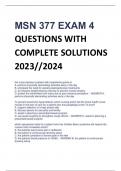
MSN 377 EXAM 4 QUESTIONS WITH COMPLETE SOLUTIONS 2023//2024
MSN 377 EXAM 4 QUESTIONS WITH COMPLETE SOLUTIONS 2023//2024 the nurse advises a patient with myasthenia gravis to A. perform physically demanding activities early in the day B. anticipate the need for weekly plasmapheresis treatments C. do frequent weight-bearing exercise to prevent muscle atrophy D. protect the extremities from injury due to poor sensory perception - ANSWER A. perform physically demanding activities early in the day To prevent autonomic hyperreflexia, which nursing action will the home health nurse include in the plan of care for a patient who has paraplegia at the T4 level? A. support selection of a high-protein diet B. discuss options for sexuality and fertility C. assist in planning a prescribed bowel program D. use quad coughing to strengthen cough efforts - ANSWER C. assist in planning a prescribed bowel program which assessment data for a patient who has Guillain-Barre syndrome will require the nurses most immediate action? A. the patients sacral area skin is reddened B. the patient is continuously drooling saliva C. the patient complains of severe pain in the feet D. the patients blood pressure is 150/82 - ANSWER B. the patient is continuously drooling saliva The nurse has administered a prescribed IV osmotic diuretic to an unconscious patient. which parameter should the nurse monitor to determine the medications effectiveness? A. blood pressure B. intracranial pressure C. oxygen saturation D. hemoglobin and hematocrit - ANSWER B. intracranial pressure A patient who is unconscious has ineffective cerebral tissue perfusion and cerebral tissue swelling. which nursing intervention will be included in the plan of care? A. encourage coughing and deep breathing B. position the patient with knees and hips flexed C. keep the head of the bed elevated to 30 degrees D. cluster nursing interventions to provide rest periods - ANSWER C. keep the head of the bed elevated to 30 degrees Multiple sclerosis - ANSWER a chronic, progressive degenerative disorder of the CNS. Characterized by disseminated demyelination of nerve fibers in the brain and spinal cord myasthenia gravis - ANSWER an autoimmune disease of the neuromuscular junction. characterized by the fluctuating weakness of certain skeletal muscle groups, which increases with muscle use. Guillain-Barre syndrome - ANSWER autoimmune condition that causes acute inflammation of the peripheral nerves in which myelin sheaths on the axons are destroyed, resulting in decreased nerve impulses, loss of reflex response, and sudden muscle weakness Spinal cord injury - ANSWER temporary or permanent alteration in the function of the spinal cord, caused by trauma or damage to the spinal cord Autonomic hyperreflexia (dysreflexia) - ANSWER Massive, uncompensated cardiovascular response to stimulation of the sympathetic nervous system Stimulation of the sensory receptors below the level of the cord lesion - HTN, bradycardia, pounding headache neurogenic shock - ANSWER unopposed PSNS stimulation and disruption of SNS, causing bradycardia, vasodilation, and hypotension. usually occurs with SCI at T6 or above spinal shock - ANSWER spinal shock presents with total flaccid paralysis and loss of all reflexes below the level of injury. Intracranial pressure - ANSWER the amount of pressure inside the skull controlled by the three essential components of pressure in the skull: brain tissue, blood, CSF A nurse is caring for a client who has a basilar skull fracture following a fall from a ladder. Which of the following assessment findings should the nurse report to the provider? A. glasgow coma scale score of 15 B. intracranial pressure reading of 15mmHg C. ecchymosis at base of skull D. clear drainage from nose - ANSWER D. clear drainage from nose clear drainage indicates that CSF is leaking from the skill fracture A nurse in an emergency department is caring for a client who suddenly lost consciousness and fell in her home. the provider determines that the client had an embolic stroke. Which of the following medications should the nurse administer? A. Tissue plasminogen activator B. Recombinant factor VIII C. Nitroglycerin D. Lidocaine - ANSWER A. tissue plasminogen activatior a thrombolytic that should dissolve the clot that caused the stroke A nurse is assessing a client who had a right hemispheric stoke. Which of the following neurologic deficits should the nurse expect? A. aphasia B. right sided neglect C. impulsive behavior D. inability to read - ANSWER C. impulsive behavior the nurse should expect impulsive behavior, poor judgment, and lack of awareness of neurologic deficits A nurse is assessing a client who is quadriplegic following a cervical fracture at vertebral level C5. the client reports a throbbing headache and nausea. the nurse notes facial drooping and a blood pressure of 220/110. Which of the following actions should the nurse take first? A. administer hydralazine via IV bolus B. loosen the clients clothing C. empty the client's bladder D. elevate the head of the client's bed - ANSWER D. elevate the head of the client's bed indicate autonomic dysreflexia and they are at risk for possible rupture of a cerebral vessel or increased intracranial pressure. The first action the nurse should take is to move the client from supine to an upright position which will result in rapid postural hypotension
Written for
- Institution
- MSN 377
- Course
- MSN 377
Document information
- Uploaded on
- September 14, 2023
- Number of pages
- 17
- Written in
- 2023/2024
- Type
- Exam (elaborations)
- Contains
- Questions & answers
Subjects
-
msn 377 exam 4 questions with complete solution
-
msn 377 exam 4 questions with complete solutions
-
msn 377 exam 4 questions with complete solutions
Also available in package deal