CEH Exam A2 Q&A
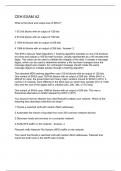
What is the block and output size of SHA1? 1 512-bit blocks with an output of 128 bits 2 512-bit blocks with an output of 160 bits 3 1024-bit blocks with an output of 256 bits 4 1088-bit blocks with an output of 256 bits - Answer- 2 The SHA1 (Secure Hash Algorithm) 1 hashing algorithm operates on one 512-bit block at a time and outputs a 160-bit hash function, usually represented as a 40 hexadecimal digits. This value can be used to validate the integrity of the data. It creates a message digest, which can be used to determine whether a file has been changed since the message digest was created. An unchanged message should create the same message digest on multiple passes through a hashing algorithm. The standard MD5 hashing algorithm uses 512-bit blocks with an output of 128 bits. One variant of SHA2 uses 1024-bit blocks with an output of 256 bits. While SHA1 is difficult to crack, the government and many major vendors moved to SHA2 in 2010. It comes in 6 variants, each differing in the block size on which they operate (512 or 1028 bits) and the size of the digest that is created (224, 256, 384, or 512 bits). One variant of SHA3 uses 1088-bit blocks with an output of 256 bits. This was a theoretical alternative to SHA2 released by NIST in 2015. You discover that an attacke
Document information
- Uploaded on
- September 10, 2023
- Number of pages
- 30
- Written in
- 2023/2024
- Type
- Exam (elaborations)
- Contains
- Questions & answers