

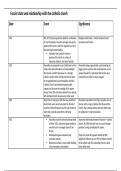
Fascist state and relationship with the catholic church
Date Event Significance
1919 The 1919 fascist programme called for confiscation Displays initial rivalry + enmity between fascist
of church property. Mussolini strongly and vocally movement and church
opposed the church, which he regarded as a force
that held back modernisation.
Published ‘the Cardinal’s mistress’ –
portrayed the church as a place of
hypocrisy, violence, and sexual activity.
1920 Mussolini was prepared to use Catholicism to drive Mussolini acting pragmatically, understanding the
Italian unity and nationalism and acknowledged bigger picture and how this could help him secure
that fascism couldn’t take power in a strongly power. Mussolini’s’ realisation that fascism must
catholic country whilst voicing anti-clerical views. compromise in order to secure support.
He recognised that an accommodation with the
Catholic Church could bring him great public
support and increase the prestige of his regime
abroad. Over 90% of Italians claimed to be catholic,
20% attended church at least every other week.
1922 Pope Pius XI, new pope. Both the new pontiff and Mussolini responded to the Pope’s positive view of
fascist state were concerned about the threat of fascism with a range of policies that favoured the
socialism. Believed fascism was the only means by church. Had a mutual enemy and were both ready
which Italy could be saved from a left-wing to collaborate + make concessions.
revolution
1923 Mussolini saved the almost bankrupt bank Improved relationship between Mussolini + catholic
of Rome 1923, authorised state funding to church. By 1926 Mussolini was in a much stronger
save the back + managed assets of the position, having consolidated his power.
church.
Reinstated religious education into Pope Pius placed his support behind the PNF,
secondary schools significant influence as over 90% of Italians claimed
Restored crucifixes in every public building to be catholic with 20% attending church at least
(church presence everywhere) every other week.
Date Event Significance
1919 The 1919 fascist programme called for confiscation Displays initial rivalry + enmity between fascist
of church property. Mussolini strongly and vocally movement and church
opposed the church, which he regarded as a force
that held back modernisation.
Published ‘the Cardinal’s mistress’ –
portrayed the church as a place of
hypocrisy, violence, and sexual activity.
1920 Mussolini was prepared to use Catholicism to drive Mussolini acting pragmatically, understanding the
Italian unity and nationalism and acknowledged bigger picture and how this could help him secure
that fascism couldn’t take power in a strongly power. Mussolini’s’ realisation that fascism must
catholic country whilst voicing anti-clerical views. compromise in order to secure support.
He recognised that an accommodation with the
Catholic Church could bring him great public
support and increase the prestige of his regime
abroad. Over 90% of Italians claimed to be catholic,
20% attended church at least every other week.
1922 Pope Pius XI, new pope. Both the new pontiff and Mussolini responded to the Pope’s positive view of
fascist state were concerned about the threat of fascism with a range of policies that favoured the
socialism. Believed fascism was the only means by church. Had a mutual enemy and were both ready
which Italy could be saved from a left-wing to collaborate + make concessions.
revolution
1923 Mussolini saved the almost bankrupt bank Improved relationship between Mussolini + catholic
of Rome 1923, authorised state funding to church. By 1926 Mussolini was in a much stronger
save the back + managed assets of the position, having consolidated his power.
church.
Reinstated religious education into Pope Pius placed his support behind the PNF,
secondary schools significant influence as over 90% of Italians claimed
Restored crucifixes in every public building to be catholic with 20% attending church at least
(church presence everywhere) every other week.


