

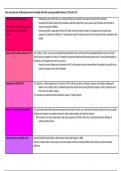
How successful was the liberal government in dealing with Italy’s growing instability between 1912 and 1914?
Impact of the Invasion of Libya - Nationalists took credit for the war, claiming Giolitti only launched it under pressure from their movement
- Denounced the liberals, blaming their weakness and lack of patriotism as the reasons why the Italian army had lost so
G’s attempts at absorbing the socialists many men during the fighting
into the liberal state had ended in - Destroyed Giolitti’s cooperation with the PSI, which had formed the key basis for his programme of trasformismo,
failure opposed it as imperialist militarism revolutionary wing of the party seized control and rejected further cooperation with
Giolitti
Impact of the franchise extension 1912 Due to Libya, in 1912, a new law was passed that extended the vote to all men who had completed military service and all men
aged 30 and over regardless of literacy hoped that increased suffrage would promote national unity, increase the popularity of
the liberals, and strengthen the vote in rural areas
- Hoped increased suffrage would undermine the PSI, with greater electoral representation the working class would be less
inclined to support more radical ideologies
Resignation of Giolitti 1914 1913 elections = Liberal deputies lost 71 seats from 1909, with the socialists, nationalists, radicals, and Catholics making gains.
- Reliant on the catholic church, Gentiloni boasted after election that around 228 liberal deputies of the 318 elected owed
their victory to catholic support
1914 socialists and anticlerical liberals withdrew support + Giolitti resigned
Growth of nationalism and socialism PSI proclaimed national strike after three protestors shot dead in Ancona, for a week most of northern Italy was in chaos as public
buildings were torched, tax registers destroyed, railway stations seized, and churches attacked.
Eventually ‘red week’ ended after trade unions agreed to call off the strike, but riots demonstrated the difficulty of
achieving national unity.
The declaration of neutrality 1914 Italy had joined the triple alliance with Germany and Austria-Hungary in 1882.
Majority of Italians had no wish to get involved in European conflict and backed Giolitti and the other non-interventionalist
politicians
Impact of the Invasion of Libya - Nationalists took credit for the war, claiming Giolitti only launched it under pressure from their movement
- Denounced the liberals, blaming their weakness and lack of patriotism as the reasons why the Italian army had lost so
G’s attempts at absorbing the socialists many men during the fighting
into the liberal state had ended in - Destroyed Giolitti’s cooperation with the PSI, which had formed the key basis for his programme of trasformismo,
failure opposed it as imperialist militarism revolutionary wing of the party seized control and rejected further cooperation with
Giolitti
Impact of the franchise extension 1912 Due to Libya, in 1912, a new law was passed that extended the vote to all men who had completed military service and all men
aged 30 and over regardless of literacy hoped that increased suffrage would promote national unity, increase the popularity of
the liberals, and strengthen the vote in rural areas
- Hoped increased suffrage would undermine the PSI, with greater electoral representation the working class would be less
inclined to support more radical ideologies
Resignation of Giolitti 1914 1913 elections = Liberal deputies lost 71 seats from 1909, with the socialists, nationalists, radicals, and Catholics making gains.
- Reliant on the catholic church, Gentiloni boasted after election that around 228 liberal deputies of the 318 elected owed
their victory to catholic support
1914 socialists and anticlerical liberals withdrew support + Giolitti resigned
Growth of nationalism and socialism PSI proclaimed national strike after three protestors shot dead in Ancona, for a week most of northern Italy was in chaos as public
buildings were torched, tax registers destroyed, railway stations seized, and churches attacked.
Eventually ‘red week’ ended after trade unions agreed to call off the strike, but riots demonstrated the difficulty of
achieving national unity.
The declaration of neutrality 1914 Italy had joined the triple alliance with Germany and Austria-Hungary in 1882.
Majority of Italians had no wish to get involved in European conflict and backed Giolitti and the other non-interventionalist
politicians


