
RN Nursing Pharmacology Exam with NGN Styled Questions and Rationales
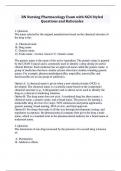
1. Question The name selected by the original manufacturer based on the chemical structure of the drug is the: A. Chemical name B. Drug name C. Generic name D. Trade name - Correct Answer: C. Generic name The generic name is the name of the active ingredient. The generic name is granted by the USAN Council and is commonly used to identify a drug during its useful clinical lifetime. Each medicine has an approved name called the generic name. A group of medicines that have similar actions often have similar-sounding generic names. For example, phenoxymethylpenicillin, ampicillin, amoxicillin, and flucloxacillin are in one group of antibiotics. Option A: A chemical name is given when a new chemical entity (NCE) is developed. The chemical name is a scientific name based on the compound's chemical structure (e.g., 6-thioguanine) and is almost never used to identify the drug in a clinical or marketing situation. Option B: The drug name does not exist. A marketed drug has three names: a chemical name, a generic name, and a brand name. The process for naming a marketable drug involves five steps: NCE submission and patent application, generic naming, brand naming, FDA review, and final approval. Option D: For drugs that make it all the way through development, testing, and regulatory acceptance, the pharmaceutical company then gives the drug a trade name, which is a standard term in the pharmaceutical industry for a brand name or trademark name. 2. Question The interaction of one drug increased by the presence of a second drug is known as: A. Potentiation B. Addictive effects C. Antagonism D. Synergism - Correct Answer: A. Potentiation Potentiation occurs when the action of one drug is increased by the action of another. Think of two words potentiate and potential together. The potential of one drug is higher when a second drug is added to it. Option B: When two drugs are used together, their effects can be additive (the result is what you expect when you add together the effect of each drug taken independently). Option C: An interaction between two or more drugs that have opposite effects on the body. Drug antagonism may block or reduce the effectiveness of one or more of the drugs. Option D: An interaction between two or more drugs that causes the total effect of the drugs to be greater than the sum of the individual effects of each drug. A synergistic effect can be beneficial or harmful.
Document information
- Uploaded on
- September 8, 2023
- Number of pages
- 61
- Written in
- 2023/2024
- Type
- Exam (elaborations)
- Contains
- Questions & answers


