

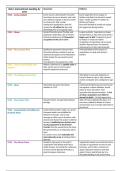
Italy’s international standing by Successes Failures
1935
1923 – Corfu incident Led to success domestically. Mussolini Led to opposition from League of
had shown he was a dynamic ruler who Nations and had to be forced to accept
was willing to engage in decisive action Italy’s weaker position in relation to
to stand up for Italy’s pride. Britain and France.
Subsequent negotiations, Italy did Mussolini decided he would not repeat
receive the 50 million lire they had this aggressive foreign policy.
demanded prior to occupying Corfu.
1924 – Fiume Gained Mussolini great Prestige and Largely symbolic, Yugoslavia no longer
popularity within Italy, due to Fiume’s needed Fiume as they had constructed a
historical significance of D’Annunzio’s bigger port at Split. Prepared to give it
occupation of the city in 1919. to Italians in return for Italian
recognition of Yugoslavia rule at Susak,
another disputed area. No material
achievements of Italy internationally.
1925 – The Locarno Pact Significant agreement, the fact that Tried and failed to link Locarno to
Mussolini had been invited to such an negotiations on Italy and Austria’s
important European event indicated to borders.
Italian people he was equal to great
powers.
Contributed to his popularity in Italy.
1926 – Treaty of friendship with Albania confirmed as a satellite state of
Albania Italy, can be seen as a first step in
imperial expansion of fascism.
1928 – The Kellogg-Briand Pact Attempted to persuade delegates to
travel to Rome to sign it; they refused,
and he eventually sent a delegate to sign
it.
1929 – Libya Italy finally put down the Libyan Continued the liberal government brutal
rebellion in 1932. war against a Libyan rebellion, brutal
policy of mass starvation, mass
execution and chemical warfare. 1/3rd
of Libya’s population were killed or
starved to death – M looks aggressive.
1933 – Four Power Pact Signed in Rome, brought international Allies of France objected the pact, so it
prestige was never ratified by Britain or France
and Germany was no longer interested in
pursuing it.
1934 – Assassination of Dollfuss by Confirmed Mussolini’s status as a great
Austrian Nazis European leader and solidified his
influence in Europe. Sent a clear
message to Hitler not to Anschluss with
Austria and showed his power to defend
territory (mobilising four divisions and
moving equipment to the Brenner
Frontier) that he wanted from the Nazis.
Recognised Italy as an important ally to
have.
His actions were seen nationally and
internationally as key to halting Hitler’s
attempt.
1935 – The Stresa Front Marked a high point in Mussolini’s Superficially looked successful but had no
cooperation with Britain and France real idea or agreement on how to stop
within Europe. He hosted the conference Germany. Led to Italys’ colonial war
at Stresa which depicted himself as a against Abyssinia which turned Italy
great European statesman. against France and Britain due to a
misunderstanding in the Stresa Front.
1935
1923 – Corfu incident Led to success domestically. Mussolini Led to opposition from League of
had shown he was a dynamic ruler who Nations and had to be forced to accept
was willing to engage in decisive action Italy’s weaker position in relation to
to stand up for Italy’s pride. Britain and France.
Subsequent negotiations, Italy did Mussolini decided he would not repeat
receive the 50 million lire they had this aggressive foreign policy.
demanded prior to occupying Corfu.
1924 – Fiume Gained Mussolini great Prestige and Largely symbolic, Yugoslavia no longer
popularity within Italy, due to Fiume’s needed Fiume as they had constructed a
historical significance of D’Annunzio’s bigger port at Split. Prepared to give it
occupation of the city in 1919. to Italians in return for Italian
recognition of Yugoslavia rule at Susak,
another disputed area. No material
achievements of Italy internationally.
1925 – The Locarno Pact Significant agreement, the fact that Tried and failed to link Locarno to
Mussolini had been invited to such an negotiations on Italy and Austria’s
important European event indicated to borders.
Italian people he was equal to great
powers.
Contributed to his popularity in Italy.
1926 – Treaty of friendship with Albania confirmed as a satellite state of
Albania Italy, can be seen as a first step in
imperial expansion of fascism.
1928 – The Kellogg-Briand Pact Attempted to persuade delegates to
travel to Rome to sign it; they refused,
and he eventually sent a delegate to sign
it.
1929 – Libya Italy finally put down the Libyan Continued the liberal government brutal
rebellion in 1932. war against a Libyan rebellion, brutal
policy of mass starvation, mass
execution and chemical warfare. 1/3rd
of Libya’s population were killed or
starved to death – M looks aggressive.
1933 – Four Power Pact Signed in Rome, brought international Allies of France objected the pact, so it
prestige was never ratified by Britain or France
and Germany was no longer interested in
pursuing it.
1934 – Assassination of Dollfuss by Confirmed Mussolini’s status as a great
Austrian Nazis European leader and solidified his
influence in Europe. Sent a clear
message to Hitler not to Anschluss with
Austria and showed his power to defend
territory (mobilising four divisions and
moving equipment to the Brenner
Frontier) that he wanted from the Nazis.
Recognised Italy as an important ally to
have.
His actions were seen nationally and
internationally as key to halting Hitler’s
attempt.
1935 – The Stresa Front Marked a high point in Mussolini’s Superficially looked successful but had no
cooperation with Britain and France real idea or agreement on how to stop
within Europe. He hosted the conference Germany. Led to Italys’ colonial war
at Stresa which depicted himself as a against Abyssinia which turned Italy
great European statesman. against France and Britain due to a
misunderstanding in the Stresa Front.


