

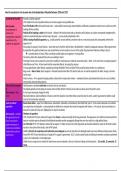
How far was fascism’s rise to power due to the leadership of Mussolini between 1920 and 1922?
Leadership of Mussolini Pursued a dualistic approach:
1921 called for the end of squadristi violence to not loose supports among middle class.
Rise to power – Pact of Pacification 1921 with socialist trade union – cynical political manoeuvring, hoped Catholics and liberals in parliament would come to a deal to stop him
encouragement of working with the socialists.
violence and Political skill of resigning as leader of the fascists – without M the fascists lacked unity or direction and his absence as a leader consequently strengthened his
strengthening of position, position by demonstrating how crucial he was to the party. – ras now clearly subordinate to him.
exploitation of the Skilful at buying off political opponents, e.g., Grandi (powerful ras boss) offered a prominent role on a new fascist journal and consequently confirmed his
weakness of opposition support for M.
Encouraged an upsurge in fascist violence – town after town in Northern Italy fell due to the Blackshirts + helped by inadequate response of liberal government.
By September the squads had taken over areas around Rome and were ready to move on to the capital, the government had done nothing to stop it.
Launched attacks in Genoa, Milian, murdering socialist leaders and supporters + burning offices.
The violence had in fact weakened Facta who was unwilling to stop it.
Promising if fascists were accepted in a government coalition he would pursue a moderate conservative policy - whilst - at the same time encouraging squads to
attack Bolzano and Trent. these towns held by conservative liberals, increasing the pressure.
M encouraged division within liberals, separately promising SALANDRA, FACTA and GIOLITTI they would be prime minister in a coalition gov.
Kings cousin – Duke of Aosta, fascist supporter + Mussolini cleverly hinted that if the fascists took over, he could be replaced by his taller, stronger, and more
manly cousin.
March on Rome – M in a powerful enough position to demand he is made prime minister – unhooked his phone and attended the theatre in an act of political
showmanship, demonstrating calmness.
Role of Victor Emmanuel Had the power to proclaim martial law and use the army to crush fascists.
lll He originally agreed and army began to assume control in Milan (March on Rome) and an order was drawn up for Mussolini’s arrest.
Rise to power – direct At 9 am same morning he changed his mind.
factor Weak and indecisive, lacked confidence in Facta to control the situation. Feared the military would not obey his orders, couldn’t guarantee the soldiers would
shoot at the fascists when instructed.
Faults of political Bennio Rosso strikes – anger from middle classes, industrialists, nationalists, and landowners that Giolitti had ‘given in’ to the workers demands as his solution
opposition was compromise and absorption – pressuring banks to withdraw for companies that would not negotiate with workers. in contrast, fascist used violence to
deal with it, looked as if they were ‘fighting back’ to stop the revolution.
Rise to power – provided Weakness of opposition:
the opportunity for the 1921, PSI split into PCI (more radical) with support from Russia = weakened strength of left-wing movement. The appearance of an official communist party that
fascist movement to spoke of revolution and was financed by the Bolsheviks provided excellent propaganda although they were too small to be a legit political threat.
gather momentum. In July 1922 strike PSI + PCI attempt, workers did not support + it faded. Crucial error by left wing parties as Mussolini claimed the reason for the strike’s failure
context was inevitable as was due to the actions of the fascists, myth of PNF spread.
trasformismo could not Giolitti’s old tactics of compromise and trasformismo was inadequate in post-war Italy where the ideological splits were more defined and deep-rooted. Newly
work forever. formed PPI, PNF, PCI were less likely to be ‘bought off’ to support G government. 1921, G tried to absorb fascists by offering the members running for parliament
a place in his ‘national bloc’ on the ballot paper.
Giolitti chose to resign once he realised his trasformismo was now obsolete in the era of universal suffrage and formal parties – 123 socialist, 15 communist, 35
fascist.
Leadership of Mussolini Pursued a dualistic approach:
1921 called for the end of squadristi violence to not loose supports among middle class.
Rise to power – Pact of Pacification 1921 with socialist trade union – cynical political manoeuvring, hoped Catholics and liberals in parliament would come to a deal to stop him
encouragement of working with the socialists.
violence and Political skill of resigning as leader of the fascists – without M the fascists lacked unity or direction and his absence as a leader consequently strengthened his
strengthening of position, position by demonstrating how crucial he was to the party. – ras now clearly subordinate to him.
exploitation of the Skilful at buying off political opponents, e.g., Grandi (powerful ras boss) offered a prominent role on a new fascist journal and consequently confirmed his
weakness of opposition support for M.
Encouraged an upsurge in fascist violence – town after town in Northern Italy fell due to the Blackshirts + helped by inadequate response of liberal government.
By September the squads had taken over areas around Rome and were ready to move on to the capital, the government had done nothing to stop it.
Launched attacks in Genoa, Milian, murdering socialist leaders and supporters + burning offices.
The violence had in fact weakened Facta who was unwilling to stop it.
Promising if fascists were accepted in a government coalition he would pursue a moderate conservative policy - whilst - at the same time encouraging squads to
attack Bolzano and Trent. these towns held by conservative liberals, increasing the pressure.
M encouraged division within liberals, separately promising SALANDRA, FACTA and GIOLITTI they would be prime minister in a coalition gov.
Kings cousin – Duke of Aosta, fascist supporter + Mussolini cleverly hinted that if the fascists took over, he could be replaced by his taller, stronger, and more
manly cousin.
March on Rome – M in a powerful enough position to demand he is made prime minister – unhooked his phone and attended the theatre in an act of political
showmanship, demonstrating calmness.
Role of Victor Emmanuel Had the power to proclaim martial law and use the army to crush fascists.
lll He originally agreed and army began to assume control in Milan (March on Rome) and an order was drawn up for Mussolini’s arrest.
Rise to power – direct At 9 am same morning he changed his mind.
factor Weak and indecisive, lacked confidence in Facta to control the situation. Feared the military would not obey his orders, couldn’t guarantee the soldiers would
shoot at the fascists when instructed.
Faults of political Bennio Rosso strikes – anger from middle classes, industrialists, nationalists, and landowners that Giolitti had ‘given in’ to the workers demands as his solution
opposition was compromise and absorption – pressuring banks to withdraw for companies that would not negotiate with workers. in contrast, fascist used violence to
deal with it, looked as if they were ‘fighting back’ to stop the revolution.
Rise to power – provided Weakness of opposition:
the opportunity for the 1921, PSI split into PCI (more radical) with support from Russia = weakened strength of left-wing movement. The appearance of an official communist party that
fascist movement to spoke of revolution and was financed by the Bolsheviks provided excellent propaganda although they were too small to be a legit political threat.
gather momentum. In July 1922 strike PSI + PCI attempt, workers did not support + it faded. Crucial error by left wing parties as Mussolini claimed the reason for the strike’s failure
context was inevitable as was due to the actions of the fascists, myth of PNF spread.
trasformismo could not Giolitti’s old tactics of compromise and trasformismo was inadequate in post-war Italy where the ideological splits were more defined and deep-rooted. Newly
work forever. formed PPI, PNF, PCI were less likely to be ‘bought off’ to support G government. 1921, G tried to absorb fascists by offering the members running for parliament
a place in his ‘national bloc’ on the ballot paper.
Giolitti chose to resign once he realised his trasformismo was now obsolete in the era of universal suffrage and formal parties – 123 socialist, 15 communist, 35
fascist.


