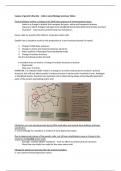
Causes of genetic diversity – AQA A Level Biology Summary Notes
Gene mutations involve a change in the DNA base sequence of chromosomes/a gene
- Leads to a change in triplets that compose the gene, amino acid sequence (primary
sequence) which changes hydrogen/ionic/disulphide bonds that determine tertiary structure
of protein – may result in protein being non-functional
Genes code for proteins (the effector molecules inside cells)
Explain how a mutation results in the production of a non-functional protein (4 marks)
1. Change in DNA base sequence
2. Change in amino acid sequence/primary structure
3. Alters position of hydrogen/ionic/disulphide bonds
4. Change in tertiary structure
(So Non functional protein formed)
A mutation may not lead to a change in tertiary structure of protein
- Degenerate
- May occur in intron
HOWEVER, if a mutation DOES result in a change in an amino acid present in protein’s primary
structure, this will only effect protein’s tertiary structure if amino acid is involved in ionic, hydrogen
or disulphide bonds, therefore has important role in determining shape of functionally important
parts of the protein (eg binding/active site)
Mutations can arise spontaneously during DNA replication and include base deletion and base
substitution
(+ use knowledge for mutations in Control of Gene Expression topic)
Due to degenerate nature of the genetic code, not all base substitutions cause a change in the
sequence of encoded amino acids
- Example: could be SILENT mutations – have no effect on protein primary structure
- More than one triplet can code for the same amino acid
Mutagenic agents can increase the rate of gene mutation
(+ use Control of Gene Expression notes)