

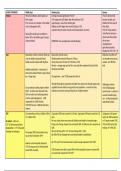
LIVING STANDARDS Middle class Working class farmers
Weimar Hit hard by inflation, which wiped out Earning increased significantly 1924-29. 1922-24, farmer food
their savings. 1932 wages were 30% higher than they had been 1924. became valuable, and
1924, income of a member of the middle Legal changes = max 8 hour working day. inflation let them pay off
class had dropped by 60%. Welfare was 60% higher than what it had been 1913. their debts.
A greater share of worker income and increased power of unions. 1924-29, cheap imports
(During first world war) one district in ruined farmer produce +
Berlin, 90% of all children aged 2-6 were prices were driven down
undernourished. HOWEVER, mass unemployment was threatening. due to mass
unemployment.
Agricultural products
dropped by 25% 1927 + 30
Nazi destruction of unions, however there was Destruction of trade unions. Reduction of profits and
a ban on textiles and people found Working week increased 43hours to 47hours not enough money to pay
textiles hard to compete with big firms. Hourly rates were 3% lower in 1933 than in 1932. workers, can’t fill their
Women – average wage was half of a mans and often employed in jobs with the land.
Wealthy industrialists – destruction of lowest pay and status
trade unions allowed them to pay workers
less + longer days. T4 programme – over 70,000 people died from it.
Strength thorough joy programme provided many extras even through wages were Volkswagen scheme –
Set up national socialist people’s welfare regulated because industry was geared to war population – provision of loans, 1939 270,000 people
(NSV) – for those who ‘deserved’ help. medical care and extra food and vitamins for ‘suitable mothers’ saved money in a state-run
NSV ran mother and child programmes account towards buying
(Creches and kindergartens) – 1938 one – in effect lending the
responsible for 10,800 of them. state RM110 million.
1939 NSV had over 1,000,000 voluntary
workers.
FRG Car ownership rose from 2 million 1950 to 1 kg butter 1950 have to work for 3.39 mins. 1 kg butter 1990 have to work for 0.23 Living space is 30 square
12.1 million 1965 mins. metres by 1980 compared
In context – after war: Pay rose, trade unions were aware of inflations and asked for increased wages. to 19 square meters 1950.
1/5th of all housing had been Cheap cost of living, cheaper than communist GDR coffee was 4x as expensive in 1952 no flats had central
bombed flat + 1/3rd of that still GDR, heating, 1971 96% did.
standing was damaged. On average 1980 real personal income FRG cost of living 1990 = 107, UK cost of living 1990 = 133.3
was 6x what it had been 1949 By 1980s 90% of all people were covered by benefits and healthcare.
However social inequality deepened: By 1971 only 27% of Germans lived in social housing compared to 69% 1949.
1973 the top percent of all households
owned 78% of wealth. 1985 Germans were able to spend 48% of their disposable income on luxuries like
cars and travel compared to 33% 1957.
Weimar Hit hard by inflation, which wiped out Earning increased significantly 1924-29. 1922-24, farmer food
their savings. 1932 wages were 30% higher than they had been 1924. became valuable, and
1924, income of a member of the middle Legal changes = max 8 hour working day. inflation let them pay off
class had dropped by 60%. Welfare was 60% higher than what it had been 1913. their debts.
A greater share of worker income and increased power of unions. 1924-29, cheap imports
(During first world war) one district in ruined farmer produce +
Berlin, 90% of all children aged 2-6 were prices were driven down
undernourished. HOWEVER, mass unemployment was threatening. due to mass
unemployment.
Agricultural products
dropped by 25% 1927 + 30
Nazi destruction of unions, however there was Destruction of trade unions. Reduction of profits and
a ban on textiles and people found Working week increased 43hours to 47hours not enough money to pay
textiles hard to compete with big firms. Hourly rates were 3% lower in 1933 than in 1932. workers, can’t fill their
Women – average wage was half of a mans and often employed in jobs with the land.
Wealthy industrialists – destruction of lowest pay and status
trade unions allowed them to pay workers
less + longer days. T4 programme – over 70,000 people died from it.
Strength thorough joy programme provided many extras even through wages were Volkswagen scheme –
Set up national socialist people’s welfare regulated because industry was geared to war population – provision of loans, 1939 270,000 people
(NSV) – for those who ‘deserved’ help. medical care and extra food and vitamins for ‘suitable mothers’ saved money in a state-run
NSV ran mother and child programmes account towards buying
(Creches and kindergartens) – 1938 one – in effect lending the
responsible for 10,800 of them. state RM110 million.
1939 NSV had over 1,000,000 voluntary
workers.
FRG Car ownership rose from 2 million 1950 to 1 kg butter 1950 have to work for 3.39 mins. 1 kg butter 1990 have to work for 0.23 Living space is 30 square
12.1 million 1965 mins. metres by 1980 compared
In context – after war: Pay rose, trade unions were aware of inflations and asked for increased wages. to 19 square meters 1950.
1/5th of all housing had been Cheap cost of living, cheaper than communist GDR coffee was 4x as expensive in 1952 no flats had central
bombed flat + 1/3rd of that still GDR, heating, 1971 96% did.
standing was damaged. On average 1980 real personal income FRG cost of living 1990 = 107, UK cost of living 1990 = 133.3
was 6x what it had been 1949 By 1980s 90% of all people were covered by benefits and healthcare.
However social inequality deepened: By 1971 only 27% of Germans lived in social housing compared to 69% 1949.
1973 the top percent of all households
owned 78% of wealth. 1985 Germans were able to spend 48% of their disposable income on luxuries like
cars and travel compared to 33% 1957.


