Genetic code and protein synthesis – AQA A Level Biology Summary Notes
Genome = complete set of genes in a cell/organism
Proteome = full range of proteins that the genome could produce
A genome codes for proteome
mRNA, tRNA and ribosomes are all important in the process of protein synthesis
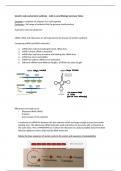
Comparing mRNA and tRNA molecules
1. mRNA does not have hydrogen bonds, tRNA does
2. mRNA is linear, tRNA is cloverleaf
3. mRNA does not have an amino acid binding site, tRNA does
4. mRNA has more nucleotides
5. mRNA has codons, tRNA has an anticodon
6. Different mRNAs have different lengths, all tRNAs are same length
Ribosomes are made up of:
- Ribosomal RNA (rRNA)
- Proteins
- And consists of two subunits
A molecule of mRNA fits between the two subunits which are large enough to have two codon
binding sites. This allows two tRNA molecules with anticodons to associate with a ribosome at
the same time. This is IMPORTANT as it allows the ribosome to catalyse peptide bond formation
between adjacent amino acids held by tRNA molecules
Relate the base sequence of nucleic acids to the amino acid sequence of polypeptides