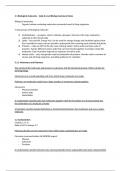
3.1 Biological molecules – AQA A Level Biology Summary Notes
Biological molecules
- Organic/carbon containing molecules commonly found in living organisms
4 main groups of biological molecule:
1) Carbohydrates – eg sugars, starch, cellulose, glycogen. Glucose is the main respiratory
substrate in the human body
2) Lipids – fats and oils. Energy rich, can be used for energy storage and insulation against heat
loss. Insoluble in water and can provide a waterproof later covering some animals and plants
3) Proteins – make up 50% of the dry mass of living matter. Amino acids are basic units of
proteins. Twenty different amino acids that can form bonds together to produce chain-like
molecules. Type of protien depends on sequence of amino acids
4) Nucleic acids – carry out genetic code for production of proteins. Genetic code is common to
viruses and all living organisms, providing evidence for evolution
3.1.1 Monomers and Polymers
The variety of life, both past and present, is extensive, but the biochemical basis of life is similar for
all living things
Monomers are a small repeating unit from which larger molecules are made
Polymers are molecules made from a large number of monomers joined together
Monomers:
- Monosaccharides
- Amino acids
- Nucleotides
A condensation reaction joins two molecules together with the formation of a chemical bond and
the elimination of a molecule of water
A hydrolysis reaction breaks/hydrolyses a chemcial bond between two molecules and uses a water
molecule
1.2 Carboydrates
Contain C, H, O
Ratio of H:O is always 2:1
Monosaccharides are the monomers from which larger carbohydrates are made
Common monosaccharides (all HEXOSE sugars)
- Glucose
- Galactose
- Fructose
A condensation reaction between two monosaccharides forms a glycosidic bond (and a disaccharide)
Biological molecules
- Organic/carbon containing molecules commonly found in living organisms
4 main groups of biological molecule:
1) Carbohydrates – eg sugars, starch, cellulose, glycogen. Glucose is the main respiratory
substrate in the human body
2) Lipids – fats and oils. Energy rich, can be used for energy storage and insulation against heat
loss. Insoluble in water and can provide a waterproof later covering some animals and plants
3) Proteins – make up 50% of the dry mass of living matter. Amino acids are basic units of
proteins. Twenty different amino acids that can form bonds together to produce chain-like
molecules. Type of protien depends on sequence of amino acids
4) Nucleic acids – carry out genetic code for production of proteins. Genetic code is common to
viruses and all living organisms, providing evidence for evolution
3.1.1 Monomers and Polymers
The variety of life, both past and present, is extensive, but the biochemical basis of life is similar for
all living things
Monomers are a small repeating unit from which larger molecules are made
Polymers are molecules made from a large number of monomers joined together
Monomers:
- Monosaccharides
- Amino acids
- Nucleotides
A condensation reaction joins two molecules together with the formation of a chemical bond and
the elimination of a molecule of water
A hydrolysis reaction breaks/hydrolyses a chemcial bond between two molecules and uses a water
molecule
1.2 Carboydrates
Contain C, H, O
Ratio of H:O is always 2:1
Monosaccharides are the monomers from which larger carbohydrates are made
Common monosaccharides (all HEXOSE sugars)
- Glucose
- Galactose
- Fructose
A condensation reaction between two monosaccharides forms a glycosidic bond (and a disaccharide)