

AMERICAN RED CROSS WSI|2023/24 UPDATE|GRADED A+
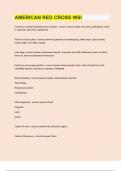
Factors to consider planning course session Safety, class size, participants, what is required, class time, equipment Parts of a lesson plan Equipment, housekeeping, safety topic, open activity, review skills, new skills, closing Late stage Movement smooth, instructor job: skill refinement, does not think then act, does not depend on instructor Factors to encourage practice Active practice time, ratio of practice to rest, variability practice, structure of practice, feedback Direct teaching Explain, demonstrate, practice Task setting Reciprocal practice Small group COLA Approach Check Organize Lead Assess Center of mass Hip and pelvic region Center of buoyancy Chest Early stage Awkward movement, think then moves Drills Static drills Fluid drills Indirect teaching strategies Active exploration, guided discovery, problem solving Buoyancy Upward force water places on an object RWI Recreational water illnesses Outcome of performance Observe change in motor skill development by observing how skill performed can see improved skill Factors that influence learning Goals Practice Feedback Motivation Parent/ child ratio 1 instructor to 10 participants Preschool aquatics level 1-3 Learn to swim level 1-3 Adult swim Basic Skills Swim for Fitness 1 instructor to 6 participants Learn to swim levels 4-6 Adult swim improve skills 1 instructor to 10 participants Developmental changes to consider for adult to consider Physiological changes- strength, motor control, physical abilities, reaction time Neurological/ sensory changes Psychological changes; need security recognition, accomplishment, feeling of belonging Intermediate stage Less time to think then act Teaching progression Developmental; broken into steps Familiar, standardized way Measurable; use participant knowledge readiness Change measured numerically Gradual increase or decrease in amount of skill swimmer can do American RC Swimming and Diving DVD Additional demonstration that can be used later Stages of growth of motor skills Develop in a serious of predictable steps roughly correlates to chronological age but at different rates Formations Line formation L formation Perpendicular formation Wave formation Stagger formation Preschool aquatic purpose Promote developmentally appropriate learning of basic water safety, aquatic skills, use logic progressions Longfellow Whale Tales Ages 5-12 teaches safe behavior in, on, around water Adult Swim purpose Teens, adults with different levels of swimming ability Learning basics, improve skills, fitness Level 2 Fundamentals Arm power phases Catch, mid pull, finish
Document information
- Uploaded on
- August 31, 2023
- Number of pages
- 5
- Written in
- 2023/2024
- Type
- Exam (elaborations)
- Contains
- Questions & answers


