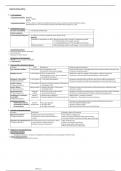
Autoimmunity
❖ T cell regulation:
• Cell intrinsic methods: Apoptosis
Anergy - neglect
Deletion
• Cell extrinsic methods: CD4 Treg cells are component of peripheral tolerance and essential to prevent autoimmune disease
Autoimmunity can occur via mutation of Foxp3 transcription factor (imp for Treg dev)
❖ Autoimmunity causes:
• Genetic susceptibility → contributed by MHC alleles
• Failed regulation
• Environmental influences → i.e. infection, sun, diet, microbiome, stress, obesity, drugs
→ Infection:
Induction of costimulators on APC • Microbe activates APC to upreg B7 costimulatory ligands
• T cell CD28 binds to B7 and gets activated
• ∴ no anergy/apoptosis and T cell reacts against self-proteins
Molecular mimicry • Microbial antigen similar to self-antigen - cross reactivity occurs
Autoimmunity leads to:
• Immune response against self antigen
• Loss of tolerance
• May/may not cause disease
Mechanisms of autoimmunity:
• AutoAb - acts as an agonist/antagonist
• T cell mediated
❖ Organ specific autoimmune disease:
Examples Type Mechanism Symptoms, signs & treatments
Type I diabetes mellitus T cell mediated • β cell targeted by T cells • Lack of insulin release - hyperglycaemia, thirst, frequent urination, blurred vision
• Activates B cells and macrophages • Treatment: insulin injections
Multiple sclerosis T cell mediated • CD4 T cell attacks CNS • Weakness, numbness, tingling, visual problems, cognitive impairment
• Demyelination occurs - slower conduction, • Treatment: corticosteroids, immunomodulators, monoclonal Ab
neurological dysfunction
Hashimoto's thyroiditis T cell mediated • T cells attack thyroid gland • Symptoms: hypothyroidism, puffy face, goitre (thyroid gland enlargement)
(T4 hypersensitivity) • Treatment: levothyroxine (thyroxine analogue) to increase thyroid hormone
Coeliac's disease T cell mediated • Response to gluten leading to inflammation
(T4 hypersensitivity) and damage to villi
Graves' disease Agonist autoAb • Agonistic Ab binds to TSH receptor • Treatment: drugs to block production of thyroid hormone, radioactive iodine
(T5 hypersensitivity) = hyperthyroidism therapy or surgery
Myasthenia gravis Antagonist • Blocks ACh receptor, affecting the • Problems with muscle coordination (inc respiratory muscles), weakness & fatigue
(T5 hypersensitivity) autoAb neuromuscular junction • Treatment: acetylcholinesterase inhibitors and immunosuppressants
Goodpasture's syndrome AutoAb + • AutoAb targets collagen IV • Kidney failure - proteinuria, anaemia
(Anti-GBM) complement • Damages lung/kidney basement membrane • Lung disease - haemoptysis, chest pain, dyspnoea
(T2 hypersensitivity)
Autoimmune cytopenia: • Treatment: immunosuppressants/corticosteroids & blood transfusions
• AI thrombocytopenia AutoAb + • Ab targets platelets • Easy bruising/bleeding/petechiae
• AI haemolytic anaemia phagocytosis • Ab targets RBC • Jaundice, anaemia, fatigue
• AI neutropenia • Ab targets neutrophils • Recurrent infections & increase risk of infections
❖ Systemic autoimmune disease:
Examples Mechanism Symptoms, signs and treatment
Rheumatoid arthritis • Inflammation of synovial membrane • Joint stiffness, swelling, pain
(T3 hypersensitivity) • Formation of a pannus (abnormal layer of • Joints can become deformed, losing range of motion
tissue) • Treatment: NSAIDs, antirheumatic drugs, physical therapy
Systemic Lupus Erythematosus • AutoAb against nuclear components in blood • Skin: butterfly rash,
(T3 hypersensitivity) • Causes immune complex formation • Kidneys: proteinuria, haematuria
• Defective clearance of dead cells • Heart: endocarditis, atherosclerosis
• Muscle & joints: pain & swollen joints
❖ Biologics to treat autoimmunity:
• Anticytokine antibodies
• Target T cell activation
→ Blocking costimulation - Ab binds to B7 ligands (of B cell/APC) to prevent binding to CD28 (of T cell)
• Cellular depletion therapies
→ B cell depletion to prevent Ab secretion
I^MD Page 1
❖ T cell regulation:
• Cell intrinsic methods: Apoptosis
Anergy - neglect
Deletion
• Cell extrinsic methods: CD4 Treg cells are component of peripheral tolerance and essential to prevent autoimmune disease
Autoimmunity can occur via mutation of Foxp3 transcription factor (imp for Treg dev)
❖ Autoimmunity causes:
• Genetic susceptibility → contributed by MHC alleles
• Failed regulation
• Environmental influences → i.e. infection, sun, diet, microbiome, stress, obesity, drugs
→ Infection:
Induction of costimulators on APC • Microbe activates APC to upreg B7 costimulatory ligands
• T cell CD28 binds to B7 and gets activated
• ∴ no anergy/apoptosis and T cell reacts against self-proteins
Molecular mimicry • Microbial antigen similar to self-antigen - cross reactivity occurs
Autoimmunity leads to:
• Immune response against self antigen
• Loss of tolerance
• May/may not cause disease
Mechanisms of autoimmunity:
• AutoAb - acts as an agonist/antagonist
• T cell mediated
❖ Organ specific autoimmune disease:
Examples Type Mechanism Symptoms, signs & treatments
Type I diabetes mellitus T cell mediated • β cell targeted by T cells • Lack of insulin release - hyperglycaemia, thirst, frequent urination, blurred vision
• Activates B cells and macrophages • Treatment: insulin injections
Multiple sclerosis T cell mediated • CD4 T cell attacks CNS • Weakness, numbness, tingling, visual problems, cognitive impairment
• Demyelination occurs - slower conduction, • Treatment: corticosteroids, immunomodulators, monoclonal Ab
neurological dysfunction
Hashimoto's thyroiditis T cell mediated • T cells attack thyroid gland • Symptoms: hypothyroidism, puffy face, goitre (thyroid gland enlargement)
(T4 hypersensitivity) • Treatment: levothyroxine (thyroxine analogue) to increase thyroid hormone
Coeliac's disease T cell mediated • Response to gluten leading to inflammation
(T4 hypersensitivity) and damage to villi
Graves' disease Agonist autoAb • Agonistic Ab binds to TSH receptor • Treatment: drugs to block production of thyroid hormone, radioactive iodine
(T5 hypersensitivity) = hyperthyroidism therapy or surgery
Myasthenia gravis Antagonist • Blocks ACh receptor, affecting the • Problems with muscle coordination (inc respiratory muscles), weakness & fatigue
(T5 hypersensitivity) autoAb neuromuscular junction • Treatment: acetylcholinesterase inhibitors and immunosuppressants
Goodpasture's syndrome AutoAb + • AutoAb targets collagen IV • Kidney failure - proteinuria, anaemia
(Anti-GBM) complement • Damages lung/kidney basement membrane • Lung disease - haemoptysis, chest pain, dyspnoea
(T2 hypersensitivity)
Autoimmune cytopenia: • Treatment: immunosuppressants/corticosteroids & blood transfusions
• AI thrombocytopenia AutoAb + • Ab targets platelets • Easy bruising/bleeding/petechiae
• AI haemolytic anaemia phagocytosis • Ab targets RBC • Jaundice, anaemia, fatigue
• AI neutropenia • Ab targets neutrophils • Recurrent infections & increase risk of infections
❖ Systemic autoimmune disease:
Examples Mechanism Symptoms, signs and treatment
Rheumatoid arthritis • Inflammation of synovial membrane • Joint stiffness, swelling, pain
(T3 hypersensitivity) • Formation of a pannus (abnormal layer of • Joints can become deformed, losing range of motion
tissue) • Treatment: NSAIDs, antirheumatic drugs, physical therapy
Systemic Lupus Erythematosus • AutoAb against nuclear components in blood • Skin: butterfly rash,
(T3 hypersensitivity) • Causes immune complex formation • Kidneys: proteinuria, haematuria
• Defective clearance of dead cells • Heart: endocarditis, atherosclerosis
• Muscle & joints: pain & swollen joints
❖ Biologics to treat autoimmunity:
• Anticytokine antibodies
• Target T cell activation
→ Blocking costimulation - Ab binds to B7 ligands (of B cell/APC) to prevent binding to CD28 (of T cell)
• Cellular depletion therapies
→ B cell depletion to prevent Ab secretion
I^MD Page 1