
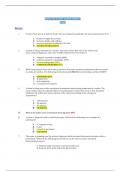
Nur2790 Study Guide Exam 4 Q &A
NUR2790 STUDY GUIDE EXAM 4 Q &A Neuro 1. For the client who is at risk for stroke, the most important guideline the nurse should teach is to: A. monitor weight and activity. B. increase drinks with caffeine. C. increase amounts of sodium in the diet. D. monitor blood pressure. 2. A client is being evaluated for a stroke. The nurse knows that one of the easiest and most common diagnostic tests used to differentiate between strokes is: A. magnetic resonance imaging (MRI). B. positron emission tomography (PET). C. electrocardiography (EEG). D. computed tomography (CT). 3. While instructing a client on stroke prevention, the nurse mentions medications that are useful in stroke prevention. The following medications are effective in preventing a stroke, EXCEPT: A. anticholinergics. B. antiplatelets. C. anticoagulants. D. neuroprotective agents. 4. A client is being seen in the emergency department experiencing symptoms of a stroke. The nurse realizes that the administration of a medication to break clots, such as tPA, should be administered within how many minutes of the client presenting to the emergency department? A. 120 minutes B. 90 minutes C. 30 minutes D. 60 minutes 5. What is the major cause of traumatic brain injuries? MVC 6. A client is diagnosed with a mild brain injury. Which of the following is an example of a mild injury? A. A. Vegetative state B. Coma C. Locked-in syndrome D. Concussion 7. The nurse is planning care for a client diagnosed with increased intracranial pressure after a head injury. Which of the following interventions can be used to reduce increased intracranial pressure? A. Perform range-of-motion exercises every hour. B. Keep the head of the bed in the flat position. C. Administer antibiotics as prescribed. D. Administer corticosteroids and osmotic diuretics as prescribed. 8. The nurse, caring for a client recovering from a traumatic brain injury, knows the client and the family are eligible for specific federal programs because of the: A. Associated Brain Act. B. Traumatic Brain Injury Act of 2008. C. Brain Protection Act. D. Health Brain Act. 9. Which of the following should be avoided when caring for a client diagnosed with increased intracranial pressure? A. Placing the client on bed rest B. Placing the bed in Trendelenburg C. Starting an intravenous access line D. Administering oxygen 10. A client is being instructed on treatments available for a newly diagnosed brain tumor. The nurse realizes that this client's treatment could include all of the following EXCEPT: A. photo DNA therapy. B. radiation. C. surgery. D. chemotherapy.
Document information
- Uploaded on
- August 23, 2023
- Number of pages
- 21
- Written in
- 2023/2024
- Type
- Exam (elaborations)
- Contains
- Questions & answers


