
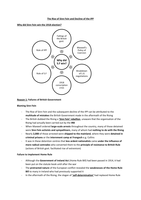
The Rise of Sinn Fein and Decline of the IPP
Why did Sinn Fein win the 1918 election?
Failings of
the British
govt.
Maxwell's
Role of IPP Policy of
Coercion
Why did
S.F win?
Breakdown
Role of S.F of L.G
negotiations
1918
conscription
crisis
Reason 1: Failures of British Government
Blaming Sinn Fein
- The Rise of Sinn Fein and the subsequent decline of the IPP can be attributed to the
multitude of mistakes the British Government made in the aftermath of the Rising
- The British dubbed the Rising a ‘Sinn Fein’ rebellion, unaware that the organisation of the
Rising had actually been carried out by the IRB
- When Maxwell ordered large-scale arrests throughout the country, many of those detained
were Sinn Fein activists and sympathisers, many of whom had nothing to do with the Rising
- Nearly 2,000 of those arrested were shipped to the mainland, where they were detained in
criminal prisons or the internment camp at Frongoch e.g. Collins
- It was in these detention centres that less ardent nationalists came under the influence of
more radical comrades who converted them to the principle of resistance to British Rule
(actions of British govt. facilitated rise of extremism)
Failure to implement Home Rule
- Although the Government of Ireland Act (Home Rule Bill) had been passed in 1914, it had
been put on the statute book until after the war
- The protracted nature of the European conflict revealed the weaknesses of the Home Rule
Bill to many in Ireland who had previously supported it
- In the aftermath of the Rising, the slogan of ‘self-determination’ had replaced Home Rule


