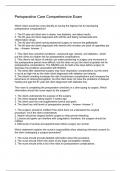
Perioperative Care Comprehensive Examination
Which client would the nurse identify as having the highest risk for developing postoperative complications? 1. The 67-year-old client who is obese, has diabetes, and takes insulin. 2. The 50-year-old client diagnosed with arthritis and taking nonsteroidal anti-inflammatory drugs. 3. The 45-year-old client having abdominal surgery to remove the gallbladder. 4. The 60-year-old client diagnosed with anemia who smokes one pack of cigarettes per day. - Answer- Answer: 1 1. This client has comorbid conditions—advanced age, obesity, and diabetes—which put this client at a higher risk for postoperative complications. 2. This client's risk factor of arthritis can make positioning in surgery and movement in the postoperative period more difficult, but this does not put the client at greater risk for postoperative complications. The NSAIDs can be held a few days before surgery to decrease the problems associated with NSAIDs. 3. The client after abdominal surgery may have respiratory complications, but the client is not at as high risk as the older client diagnosed with diabetes and obesity. 4. The client's smoking increases the risk of pulmonary complications and increases the blood level of carboxyhemoglobin, but this client does not have the problems of delayed healing and age the 67-year-old client diagnosed with diabetes has. The nurse is completing the preoperative checklist on a client going to surgery. Which information should the nurse report to the surgeon? 1. The client understands the purpose of the surgery. 2. The client stopped taking aspirin 3 weeks ago. 3. The client uses the oral supplements licorice and garlic. 4. The client has mild levels of preoperative anxiety. - Answer- Answer: 3 1. The surgeon should be notified if the client does not understand the surgical procedure, not if the client understands. 2. Aspirin should be stopped before surgery to help prevent bleeding. 3. Licorice and garlic can interfere with coagulation; therefore, the surgeon should be notified. 4. Mild levels of anxiety and apprehension before surgery are normal. Which statement explains the nurse's responsibility when obtaining informed consent for the client undergoing a surgical procedure? 1. The nurse should provide detailed information about the procedure. 2. The nurse should inform the client of any legal consultation needed. 3.
Document information
- Uploaded on
- August 3, 2023
- Number of pages
- 10
- Written in
- 2023/2024
- Type
- Exam (elaborations)
- Contains
- Questions & answers