
Davita Basic Training Final|Updated&Verified|100% Solved|Guaranteed Success
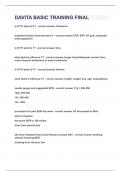
in KT/V what is K? Clearance treatment factors that decrease K DFR, BVP, UF goal, adequate anticoagulation In KT/V what is T? time what factors influence T? longer blood/dialysate contact time, more frequent treatments or extra treatments In KT/V what is V? Volume what factors influence V? height, weight, sex, age, amputations needle gauge and suggested BFR 17g = 200-250 16g= 250-350 15= 350-450 14= 450 procedure for post BUN lab draw UF decreased to 50ml place in bypass decrease BFR to 100 ml/pm draw from arterial line lab draw mistakes that would falsely increase Kt/V drawing without lowering BFR drawing from veinous line not waiting full 15 seconds lab draw mistakes that would falsely decrease Kt/V Diluting pre BUN sample waiting longer than 15 seconds What does the acronym RIFLE stand for? *RISK *INJURY *FAILURE *LOSS *END STAGE RENAL DISEASE Define AKI AKI occurs when persons experience a sudden loss of kidney function. restoring function is still possible. 3 examples of pre, intra and post-renal causes of AKI pre- volume depletion, decreased CO output renal vascular obstruction intra- glomerulonephritis, contrast induced, chemotherapy post- benign prosthetic hypotrophy, kidney stones outline treatment goals for AKI patient dialyzing in in the out-patient facility restoring function: eliminate cause, protect from further damage protect from further injury: prevent hypotensive injury, avoid toxic kidney meds why is accuracy important in monitoring weight and BP? to avoid hypotension and hypovolemia AKI patients are at increased risk for: infection and GI bleed protect vascular access explain the difference between AKI and CRF AKI is a sudden loss of function with restoring function still possible CRF is not reversible outline the treatment goals for a patient with CKD slow the progression manage comorbidities controlling symptoms minimizing the effects of CKD in patients lifestyle renal replacement therapy modality education encouraging patients to actively participate in their healthcare what are the most common causes of CRF in the USA? 1. Diabetes 2. Hypertension 3. Polycystic kidney disease why do we document in the medical record? proof of care data continuity permanent legal record communication 6 occurrences when to chart 1. baseline assessment change 2. change in condition 3. procedure or treatment ation and response nt teaching 6. care plan review and interventions times to chart pre, intra, and post dialysis
Document information
- Uploaded on
- July 29, 2023
- Number of pages
- 6
- Written in
- 2022/2023
- Type
- Exam (elaborations)
- Contains
- Questions & answers


