ATI NUTRITION PROCTOR STUDY GUIDE REVIEW|WITH 100% CORRECT ANSWERS|ALREADY GRADED A|DOWNLOAD TO PASS
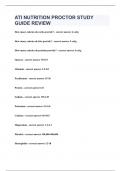
How many calories do carbs provide? 4 cal/g How many calories do fats provide? 9 cal/g How many calories do proteins provide? 4 cal/g Glucose 70-115 Albumin 3.5-5.0 Prealbumin 15-36 Protein 6-8 Sodium 135-145 Potassium 3.5-5.0 Calcium 9.0-10.5 Magnesium 1.3-2.1 Platelets 150,000-400,000 Hemoglobin 12-18 Hematocrit 37%-52% Cholesterol 200 HDL Male 40; Female 50 LDL 100 Triglycerides 150 Glycosylated Hemoglobin A1c 4.0-6.0% Creatinine 0.6-1.3 BUN 6-20 WBC 5,000-10,000 Food sources for folic acid Green leafy vegetables; liver, beef, and fish; legumes; grapefruit and oranges Food sources for niacin Meats, poultry, fish, beans, peanuts, grains, legumes, milk, whole grain, and enriched breads and cereals. Deficiency of Niacin (B3) results in pellagra S/S: sun-sensitive skin lesions and GI and neurological findings. Food sources for B12 (thiamine) pork and nuts, whole-grain cereals, legumes Thiamin (B1) deficiency results in beriberi (ataxia, confusion, anorexia, tachycaria), headache, wt loss, fatigue Food sources for B2 (riboflavin) milk, lean meats, fish, grains Deficiency of Riboflavin (B2) results in cheilosis (S/S: scales and cracks on lips and in corners of mouth), swollen/smooth red tongue (glossitis), and dermatitis of ears, nose, and mouth) Food sources for B6 (pyridoxine) yeast, corn, meat, poultry, fish Food sources for B12 (cobalamin) Meat, liver Food sources for vitamin C (ascorbic acid) Citrus fruits (oranges, lemons), tomatoes, broccoli, cabbage, peppers, green leafy vegetables, strawberries Vitamin C deficiency scurvy; a hemorrhagic disease w/ diffuse tissue bleeding, painful limbs/joints, weak bones, swollen gums/loose teeth Food sources for Vitamin A Liver, egg yolk, whole milk, green or orange vegetables, fruits Food sources for Vitamin D Fortified milk, fish oil, cereal Food sources for Vitamin E vegetable oils; green leafy vegetables; cereals; apricots, apples, and peaches Food sources for Vitamin K green leafy vegetables; cauliflower and cabbage. Food sources of calcium cheese, collard greens, milk and soy milk, rhubarb, sardines, tofu, yogurt Food sources of chloride salt Food sources of iron Bread, cereal, dark green vegetables, dried fruits, egg yolk, legumes, liver, meats Food sources of magnesium Avocado, canned white tuna, cauliflower, cooked rolled oats, green leafy vegetables, milk, peanut butter, peas, pork, beef, chicken, potatoes, raisins, yogurt. affects enzyme and neurochemical activities and the excitability of cardiac and skeletal muscles. Food sources of phosphorus Fish, nuts, organ meats, pork, beef, chicken, whole grain breads and cereals. Milk products, beef liver, chocolate, nuts, legumes, peanut butter, dried peas and beans, bran, cola, beer, some whole grains. plays a role in bone and teeth formation and energy metabolism Food sources of potassium Avocado, bananas, cantaloupe, carrots, fish, mushrooms, oranges, pork, beef, veal, potatoes, raisins, spinach, strawberries, tomatoes Food sources of sodium Bacon, butter, canned food, cheese, cured pork, hot dogs, ketchup, lunch meat, milk, mustard, processed food, snack food, soy sauce, table salt, white and whole wheat bread Food sources of zinc eggs, leafy vegetables, meats, protein rich foods. plays a role in tissue growth and wound healing, and supports immune function Recommended intake of protein for adults 10%-35% of total calories Recommended intake of fats for adults 20-35% of total calories, 10% or less of total calories should come from saturated fat souces
Written for
- Institution
- ATI NUTRITION
- Course
- ATI NUTRITION
Document information
- Uploaded on
- July 29, 2023
- Number of pages
- 18
- Written in
- 2022/2023
- Type
- Exam (elaborations)
- Contains
- Questions & answers
Subjects
-
ati nutrition proctor study guide review|with 100

Also available in package deal