Written by students who passed Immediately available after payment Read online or as PDF Wrong document? Swap it for free 4.6 TrustPilot
logo-home
Document preview thumbnail
Preview 4 out of 45 pages
Summary

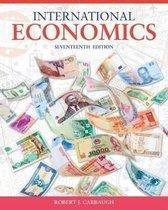
Summary book: International Economics 17th Editions by Robert J. Carbaugh

Document preview thumbnail
Preview 4 out of 45 pages

This summary contains the following chapters: 1,2,3,4,5,9,11,12,13. This is for the International Economics and Business module, tutor Mr A. Rapozo at the Hogeschool van Amsterdam.

Content preview

SUMMARY BOOK:
INTERNATIONAL
BUSINESS & ECONOMICS
International Business
Parttime

,Table of Contents:

Chapter 1: The International Economy & Globalization..................2

Study Questions:............................................................................5

Chapter 2: Foundations of Modern Trade Theory: Comparative

Advantage.........................................................................................7

Chapter 3: Sources of Comparative Advantage..............................14

Chapter 4: Tariffs...........................................................................23

Chapter 5: Non - tariff Trade Barriers...........................................28

Chapter 9: International Factor Movements and Multinational

Enterprises..................................................................................... 32

Chapter 11: Foreign Exchange.......................................................36

Chapter 12: Exchange Rate Determination....................................41

Chapter 13: Exchange Rate Adjustments and the Balance – of -

Payments........................................................................................ 43


1

, Chapter 1: The International Economy &
Globalization

Economic interdependence:
The economy of one nation depends on the economy of other trading
partners in the world. This is reflected in the form of international
movements of goods and services, labour, business enterprise,
investment funds and technology. Therefore, business, labour, investors,
and consumers all feel the repercussions of changing economic
conditions and trade policies in other nations. As such, global economy
required cooperation on an international level to cope with the myriad
(veelvoudig) issues and problems and issues.

The federal reserve policy (FED):
A policy a country has when it suffers from the repercussions of economic
interdependence. Also, when domestic policies have spill over effects on
the economies of other countries.

Quantitative easing:
Purchasing large amounts of long – term securities in order to pump
additional money into the economy that would cause long – term interest
rates to fall.

Globalization:
Globalization is the process of greater interdependence among countries
and their citizens and consists of the increase interaction of product and
resource markets across nation. Globalization is political, technological,
cultural, and economic via:
 Trade
 Immigration
 Foreign investment:
o international flows of goods and services, people, investments in
equipment, factories, stocks, and bonds.
 Non – economic elements:
o Culture and environment.
 Corporation stocks
 Government securities.

Global manufacturing:
Is characterized by the geographical fragmentation of productive
processes and the offshoring of industrial tasks.

Agglomeration economies:
Rich country specialization in manufacturing niches that gained
productivity through agglomeration economies. Firms clustering


2

, together; some clusters produced the same product, and others were
connected by vertical linkages.

Openness ratio:
A rough measure of the importance of international trade in a nation’s
economy:
(Exports + Imports)
GDP
Globalization is important due to the following reasons:
 International trade allows consumers to purchase that have not been
domestically produced.
 Production can be separated from consumption, often by great
distances.
 Individuals, firms, regions, and nations can specialize in the
production of things they do well and use the earnings from these
activities to purchase goods from other companies that are high – cost
producers.
 Trading partners can produce a larger joint output and achieve a
higher standard of living, than would otherwise be possible.

The law of comparative advantage:
The citizens of each nation can gain by spending more of their time and
resources doing those things where they have a relative advantage.
If a good or service can be obtained more economically through trade, it
makes sense to trade for it instead of producing it domestically. The
central issue is how the available resources can be used to obtain each
good at the lowest possible cost. When trading partners use more of their
time and resources producing things they can produce best, they are able
to produce a larger joint output that provides the source for mutual gain.

The competitive process:
Competition is essential to both innovation and efficient production.
International competition helps keep domestic producers on their toes
and provides them with a strong incentive to improve the quality of their
products. Plus, international trade usually weakens monopolies as
monopoly producers face competition from foreign firms.

Open economies have more:
 Competition
 Firm turnover
 Hight – cost domestic producers exiting the market, which leads to
productivity improvements for the industry.
 New firms entering the market unless there are significant barriers.
 Churning of the labour market.
 Some workers might become unemployable due to the lack of
adequate education and training for new jobs that are being created as
a result of emerging firms.
 Benefit from new technologies and other sources of economic growth.


3

Connected book
 image
Robert Carbaugh, Robert Carbaugh International Economics
Publisher: Unknown ISBN: 9781337558938 Edition: Unknown

Document information

Study
Summarized whole book?
Yes
Uploaded on
July 27, 2023
Number of pages
45
Written in
2022/2023
Type
Summary
$16.72

Wrong document? Swap it for free Within 14 days of purchase and before downloading, you can choose a different document. You can simply spend the amount again.
Written by students who passed
Immediately available after payment
Read online or as PDF

Seller avatar
Reputation scores are based on the amount of documents a seller has sold for a fee and the reviews they have received for those documents. There are three levels: Bronze, Silver and Gold. The better the reputation, the more your can rely on the quality of the sellers work.
swkalaykhan
4.0
(3)
Sold
16
Followers
9
Items
0
Last sold
1 year ago


Why students choose Stuvia

Created by fellow students, verified by reviews

Quality you can trust: written by students who passed their tests and reviewed by others who've used these notes.

Didn't get what you expected? Choose another document

No worries! You can instantly pick a different document that better fits what you're looking for.

Pay as you like, start learning right away

No subscription, no commitments. Pay the way you're used to via credit card and download your PDF document instantly.

Student with book image

“Bought, downloaded, and aced it. It really can be that simple.”

Alisha Student

Working on your references?

Create accurate citations in APA, MLA and Harvard with our free citation generator.

Working on your references?

Frequently asked questions