Exam (elaborations) ATI NURSING PHARMACOLOGY EXAM 1 2023
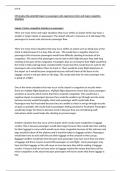
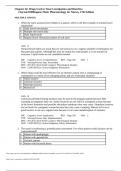
Nursing Pharmacotherapeutics Exam #1 Question #1: The nurse provides medication to a client with terminal cancer. The physician has ordered morphine, a schedule II drug, for the client. The nurse determines that learning has occurred when the client makes which of the following statements. • "I need to see my doctor before my prescription runs out so I can get a refill." Question #2: The patient uses Ginkgo biloba to enhance memory functioning but has not told the nurse about this herb. The physician orders warfarin (Coumadin) for the patient. Which findings may the nurse find upon assessment of this client? • Petechiae and bleeding from the gums Question #3: A client has been prescribed the antibiotic tetracycline, for an infection. What discharge instruction should the nurse provide to this client regarding foods to avoid due to a drug- to food interaction. • ??? Do not take tetracycline with food, especially dairy products such as milk, yogurt, cheese, and ice cream.??? • absorption reduced by food • They should not be administered with calcium supplements, milk products, iron supplements, magnesium containing laxatives, and most antacids Question #4: What are the four phases of pharmacokinetics that a drug goes through? • absorption, distribution, metabolism, excretion Question #5: Which of the following is considered a standing order? • PRN Question #6: All opioids are assigned a schedule or classification by law. In which classification or schedule would the nurse find the drug morphine sulfate? • Schedule II drugs Question #7: The adolescent client is supposed to go to the school nurse at 12:00 to receive his medication for attention- deficit hyperactivity- disorder (ADHD). He often misses his appointment with the school nurse and therefore does not receive his medications as ordered. What best describes the ‘s nurse’s understanding of this situation? • The adolescent is embarrassed in front of his peers. Question #8: A postmenopausal client with a history of stroke is told she cannot take female hormones such as estrogen because of the risk for future thromboembolic events. The client asks about the nonpharmacologic ways to manage her menopausal symptoms. Which of the following herbs might the nurse suggest as an alternative? • Soy: Rationale – Soy is used to alleviate postmenopausal symptoms. • Black cohosh: Rationale – black cohosh is used to alleviate postmenopausal symptoms • Evening primrose: Rationale – Evening primrose is used to alleviate postmenopausal symptoms. Question #9: The order is for pain medication to be given PRN. Which statement by the nurse, correctly teaches the patient about the medication order? • “I will be giving you this medication anytime you need it, so ii will be asking you about your pain Question #10: The nurse should never use which of the following abbreviations when documenting, because it has been found to result in medication errors? • QD Question #11: The nurse is working with a group of patients in a rehab unit that have an admitting diagnosis of chronic alcoholism. What organ system is most likely to be compromised or malfunctioning of this problem? • Liver Question #12: The nurse determines that a client who is breast-feeding has understood the teaching plan regarding the correct medication usage when the client makes which of the following statements? • Check with doctor (HCP) before taking any medications. Question #13: The nurse is teaching a caregivers’’ support group for caretakers of older adult patients. The focus is medication compliance. The nurse determines that learning has been successful when the caregivers make which of the following statements? • “We should use a medication management box, so they won’t forget to take it” Question #14: The HCP has ordered several medications for the client. What does the nurse recognize as the critical responsibilities regarding administration of medications? • Knowing the reason, the medication was prescribed for the client • Knowing the name of the medication • Knowing how the medication is supplied by the pharmacy • Knowing how the medication is to be administered. Question #15: The nurse for a client who is taking a drug known to cause nephrotoxicity. Which interventions would be the appropriate for the nurse to monitor to prevent s drug- induced nephrotoxicity event? • Keep patient hydrated (protects kidneys) • Monitor diagnostic lab test (BUN and creatinine levels) • Check kidney function Question #16: The nurse is on the committee to reduce medication errors in a large health care facility. What recommendation should the nurse propose that might reduce the medication errors in the facility? • Use automated, computerized cabinets on all nursing units. (Pyxis – automated medication dispensing system) Question #17: The HCP orders cefaclor 100 mg PO QID. The drug is available as an oral suspension 125 mg/5mL. How much will you administer each time to your patient? • mL= 5ml x 100 = 500 = 4mL 125 dose 125 Question #18: While reading a medication package insert, the nurse notes the information within the information within the “black box”. What is the significance of this information to the nurse and or the patient? • The drug can cause “special problems” • It identified extreme adverse drug reactions Question #19: The HCO orders metaproterenol sulfate 20 mg. QID. The pharmacy sends metaproterenol syrup 10mg/5ml. How much will the nurse administer per dose? • 10mL Question #20: What would the nurse anticipate about medications ordered for a patient with Cirrhosis of the Liver? • Lower dose of medication (no first pass metabolism) Question #21: When teaching a client about a new medication, the nurse should include which of the following information in the teaching plan. • Adverse reactions to report to the physician • Side effects to expect from the drug • Therapeutic response to expect from the drug • The route of administration • The dose to administer • What the drug is for
Written for
- Institution
- ATI NURSING PHARMACOLOGY
- Course
- ATI NURSING PHARMACOLOGY
Document information
- Uploaded on
- July 26, 2023
- Number of pages
- 8
- Written in
- 2022/2023
- Type
- Exam (elaborations)
- Contains
- Questions & answers
Subjects
- ati nursing pharmacology
- exam 1
-
the nurse provides medication to a client with ter