
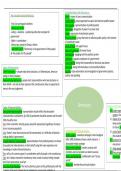
Interlinked Ideas with Democracy: -
Key concepts around democracy: Media- means of mass communication
Political party- group organised to acquire and exercise political power
-Free, fair and regular elections Party leaders- representatives of political parties
-Democratic deficit Devolution- delegation of power to a lower level
-voting -> elections -> political parities that compete for Voting- expression of electorates opinion
government Pressure groups- group that tries to influence public policy in the interest
-Rights = constitutions of a particular cause.
-Democracy started in Greece, Athens House of lords- the upper house
- Abraham Lincoln “Democracy is the government of the people, House of commons- the lower house
by the people, for the people” Participation- engaging with the political system
Legitimacy- popular acceptance of a government
Accountability- being held responsible for decisions and actions
Types of Democracies: - Education- being informed about current political affaires
Direct democracy – people make direct decisions, ie: Referendums, American Scrutiny- close examination and investigation of government policies,
voting on their president. actions and spending.
Representative democracy- people elect representatives who take decisions on
their behalf – not only do they represent the constituencies they are expected to
exercise the own judgement.
Types of Representations: - Democracy Failings of UK Demo
Descriptive Representation- representation should reflect the descriptive 1) Under repre
characteristics in parliament. Eg: 50% of parliament should be women and the other system- Elec
50% should be men. 2) House of Lor
Pro- Ethnic and other minority groups would be represented, legitimacy increases being unelec
due to increase popularity. for them, he
Con- Doesn’t mean that everyone will be represented, isn’t reflective of decision- Interlinked with Pressure Groups: - 3) Lack of prote
making ability in government. Public support- snowdrop campaign to ban handguns the protectio
Trustee Model of representation- Representatives from political parties are chosen after 1996 Dunblane primary school massacre. -> 4) Control of m
by people and make decisions on their behalf using their own experience and favourable media coverage one person c
knowledge to make informed decisions. Government attitudes- insider contacts with 5) Party memb
Pro- will act for common good, in consideration with all people in the constituency. ministers and civil servants can lead to success 6) Pressure gro
Con- don’t always represent constituency views, leads to tactical voting if people Tactics and leadership- collaboration and “access individuals
don’t feel represented- recall act. points”
Doctrine of the Mandate- The most authority is given to the political party with the Resources- membership and subscriptions
Key concepts around democracy: Media- means of mass communication
Political party- group organised to acquire and exercise political power
-Free, fair and regular elections Party leaders- representatives of political parties
-Democratic deficit Devolution- delegation of power to a lower level
-voting -> elections -> political parities that compete for Voting- expression of electorates opinion
government Pressure groups- group that tries to influence public policy in the interest
-Rights = constitutions of a particular cause.
-Democracy started in Greece, Athens House of lords- the upper house
- Abraham Lincoln “Democracy is the government of the people, House of commons- the lower house
by the people, for the people” Participation- engaging with the political system
Legitimacy- popular acceptance of a government
Accountability- being held responsible for decisions and actions
Types of Democracies: - Education- being informed about current political affaires
Direct democracy – people make direct decisions, ie: Referendums, American Scrutiny- close examination and investigation of government policies,
voting on their president. actions and spending.
Representative democracy- people elect representatives who take decisions on
their behalf – not only do they represent the constituencies they are expected to
exercise the own judgement.
Types of Representations: - Democracy Failings of UK Demo
Descriptive Representation- representation should reflect the descriptive 1) Under repre
characteristics in parliament. Eg: 50% of parliament should be women and the other system- Elec
50% should be men. 2) House of Lor
Pro- Ethnic and other minority groups would be represented, legitimacy increases being unelec
due to increase popularity. for them, he
Con- Doesn’t mean that everyone will be represented, isn’t reflective of decision- Interlinked with Pressure Groups: - 3) Lack of prote
making ability in government. Public support- snowdrop campaign to ban handguns the protectio
Trustee Model of representation- Representatives from political parties are chosen after 1996 Dunblane primary school massacre. -> 4) Control of m
by people and make decisions on their behalf using their own experience and favourable media coverage one person c
knowledge to make informed decisions. Government attitudes- insider contacts with 5) Party memb
Pro- will act for common good, in consideration with all people in the constituency. ministers and civil servants can lead to success 6) Pressure gro
Con- don’t always represent constituency views, leads to tactical voting if people Tactics and leadership- collaboration and “access individuals
don’t feel represented- recall act. points”
Doctrine of the Mandate- The most authority is given to the political party with the Resources- membership and subscriptions


