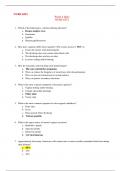
NURS 6551
Week 4 Quiz
NURS 6551
1. Which of the following is a chronic lifelong infection?
a. Herpes simplex virus
b. Gonorrhea
c. Syphilis
d. Human papillomavirus
2. How does vaginosis differ from vaginitis? (The correct answer is NOT A)
a. It must be treated with metronidazole
b. The discharge does not contain white blood cells
c. The discharge does not have an odor
d. It causes itching and/or burning
3. How do systematic antiviral drugs treat genital herpes?
a. The can control the symptoms
b. They can reduce the frequency of recurrences after discontinuation.
c. They can prevent transmission to sexual partners.
d. They can protect secondary infections.
4. What is the most common symptoms of bacterial vaginosis?
a. Vaginal itching and/or burning.
b. Cottage cheeselike discharge
c. Fishy odor
d. Yeasty odor
5. What is the most common symptom of vulvovaginal candidiasis?
a. Fishy odor
b. Fever
c. Thin, grayish-white discharge
d. Vulvar pruritis
6. What is the major source of normal vaginal secretions?
a. Bartholin’s glands
b. Apocrine glands
c. Sebaceous glands
d. Cervical mucosa
7. Approximately how many Americans will contract one or more sexually transmitted infections during
their lifetime?
a. 50%
b. 25%
c. 40%
Week 4 Quiz
NURS 6551
1. Which of the following is a chronic lifelong infection?
a. Herpes simplex virus
b. Gonorrhea
c. Syphilis
d. Human papillomavirus
2. How does vaginosis differ from vaginitis? (The correct answer is NOT A)
a. It must be treated with metronidazole
b. The discharge does not contain white blood cells
c. The discharge does not have an odor
d. It causes itching and/or burning
3. How do systematic antiviral drugs treat genital herpes?
a. The can control the symptoms
b. They can reduce the frequency of recurrences after discontinuation.
c. They can prevent transmission to sexual partners.
d. They can protect secondary infections.
4. What is the most common symptoms of bacterial vaginosis?
a. Vaginal itching and/or burning.
b. Cottage cheeselike discharge
c. Fishy odor
d. Yeasty odor
5. What is the most common symptom of vulvovaginal candidiasis?
a. Fishy odor
b. Fever
c. Thin, grayish-white discharge
d. Vulvar pruritis
6. What is the major source of normal vaginal secretions?
a. Bartholin’s glands
b. Apocrine glands
c. Sebaceous glands
d. Cervical mucosa
7. Approximately how many Americans will contract one or more sexually transmitted infections during
their lifetime?
a. 50%
b. 25%
c. 40%