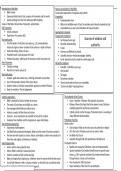
jk4Introduction to the bible Nature and authority of the Bible-
Bible= books Conservative approaches- Evangelical and catholic
Expresses beliefs about God, purposes for humanity and the world Evangelical-
Earliest writings from the first millennium BCE-tradition Fundamentalist view
Canon of the bible- Old and New Testament- authoritative Bible is the infallible word of God. No mistakes and is directly inspired by God.
Old Testament: Contradictions are due to the limitations of human intellect.
Jewish scriptures Approaches to Genesis:
Fixed form- First century BCE Young Earth creationist:
Four main parts Six thousand years ago Sources of wisdom and
1. First five books- Torah (law), law codes e.g., 10 commandments,
history of origins of Jews= creation of the universe-> death of Moses
Literalist understanding authority
6 days
2. Historical writing- History of Jews Humans are different to animals.
3. Prophetic books- Gods purposes for Israel Scientific theories= limited knowledge/ intellect
4. Wisdom Literature- suffering of the innocent, erotic love poetry etc. Fossil- planted by God to make the world appear old.
New Testament: Old earth creationist
Christian writings Scientific- 13.8 billion years ago
Fixed form- Fourth century CE Not literalist
Four main parts- Six stages
1. Gospels- good news about Jesus, suffering and death, resurrection. Darwinian evolution
2. Acts of the Apostles- History of the early church Genesis and modern science are compatible.
3. Epistles- letters to Christian communities, guidance on belief/ lifestyle. ‘Let there be light’= big bang theory
4. Book of revelation- The last judgement
Catholic approaches - The Authority of the Church-
Bible is inspired by God but written by humans. Jesus-> Apostles-> Bishops= The Apostolic Succession
The word of God relates to the Bible as a whole. Bishop of Rome (the Pope) had to be obeyed- many Christians
Key messages within bible are without error. rebelled against this and became protestants.
Authors a product of their time and culture Catholic church- led by the pope, Protestant church- consisting of
Genesis 1- never intended to be scientific or factual for creation. many different denominations.
Guidance from tradition and the magisterium- pope and bishops Protestant churches-
Neo-orthodox approaches- Martin Luther-
Arguments of philosophers Sola Scriptura- Bible as the only source of authority in religion
Karl Bath-Swiss protestant theologian, bible is not the word of God but contains it. All is the truth- Christians must not say some is false.
Not inerrant with respect to science, history, and religion, authors were products of No Bible= No Church
their time and subject to limitations of intellect. Salvation through Faith (the priesthood of all believers)
Liberal Approaches- The Baptist Church-
Some- authors were guided by God. Baptists are evangelical Christians, most not fundamentalist.
Others- Bible is entirely a human document. Special revelation (God makes himself known in specific ways/
Authors a product of their culture and age times e.g., RE) + general revelation (God makes himself known
Bible not inspired but inspiring e.g., Matthew- draw the sword will die by the sword. through nature, reason, and conscience
Sea of Faith Network- faith is a human creation- so the bible has no authority other New Testament> Old Testament
than any that an individual might choose to give it. Reject authority of the church as an institution
,Catholic churches- Authority Part 2
Once bible was in its fixed form, it could not be added
tot or taken away from The Authority of Jesus-
Tradition passed in oral form and written down by the Two different views-
apostles-apostolic tradition. Jesus’ authority as Gods authority:
Bible is the living form of truth in that it is added to by Based on the claim that Jesus was God incarnate (‘in flesh’)
new insights e.g., ethical teachings. Jesus’ authority as only human:
Overseen by the magisterium. Jesus was not divine.
“We find the true Faith in sacred scripture and in the Jesus’ authority as Gods Authority-
living tradition of the church” Youcat. Traditional- Nicene Creed
According to the gospels, Jesus claimed to have divine authority- through his teaching,
Jesus' authority as only human: miracles, and titles e.g., messiah (anointed one)
Adoptionism- belief that Jesus was not divine by “All authority in Heaven and earth has been given to me”- Matthew
nature.
God adopted him as his ‘son’ at the baptism. Divine authority Divine authority Jesus as son of God Jesus as son of man
Unitarianism- through teaching through healing
Adopts a deist view of the creation of the world- God Taught in a new, Healing the centurion's Old Testament- used for Old Testament- this was an
created the world then had no further connection. direct, and original servant kings. ambiguous term.
Just a spiritual leader whose teachings contain useful way. Jesus only needed to Phrase son of= ‘reflecting Ambiguity made it less likely
insights, but there us no idea of divine authority Taught with authority say the word for the nature of’ that he would be thought of
attaching to them. and those who healing to take place. Kings were thought to as a power figure.
Liberal Christian views- believed in him were Story shows that he have been adopted by “I want you to know that the
Jesus' teaching and the stories associated with him may convinced his had unique authority. God at their accession. son of man has authority on
have been altered overtime or even exaggerated. authority came from Messiah- being chosen by earth to forgive sins- mark.
Gradually Jesus was transformed into divine figure. God. God. “You will see the son of man
The outlook of modern science which rejects the New Testament- the title sitting at the right hand of the
possibility of miracles. indicates Jesus unique mighty one”- Mark
Jesus was a human being like everyone else, though his divine authority.
deeply spiritual nature gave his teaching authority.
Christian responses to the teaching of Jesus:
Those who see Jesus' authority as gods' authority- obey
his teaching yet some of his teachings are impractical.
Those who see Jesus' authority as only human- free to
decide for themselves- yes/no to follow his teaching.
Jesus as a role model-
Seek to emulate his life of self-giving love- reflected in
teaching of the commandments as love of God and thy
neighbour.
Many non-Christians such as Gandhi have been
inspired by the teaching and example of Jesus.
, Transcendent and unknowable- Christian monotheism
God is beyond and outside the world of space and time. God is eternal and Monotheism- refers to the belief that there is one God.
limitless. Catholic- Gods Aseity (belief in gods self-existence, his nature to exist) “I am the first and I am the last; apart from me there is no God” Old
Call of Moses- Moses asked Gods name, and the reply was ‘I am who I am’. no Testament- Isaiah 44:6
human can possibly know god’s name. i.e., understand what it means to be God. “The Lord our God, the Lord is one” Deuteronomy.
The doctrine of the trinity- Ethical Monotheism- Belief in One God includes also following the moral
God is ‘Three in one’ codes linked to that belief, e.g. The Ten Commandments
Trinitarian – Old Testament “Love your neighbour as yourself. no commandment greater than these.”
The Hebrew word for God in the Old Testament is plural- Elohim.
God as Personal, God as Father and God as Love-
The baptism of Jesus:
Bible describes God in anthropomorphic terms- Genesis 2- God is said to walk in the
“Just as Jesus was coming out of the water, he saw heaven being torn open and the
Garden in the cool of the day – depicted as having a human body.
spirit descending on him like a dove. And a voice came from heaven: ‘You are my
God as Personal-
son, whom I love; with you I am well pleased.”
Humans can relate to God.
One God in three people: Father, son, and Holy Spirit
God is immanent i.e., involved in the world and accessible.
Each person possesses fully all the attributes of the God head (eternity,
God hears and answers prayers.
omnipotence, omniscience etc.)
“Your bodies are temples of the holy spirit, who is in you”- 1 Corinthians.
The importance of the doctrine of the trinity-
God as Father- Old Testament:
It connects with Christian beliefs of sin and atonement.
God created the universe.
God sent his son to atone for that sin through his crucifixion
Rescued Israel when they were in trouble.
Holy spirit works in believers’ hearts and lives, giving hope for eternal life.
Setting standards of behavior e.g., the ten commandments
Supports the idea that God is transcendent and immanent.
Exercising justice, rewarding obedience, and punishing misdemeanors
New Testament- Jesus referred to God as Father, parable of Forgiving father- gods unconditional love, Jesus tells disciple their heavenly father will give good things to those
who ask him and teaches them a prayer that addresses God as ‘our father’. Apostles’ creeds refer to God as father as a creator of the universe and as the father of Jesus.
Omnipotent creator and controller of things- Omnipotence- All-powerful
Descartes views- God can do absolutely anything- raises issues relating to the problem of evil.
Most Christians think omnipotence means that God can do anything that is logically possible- creating further issues relating to freewill and determinism.
God as omnipotent creator- there are three approaches.
Minority of Christians-universe coming out of Gods being. Most however reject this identification of God as it limits them.
Many Christians-The universe was created by God Ex Nihilo (out of nothing). “Let there be... and there was” in Genesis 1.
Adopted by process theology- The Earth was already in existence and in state of chaos. God then worked at ordering it.
God as the omnipotent controller of all things- God
The biblical references to God as king express the belief that everything is subject to god's control.
God both created the universe and sustains it- in both a spiritual and physical sense.
Most Christians believe that God is omniscient (all-knowing) creating issues for both the problem of evil and human free will.
There are three approaches to the concept of omniscience-
God knows past, present, and future. He controls everything that goes on in the universe, including human actions. This is known as theological determinism-Gods
control over everything means he causes all that happens.
As God exists beyond space & time, spatio-temporal language is not appropriate in relation to him.
According to Swinburne, God exists within time and knows all that it is logically possible for God to know. This means he cannot be the cause of human future
choices because he cannot know them, though he might be able to predict them.
Bible= books Conservative approaches- Evangelical and catholic
Expresses beliefs about God, purposes for humanity and the world Evangelical-
Earliest writings from the first millennium BCE-tradition Fundamentalist view
Canon of the bible- Old and New Testament- authoritative Bible is the infallible word of God. No mistakes and is directly inspired by God.
Old Testament: Contradictions are due to the limitations of human intellect.
Jewish scriptures Approaches to Genesis:
Fixed form- First century BCE Young Earth creationist:
Four main parts Six thousand years ago Sources of wisdom and
1. First five books- Torah (law), law codes e.g., 10 commandments,
history of origins of Jews= creation of the universe-> death of Moses
Literalist understanding authority
6 days
2. Historical writing- History of Jews Humans are different to animals.
3. Prophetic books- Gods purposes for Israel Scientific theories= limited knowledge/ intellect
4. Wisdom Literature- suffering of the innocent, erotic love poetry etc. Fossil- planted by God to make the world appear old.
New Testament: Old earth creationist
Christian writings Scientific- 13.8 billion years ago
Fixed form- Fourth century CE Not literalist
Four main parts- Six stages
1. Gospels- good news about Jesus, suffering and death, resurrection. Darwinian evolution
2. Acts of the Apostles- History of the early church Genesis and modern science are compatible.
3. Epistles- letters to Christian communities, guidance on belief/ lifestyle. ‘Let there be light’= big bang theory
4. Book of revelation- The last judgement
Catholic approaches - The Authority of the Church-
Bible is inspired by God but written by humans. Jesus-> Apostles-> Bishops= The Apostolic Succession
The word of God relates to the Bible as a whole. Bishop of Rome (the Pope) had to be obeyed- many Christians
Key messages within bible are without error. rebelled against this and became protestants.
Authors a product of their time and culture Catholic church- led by the pope, Protestant church- consisting of
Genesis 1- never intended to be scientific or factual for creation. many different denominations.
Guidance from tradition and the magisterium- pope and bishops Protestant churches-
Neo-orthodox approaches- Martin Luther-
Arguments of philosophers Sola Scriptura- Bible as the only source of authority in religion
Karl Bath-Swiss protestant theologian, bible is not the word of God but contains it. All is the truth- Christians must not say some is false.
Not inerrant with respect to science, history, and religion, authors were products of No Bible= No Church
their time and subject to limitations of intellect. Salvation through Faith (the priesthood of all believers)
Liberal Approaches- The Baptist Church-
Some- authors were guided by God. Baptists are evangelical Christians, most not fundamentalist.
Others- Bible is entirely a human document. Special revelation (God makes himself known in specific ways/
Authors a product of their culture and age times e.g., RE) + general revelation (God makes himself known
Bible not inspired but inspiring e.g., Matthew- draw the sword will die by the sword. through nature, reason, and conscience
Sea of Faith Network- faith is a human creation- so the bible has no authority other New Testament> Old Testament
than any that an individual might choose to give it. Reject authority of the church as an institution
,Catholic churches- Authority Part 2
Once bible was in its fixed form, it could not be added
tot or taken away from The Authority of Jesus-
Tradition passed in oral form and written down by the Two different views-
apostles-apostolic tradition. Jesus’ authority as Gods authority:
Bible is the living form of truth in that it is added to by Based on the claim that Jesus was God incarnate (‘in flesh’)
new insights e.g., ethical teachings. Jesus’ authority as only human:
Overseen by the magisterium. Jesus was not divine.
“We find the true Faith in sacred scripture and in the Jesus’ authority as Gods Authority-
living tradition of the church” Youcat. Traditional- Nicene Creed
According to the gospels, Jesus claimed to have divine authority- through his teaching,
Jesus' authority as only human: miracles, and titles e.g., messiah (anointed one)
Adoptionism- belief that Jesus was not divine by “All authority in Heaven and earth has been given to me”- Matthew
nature.
God adopted him as his ‘son’ at the baptism. Divine authority Divine authority Jesus as son of God Jesus as son of man
Unitarianism- through teaching through healing
Adopts a deist view of the creation of the world- God Taught in a new, Healing the centurion's Old Testament- used for Old Testament- this was an
created the world then had no further connection. direct, and original servant kings. ambiguous term.
Just a spiritual leader whose teachings contain useful way. Jesus only needed to Phrase son of= ‘reflecting Ambiguity made it less likely
insights, but there us no idea of divine authority Taught with authority say the word for the nature of’ that he would be thought of
attaching to them. and those who healing to take place. Kings were thought to as a power figure.
Liberal Christian views- believed in him were Story shows that he have been adopted by “I want you to know that the
Jesus' teaching and the stories associated with him may convinced his had unique authority. God at their accession. son of man has authority on
have been altered overtime or even exaggerated. authority came from Messiah- being chosen by earth to forgive sins- mark.
Gradually Jesus was transformed into divine figure. God. God. “You will see the son of man
The outlook of modern science which rejects the New Testament- the title sitting at the right hand of the
possibility of miracles. indicates Jesus unique mighty one”- Mark
Jesus was a human being like everyone else, though his divine authority.
deeply spiritual nature gave his teaching authority.
Christian responses to the teaching of Jesus:
Those who see Jesus' authority as gods' authority- obey
his teaching yet some of his teachings are impractical.
Those who see Jesus' authority as only human- free to
decide for themselves- yes/no to follow his teaching.
Jesus as a role model-
Seek to emulate his life of self-giving love- reflected in
teaching of the commandments as love of God and thy
neighbour.
Many non-Christians such as Gandhi have been
inspired by the teaching and example of Jesus.
, Transcendent and unknowable- Christian monotheism
God is beyond and outside the world of space and time. God is eternal and Monotheism- refers to the belief that there is one God.
limitless. Catholic- Gods Aseity (belief in gods self-existence, his nature to exist) “I am the first and I am the last; apart from me there is no God” Old
Call of Moses- Moses asked Gods name, and the reply was ‘I am who I am’. no Testament- Isaiah 44:6
human can possibly know god’s name. i.e., understand what it means to be God. “The Lord our God, the Lord is one” Deuteronomy.
The doctrine of the trinity- Ethical Monotheism- Belief in One God includes also following the moral
God is ‘Three in one’ codes linked to that belief, e.g. The Ten Commandments
Trinitarian – Old Testament “Love your neighbour as yourself. no commandment greater than these.”
The Hebrew word for God in the Old Testament is plural- Elohim.
God as Personal, God as Father and God as Love-
The baptism of Jesus:
Bible describes God in anthropomorphic terms- Genesis 2- God is said to walk in the
“Just as Jesus was coming out of the water, he saw heaven being torn open and the
Garden in the cool of the day – depicted as having a human body.
spirit descending on him like a dove. And a voice came from heaven: ‘You are my
God as Personal-
son, whom I love; with you I am well pleased.”
Humans can relate to God.
One God in three people: Father, son, and Holy Spirit
God is immanent i.e., involved in the world and accessible.
Each person possesses fully all the attributes of the God head (eternity,
God hears and answers prayers.
omnipotence, omniscience etc.)
“Your bodies are temples of the holy spirit, who is in you”- 1 Corinthians.
The importance of the doctrine of the trinity-
God as Father- Old Testament:
It connects with Christian beliefs of sin and atonement.
God created the universe.
God sent his son to atone for that sin through his crucifixion
Rescued Israel when they were in trouble.
Holy spirit works in believers’ hearts and lives, giving hope for eternal life.
Setting standards of behavior e.g., the ten commandments
Supports the idea that God is transcendent and immanent.
Exercising justice, rewarding obedience, and punishing misdemeanors
New Testament- Jesus referred to God as Father, parable of Forgiving father- gods unconditional love, Jesus tells disciple their heavenly father will give good things to those
who ask him and teaches them a prayer that addresses God as ‘our father’. Apostles’ creeds refer to God as father as a creator of the universe and as the father of Jesus.
Omnipotent creator and controller of things- Omnipotence- All-powerful
Descartes views- God can do absolutely anything- raises issues relating to the problem of evil.
Most Christians think omnipotence means that God can do anything that is logically possible- creating further issues relating to freewill and determinism.
God as omnipotent creator- there are three approaches.
Minority of Christians-universe coming out of Gods being. Most however reject this identification of God as it limits them.
Many Christians-The universe was created by God Ex Nihilo (out of nothing). “Let there be... and there was” in Genesis 1.
Adopted by process theology- The Earth was already in existence and in state of chaos. God then worked at ordering it.
God as the omnipotent controller of all things- God
The biblical references to God as king express the belief that everything is subject to god's control.
God both created the universe and sustains it- in both a spiritual and physical sense.
Most Christians believe that God is omniscient (all-knowing) creating issues for both the problem of evil and human free will.
There are three approaches to the concept of omniscience-
God knows past, present, and future. He controls everything that goes on in the universe, including human actions. This is known as theological determinism-Gods
control over everything means he causes all that happens.
As God exists beyond space & time, spatio-temporal language is not appropriate in relation to him.
According to Swinburne, God exists within time and knows all that it is logically possible for God to know. This means he cannot be the cause of human future
choices because he cannot know them, though he might be able to predict them.