

Sampling
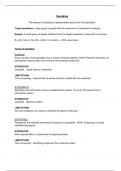
The process of selecting a representative group from the population.
Target population: Large group of people that the researcher is interested in studying.
Sample: A small group of people collected from the target population to take part in the study.
E.g All men in the UK → Born in London → 500 volunteers.
Types of sampling
RANDOM
Every member of the population has a chance of being selected. HOW? Random technique, all
participants' names drawn into a hat and are randomly picked out.
STRENGTHS
Unbiased - equal chance of selection
LIMITATIONS
Time consuming - need all lists of names and then contact the ones selected.
SYSTEMATIC
Selecting every Nth person using a predetermined system. E.g every 5th person from a
phonebook system.
STRENGTHS
Unbiased - objective system
LIMITATIONS
Not truly unbiased, not everyone selected will agree to take part.
STRATIFIED
Participants are selected according to frequency in population. HOW? Subgroups or strata
identified (boys/girls).
STRENGTHS
More representative - proportional to target population
LIMITATIONS
Time consuming - identifying subgroups then randomly select
The process of selecting a representative group from the population.
Target population: Large group of people that the researcher is interested in studying.
Sample: A small group of people collected from the target population to take part in the study.
E.g All men in the UK → Born in London → 500 volunteers.
Types of sampling
RANDOM
Every member of the population has a chance of being selected. HOW? Random technique, all
participants' names drawn into a hat and are randomly picked out.
STRENGTHS
Unbiased - equal chance of selection
LIMITATIONS
Time consuming - need all lists of names and then contact the ones selected.
SYSTEMATIC
Selecting every Nth person using a predetermined system. E.g every 5th person from a
phonebook system.
STRENGTHS
Unbiased - objective system
LIMITATIONS
Not truly unbiased, not everyone selected will agree to take part.
STRATIFIED
Participants are selected according to frequency in population. HOW? Subgroups or strata
identified (boys/girls).
STRENGTHS
More representative - proportional to target population
LIMITATIONS
Time consuming - identifying subgroups then randomly select


