POSTPARTUM NCLEX STYLE QUESTIONS|UPDATED&VERIFIED|GUARANTEED SUCCESS
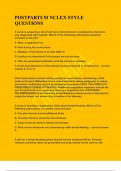
A nurse is preparing a list of self-care instructions for a postpartum client who was diagnosed with mastitis. Which of the following instructions would be included on the list? A. Wear a supportive bra B. Rest during the acute phase C. Maintain a fluid intake of at least 3000 ml D Continue to breast-feed if the breasts are not too sore. E. Take the prescribed antibiotics until the soreness subsides. F. Avoid decompression of the breasts by breast-feeding or breast pump. A, B, C, D Client instructions include resting during the acute phase, maintaining a fluid intake of at least 3000ml/day (if not contraindicated), taking analgesics to relieve discomfort. Antibiotics may be prescribed and are taken UNTIL THE COMPLETE PRESCRIBED COURSE IS FINISHED. Additional supportive measures include the use of moist heat or ice packs and wearing a supportive bra. CONTINUED DECOMPRESSION of the breast by breast-feeding or breast pump is important to empty the breast and prevent the formation of an abscess. A nurse is teaching a postpartum client about breast-feeding. Which of the following instructions should the nurse include? A. The diet should include additional fluids B. Prenatal vitamins should be discontinued C. Soap should be used to cleanse the breasts. D. Birth control measures are unnecessary while breast-feeding. A. A diet for a breast-feeding patient should include additional fluids. Prenatal vitamins should be taken as prescribed and soap should not be used on the breast because it removes natural oils which increases the chance of cracked nipples. Breast-feeding is not a sole method of contraception, so birth control measures should be resumed. A postpartum client is diagnosed with cystitis .The nurse plans for which priority nursing intervention in the care of the client? A. Providing Sitz baths B. Encouraging fluid intake C. Placing ice on the perineum D. Monitoring hemoglobin and hematocrit levels. B. Cystitis is an infection of the bladder. The client should consume 3000ml/day if not contraindicated. Sitz baths and ice would be appropriate interventions for perineal discomfort. H&H would be monitored with hemorrhage. After a precipitous delivery, a nurse notes that the new mother is passive and only touches her newborn infant briefly with her fingertips. The nurse should do which of the following to help the woman process what has happened? A. Encourage the mother to breast-feed soon after birth. B. Support the mother in her reaction to the newborn infant. C. Tell the mother that it is important to hold the newborn infant. D. Document a complete account of the mother's reaction on the birth record. B. Precipitous labor is labor that lasts less than 3 hours. Women who have experienced precipitous labor often describe the feelings of disbelief that their labor progressed so rapidly. To assist the client to process what has happened the best option is to support the client in her reaction to the newborn infant. Options A, C, and D do not acknowledge the client's feelings. A client who is breast-feeding her newborn infant is experiencing nipple soreness. To relieve the soreness, the nurse suggests that the client: A. Avoid rotating breast-feeding positions. B. Stop nursing until the nipples heal C. Substitute a bottle-feeding until the nipples heal. D. Position the infant with the ear, shoulder, and hip in straight alignment with the infant's stomach against the mother. D. The nurse would suggest the mother position the infant in this manner. Rotating breast-feeding positions; breaking suction with the little finger; nursing frequently; begin feeding on the less sore nipple; not allowing the newborn to chew on the nipple or to sleep holding the nipple in the mouth and applying tea bags soaked in warm water to the nipple are also measures to alleviate nipple soreness. On assessment of a client who is 30 minutes into the fourth stage of labor, the nurse finds the client's perineal pad saturated with blood and blood soaked into the bed linen under the client's buttocks. The nurse's initial action is which of the following. A. Call the physician B. Assess the client's vital signs C. Gently massage the uterine fundus D. Administer a 300ml bolus of a 20 units/L Oxytocin(Pitocin) solution C. The most frequent cause of excessive bleeding or hemorrhage after childbirth is uterine atony. A major intervention to restore adequate tone is stimulation of the uterine muscle via gently massaging the uterine fundus. Options A, B and D may be necessary eventually but are not initial actions. The initial action is to alleviate the problem. A second-day postpartum client with diabetes mellitus has scant lochia with a foul odor and a temperature of 101.6 degrees F. The physician suspects infection and writes orders to treat the client. Which of the following orders written by the physician would the nurse complete first? A. Obtain culture and sensitivity of lochia and urine B. Administer Ceftriaxone (Rocephin) C. Check the client's temperature D. Increase the intake of oral fluids. A. Culture and sensitivity results should be obtained before any antibiotic therapy is begun to avoid masking the microorganisms identified in the culture. Options B and D are standard parts of therapy for this type of infection but are not completed first. Although the client's temperature is monitored, checking the temperature is not the first action.The data in the question indicate that the temperature has already been checked.
Written for
- Institution
- POSTPARTUM NCLEX STYLE
- Course
- POSTPARTUM NCLEX STYLE
Document information
- Uploaded on
- July 3, 2023
- Number of pages
- 9
- Written in
- 2022/2023
- Type
- Exam (elaborations)
- Contains
- Questions & answers
Subjects
-
postpartum nclex style questions|updatedampverified|

Also available in package deal