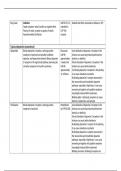
Drug name Indication Half-life (T1/2), Notable side effects (associate to pathway or NT)
Target symptoms: state if positive or negative effect metabolism
Potency (if noted. receptor occupancy if noted ) (CYP 450
Neurotransmitter(s) affected enzyme)
Typical antipsychotics (conventional)
Haloperidol Blocks dopamine 2 receptors, reducing positive Decanoate Acute blockade of dopamine 2 receptors in the
symptoms of psychosis and possibly combative, half-life striatum can cause drug-induced parkinsonism,
explosive, and hyperactive behaviors Blocks dopamine approximately dystonia, or akathisia
2 receptors in the nigrostriatal pathway, improving tics 3 weeks Oral Chronic blockade of dopamine 2 receptors in the
and other symptoms in Tourette’s syndrome. half-life striatum can cause tardive dyskinesia
approximately By blocking dopamine 2 receptors in the pituitary,
12–38 hours it can cause elevations in prolactin
By blocking dopamine 2 receptors excessively in
the mesocortical and mesolimbic dopamine
pathways, especially at high doses, it can cause
worsening of negative and cognitive symptoms
(neuroleptic-induced deficit syndrome).
Blocking alpha 1 adrenergic receptors can cause
dizziness, hypotension, and syncope
Thioridazine Blocks dopamine 2 receptors, reducing positive Metabolized Acute blockade of dopamine 2 receptors in the
symptoms of psychosis by CYP450 2D6 striatum can cause drug-induced parkinsonism,
dystonia, or akathisia.
Chronic blockade of dopamine 2 receptors in the
striatum can cause tardive dyskinesia
By blocking dopamine 2 receptors in the pituitary,
it can cause elevations in prolactin
By blocking dopamine 2 receptors excessively in
the mesocortical and mesolimbic dopamine
pathways, especially at high doses, it can cause
worsening of negative and cognitive symptoms
(neuroleptic-induced deficit syndrome)
Blocking muscarinic cholinergic receptors can
, cause dry mouth, blurred vision, urinary retention,
constipation, and paralytic ileus
Antihistaminic actions may cause sedation, weight
gain Blocking alpha 1 adrenergic receptors can
cause dizziness, hypotension, and syncope
Thiothixene Blocks dopamine 2 receptors, reducing positive Initial Acute blockade of dopamine 2 receptors in the
symptoms of psychosis elimination striatum can cause drug-induced parkinsonism,
Commonly prescribed for schizophrenia and bipolar half-life dystonia, or akathisia
disorder approximately Chronic blockade of dopamine 2 receptors in the
3.4 hours striatum can cause tardive dyskinesia.
Terminal By blocking dopamine 2 receptors in the pituitary,
elimination it can cause elevations in prolactin
half-life By blocking dopamine 2 receptors excessively in
approximately the mesocortical and mesolimbic dopamine
34 hours pathways, especially at high doses, it can cause
worsening of negative and cognitive symptoms
(neuroleptic-induced deficit syndrome)
Blocking muscarinic cholinergic receptors can
cause dry mouth, blurred vision, urinary retention,
constipation, and paralytic ileus
Antihistaminic actions may cause sedation, weight
gain Blocking alpha 1 adrenergic receptors can
cause dizziness, hypotension, and syncope.
Fluphenazine Blocks dopamine 2 receptors, reducing positive Mean half-life Acute blockade of dopamine 2 receptors in the
symptoms of psychosis of oral striatum can cause drug-induced parkinsonism,
Commonly prescribed for Bipolar disorder formulation dystonia, or akathisia
approximately Chronic blockade of dopamine 2 receptors in the
15 hours Mean striatum can cause tardive dyskinesia
half-life of By blocking dopamine 2 receptors in the pituitary,
intramuscular it can cause elevations in prolactin.
formulation By blocking dopamine 2 receptors excessively in
approximately the mesocortical and mesolimbic dopamine
6.8–9.6 days pathways, especially at high doses, it can cause
worsening of negative and cognitive symptoms