

AO2 Hard Times Atonement Commentary
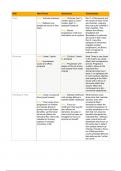
Form How? Victorian literature How? Victorian (part 1), Part 1 of Atonement and
modern (part 2), post- the whole of Hard Times
Why? Re ects how modern (part 3 + are Victorian, meaning
people are stuck in their epilogue) literature they are quite childlike in
ways their chapters. This
Why? Shows re ects how Briony,
progression of life and Gradgrind and
maturation yet is cyclical Bounderby in particular
are stuck in their ways.
Part 2, 3 and the
epilogue of Atonement
suggest societal
progression, yet Briony
does not appear to
mature much.
Structure How? Linear, 3 parts How? Cyclical, 3 parts Hard Times is very linear
(+ epilogue) in its 3 parts, as cause,
Why? Emphasises e ect and consequence
cause and e ect, Why? Progresses with prevail. Progress is
progress stages of life yet shows evident, linking to the
how people never really Industrial Rev.
change Atonement also has 3
parts (+ an epilogue) yet
is more cyclical, starting
and ending at the Tallis
house with a focus on
the same fateful day.
Cause, e ect and
consequence is also
somewhat established.
Handling of Time How? Linear, occasional How? (Mostly) childhood While Dickens uses
time jumps forward until old age (Briony’s linear time that marches
implied death), ashback forward, even with
Why? Time jumps show occasional ash
progression of children Why? Focus on forwards to re ect the
and society (those in childhood, that speci c constant progression of
poverty don’t get these day re ects her society (emphasis on the
bene ts), yet the linear dementia, focuses on fact that not everyone
structure re ects the what could’ve been yet bene ts) alongside the
Industrial Rev. (time only struggles to focus on Industrial Rev., McEwan
valuable for money), anyone but herself uses cyclical time with
urgency of change, ashbacks that focus on
monotony of life the same day to re ect
how people rarely truly
change, through a focus
on childhood which
could symbolise Briony’s
dementia as she “writes
the novel”.
flfffl fifl fffl flff fl fl fl fi
Form How? Victorian literature How? Victorian (part 1), Part 1 of Atonement and
modern (part 2), post- the whole of Hard Times
Why? Re ects how modern (part 3 + are Victorian, meaning
people are stuck in their epilogue) literature they are quite childlike in
ways their chapters. This
Why? Shows re ects how Briony,
progression of life and Gradgrind and
maturation yet is cyclical Bounderby in particular
are stuck in their ways.
Part 2, 3 and the
epilogue of Atonement
suggest societal
progression, yet Briony
does not appear to
mature much.
Structure How? Linear, 3 parts How? Cyclical, 3 parts Hard Times is very linear
(+ epilogue) in its 3 parts, as cause,
Why? Emphasises e ect and consequence
cause and e ect, Why? Progresses with prevail. Progress is
progress stages of life yet shows evident, linking to the
how people never really Industrial Rev.
change Atonement also has 3
parts (+ an epilogue) yet
is more cyclical, starting
and ending at the Tallis
house with a focus on
the same fateful day.
Cause, e ect and
consequence is also
somewhat established.
Handling of Time How? Linear, occasional How? (Mostly) childhood While Dickens uses
time jumps forward until old age (Briony’s linear time that marches
implied death), ashback forward, even with
Why? Time jumps show occasional ash
progression of children Why? Focus on forwards to re ect the
and society (those in childhood, that speci c constant progression of
poverty don’t get these day re ects her society (emphasis on the
bene ts), yet the linear dementia, focuses on fact that not everyone
structure re ects the what could’ve been yet bene ts) alongside the
Industrial Rev. (time only struggles to focus on Industrial Rev., McEwan
valuable for money), anyone but herself uses cyclical time with
urgency of change, ashbacks that focus on
monotony of life the same day to re ect
how people rarely truly
change, through a focus
on childhood which
could symbolise Briony’s
dementia as she “writes
the novel”.
flfffl fifl fffl flff fl fl fl fi


